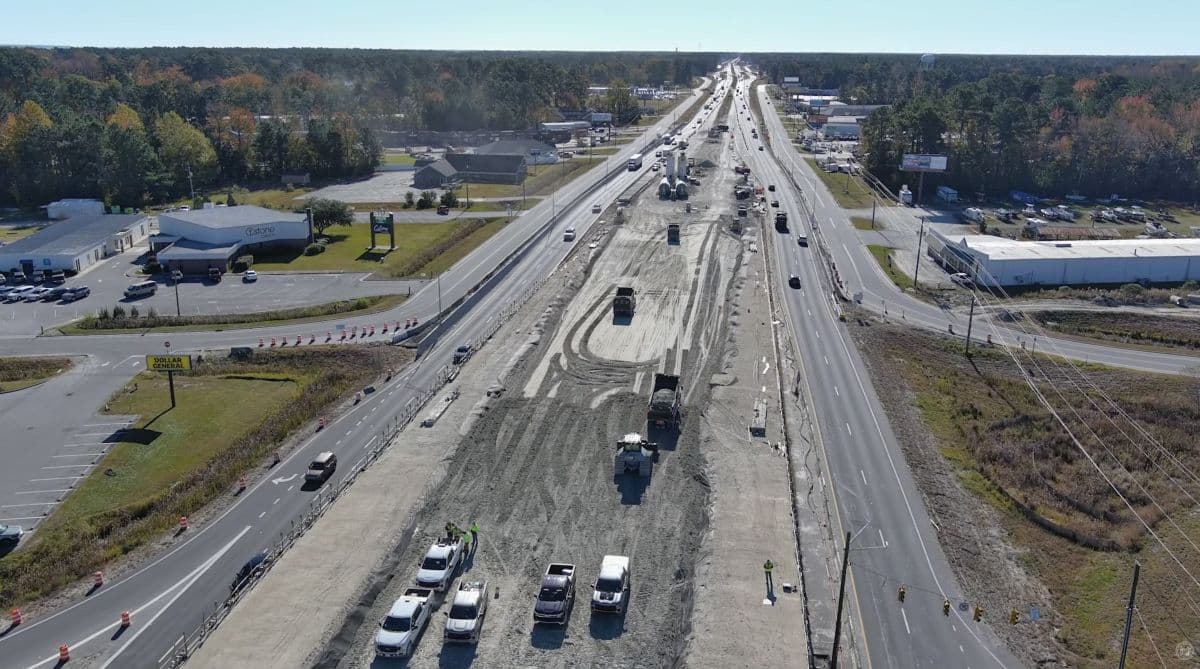
North Carolina DOT Is Using New Cement Mixture for Highway Project
Why It Matters
Cellular concrete offers a faster, lighter, and more adaptable solution for challenging soil conditions, potentially lowering construction costs and timelines for major highway projects nationwide.
Key Takeaways
- •NCDOT adopts lightweight cellular concrete for U.S. 70 elevation
- •Cellular concrete reduces fill material needs on poor soils
- •Foamed glass projects cut construction time by up to a year
- •Other states adopt innovative lightweight aggregates for infrastructure resilience
Pulse Analysis
State transportation agencies are increasingly turning to engineered lightweight aggregates to solve age‑old geotechnical challenges. In North Carolina, the decision to use cellular concrete—a foamed cement slurry—allows engineers to build a stable roadway deck without the massive earthworks typically required on soft, compressible soils. The material’s low density reduces the load on underlying strata, cuts the volume of imported fill, and shortens the curing period, delivering a more predictable schedule for the U.S. 70 elevation and its connection to the future I‑42 corridor.
The trend extends beyond the Southeast. New York’s $25 million Westchester elevation project combined geosynthetic‑reinforced soil with foamed glass, organic fibers and mesh, achieving a one‑year acceleration in completion. Arizona’s 2024 I‑17 culvert reinforcement and Wyoming’s 2025 landslide embankment rebuild also leveraged foamed glass for its fire‑proof, waterproof, and durable properties. These case studies illustrate how lightweight, porous materials can provide structural strength while mitigating settlement and erosion, especially in flood‑prone or landslide‑susceptible zones.
Adopting such technologies signals a shift toward more resilient, cost‑effective infrastructure. By minimizing heavy earthmoving, agencies lower fuel consumption and emissions, aligning with sustainability goals. Moreover, the faster project timelines free up funding for additional improvements, a critical advantage amid tightening state budgets. As climate change intensifies weather‑related disruptions, the ability to quickly erect robust roadways with adaptable materials could become a standard practice across the nation’s transportation network.
North Carolina DOT Is Using New Cement Mixture for Highway Project
Comments
Want to join the conversation?
Loading comments...