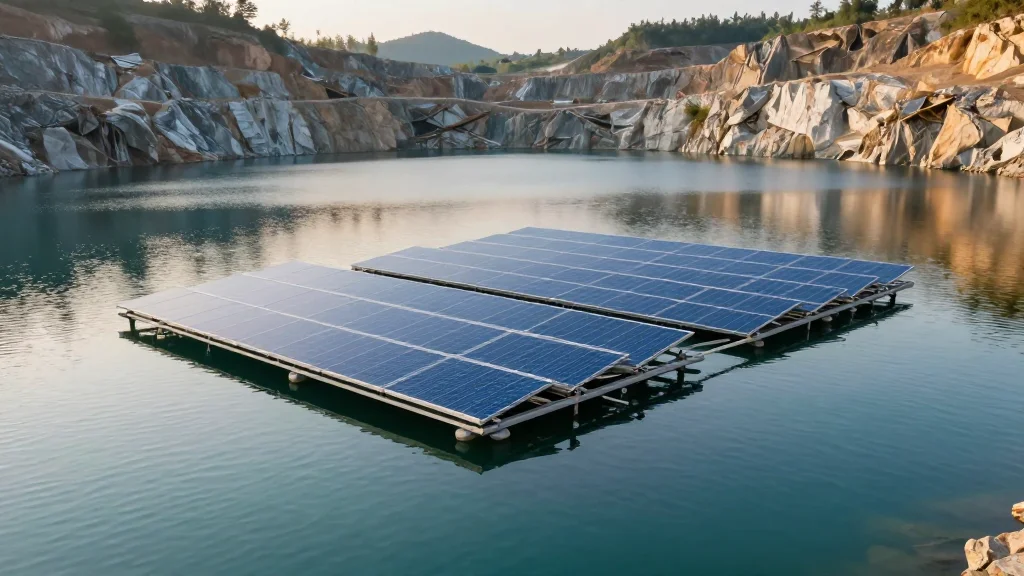
Nova and RSK Install Floating Solar Farm at Cheshire Quarry
Companies Mentioned
Why It Matters
The installation gives Bathgate Silica Sand greater energy security and cost control while advancing the UK’s 2035 renewable target, illustrating how industrial sites can repurpose water bodies for low‑carbon power.
Key Takeaways
- •400 kW floating solar array installed at Cheshire quarry
- •650 panels cover area equal to two Olympic pools
- •Project completed in six months with no operational downtime
- •Expected to cut Bathgate’s energy bills and carbon footprint
- •Demonstrates floating solar’s role in UK 2035 renewable goal
Pulse Analysis
Floating solar, or floating photovoltaic (FPV) systems, are gaining traction worldwide as a way to harness unused water surfaces for clean energy. In the UK, the drive to meet the 2035 renewable electricity target has spurred interest in innovative solutions that avoid land‑use conflicts. FPV installations can achieve higher panel efficiency thanks to the cooling effect of water, and they provide ancillary benefits such as reduced evaporation and improved water quality. Nova’s latest project adds a high‑profile example to a growing portfolio that includes reservoirs, canals, and even offshore wind‑farm lagoons.
The Cheshire quarry project showcases a seamless collaboration between Nova, a specialist in marine energy, and RSK, an engineering services firm. From feasibility studies to consent acquisition, design, and rapid six‑month construction, the partnership delivered a 400 kW system comprising 650 floating panels. The array’s footprint—roughly the size of two Olympic swimming pools—was installed on the artificial North Arclid Lake without halting quarry operations, preserving Bathgate Silica Sand’s production schedule. Early data indicate a measurable reduction in the quarry’s electricity bills and a tangible step toward its decarbonisation roadmap, giving the company greater control over energy supply and price volatility.
For the broader industrial sector, this deployment signals that floating solar can be a pragmatic, low‑impact retrofit for sites with existing water bodies. As the UK tightens carbon regulations and energy costs rise, more quarries, mines, and even wastewater treatment facilities may explore similar FPV solutions. Policymakers are likely to view such projects favorably, potentially streamlining permitting processes and offering incentives. Nova’s rapid delivery timeline also demonstrates that FPV can be scaled quickly, positioning the technology as a key component of the nation’s clean‑energy transition.
Nova and RSK install floating solar farm at Cheshire quarry
Comments
Want to join the conversation?
Loading comments...