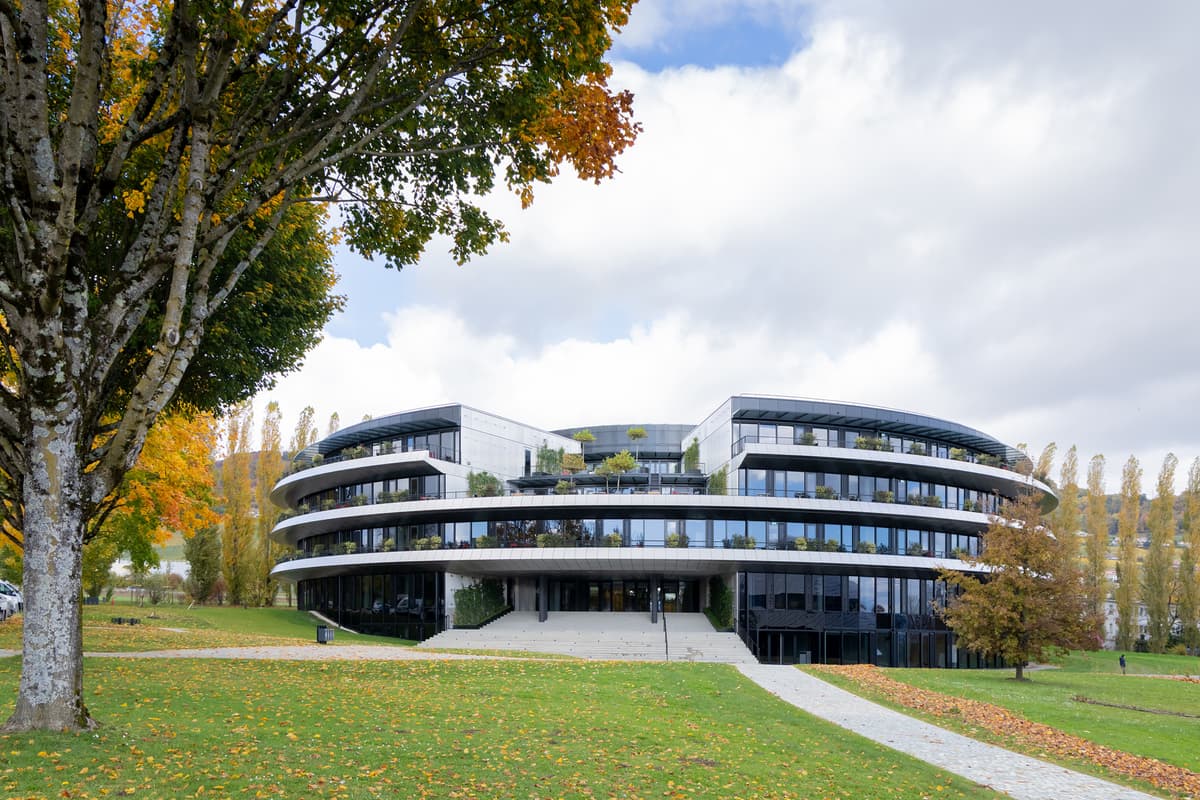
Philo Science Center at Institut Le Rosey / Bernard Tschumi Architects
Why It Matters
Philo sets a new benchmark for adaptable, sustainability‑focused education facilities, positioning Le Rosey as a leader in next‑generation learning environments.
Key Takeaways
- •Philo covers 16,222 m² with five flexible education floors.
- •Spiral atrium features double‑helix toboggan slides for dynamic circulation.
- •Modular partitions allow reconfiguration into up to 90 classrooms.
- •Heat pumps draw lake water; photovoltaic roof supplies most energy.
- •Exterior balconies plant seasonal colors, linking indoor learning with outdoors.
Pulse Analysis
Bernard Tschumi Architects’ Philo Science and Innovation Center reimagines campus architecture by marrying bold form with functional flexibility. The cylindrical volume, anchored by a 30‑meter atrium, creates a covered public square where three concentric walkways intersect, encouraging spontaneous movement and interaction. The double‑helix toboggan slides and spiral stair add kinetic energy, turning circulation into an experiential feature that distinguishes the building from conventional academic blocks.
Beyond its striking silhouette, Philo is engineered for pedagogical agility. Movable partitions enable rapid reconfiguration of up to 90 classrooms, allowing the space to morph between lecture halls, maker labs, and startup incubator zones. This adaptability supports interdisciplinary projects, from digital fabrication to entrepreneurial pitching, aligning with global trends toward experiential, project‑based learning. By integrating informal zones, balconies, and garden spaces, the design fosters serendipitous collaboration among students, faculty, and visiting innovators, reinforcing Le Rosey’s reputation as a crucible for future leaders.
Sustainability is woven into Philo’s DNA. Triple‑glazed aluminum façades, electro‑chrome glass, and seasonal planted balconies reduce solar gain while maximizing daylight. Mechanical ventilation is paired with lake‑water heat pumps, and a photovoltaic‑laden green roof supplies the majority of the building’s power demand. These measures not only lower operational carbon but also serve as a living laboratory for students studying climate‑responsive design, illustrating how high‑performance architecture can coexist with cutting‑edge education.
Philo Science Center at Institut Le Rosey / Bernard Tschumi Architects
Comments
Want to join the conversation?
Loading comments...