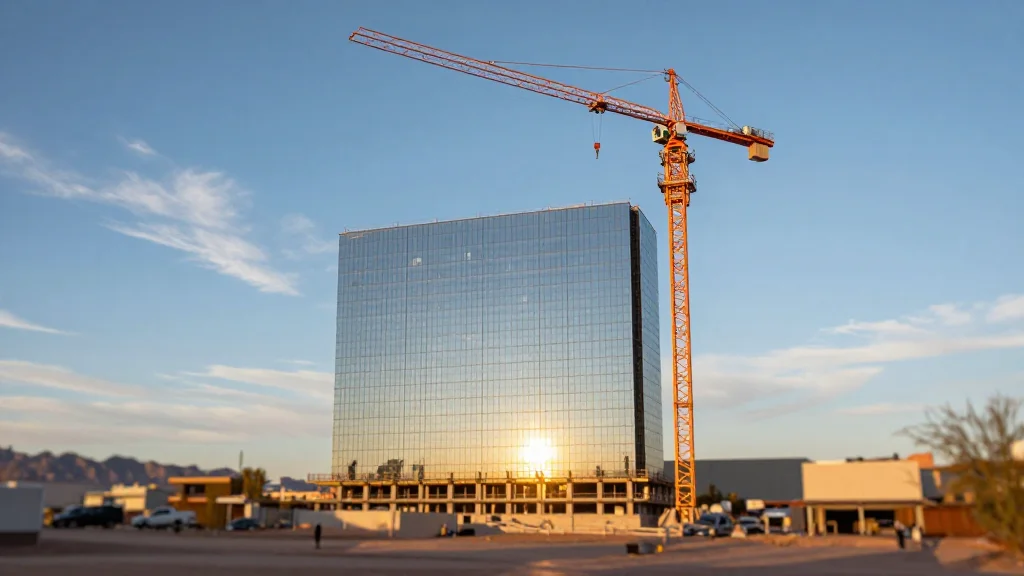
Phoenix Hotel Developers Building To Make Up For Lost Time
Why It Matters
The boom reshapes Phoenix’s economic landscape, creating significant tax revenue and investment opportunities while testing developers’ ability to manage cost pressures and supply‑demand balance.
Key Takeaways
- •Phoenix to open 3,650 hotel rooms across 22 properties in 2026
- •Hotel pipeline up 117% from 2025, second only to New York
- •Developers favor ground‑up builds over renovations in underserved pockets
- •Construction costs rising 2.8‑3.4% in 2026 due to material tariffs
- •Mixed‑use and sports‑venue hotel concepts gaining traction
Pulse Analysis
Phoenix’s hospitality surge reflects a broader shift in U.S. secondary markets where tech‑driven employment hubs, like the TSMC semiconductor plant, create localized demand spikes. The city’s projected $1.1 billion tax windfall underscores the fiscal impact of hotel construction, while the 3,650 new rooms slated for 2026 will push total inventory beyond 20,000 rooms, narrowing the historic supply gap that has lingered since the 2020‑2022 construction drought. Investors are watching closely as the Phoenix market now rivals traditional powerhouses such as New York for growth velocity.
Rising construction costs present a double‑edged sword for developers. Cushman & Wakefield forecasts a 2.8‑3.4% cost increase in 2026, driven largely by tariffs on steel, lumber, and other inputs. To preserve margins, developers are integrating hotels with residential, retail, and entertainment components, creating mixed‑use assets that diversify revenue streams. Partnerships with sports venues and surf parks illustrate a creative response, allowing operators to bundle lodging with experiential packages that command premium rates and improve occupancy stability.
Looking ahead, the sustainability of Phoenix’s hotel boom hinges on balancing aggressive pipeline growth with genuine demand. While the TSMC campus and expanding medical facilities like the Mayo Clinic provide anchor demand, overbuilding could pressure average daily rates and RevPAR if tourism rebounds slower than expected. For capital providers, the market offers attractive yields but requires diligent underwriting that accounts for cost inflation, mixed‑use risk profiles, and the city’s capacity to absorb new supply without eroding profitability.
Phoenix Hotel Developers Building To Make Up For Lost Time
Comments
Want to join the conversation?
Loading comments...