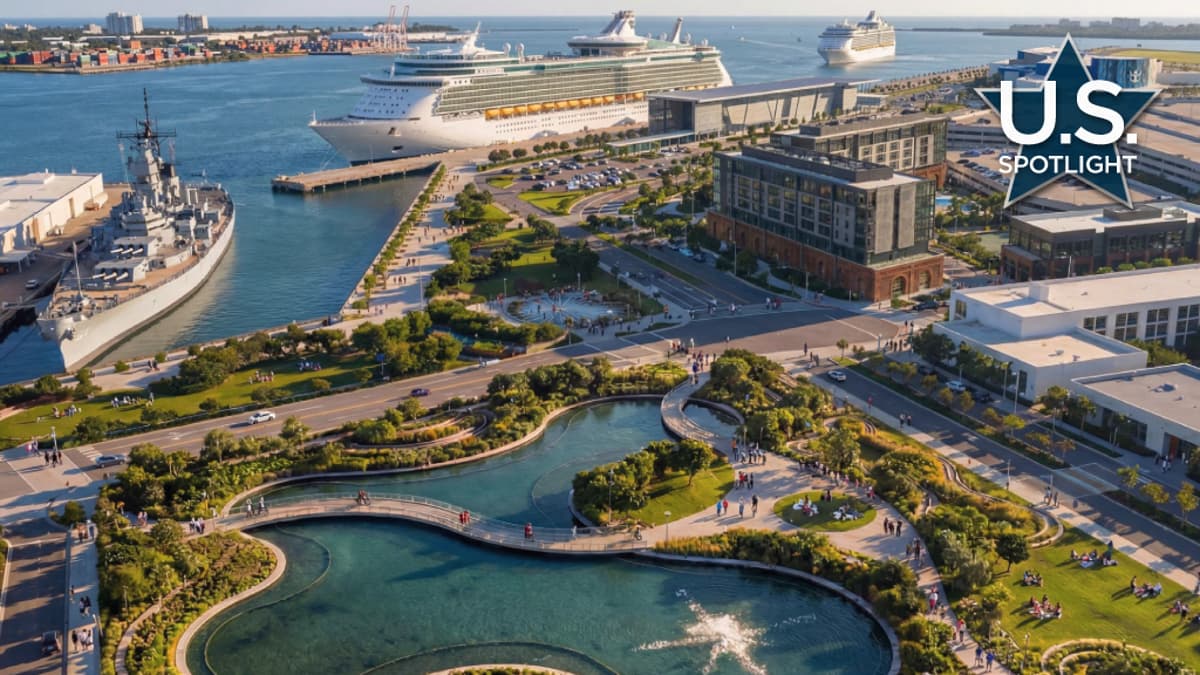
Port of Galveston Master Plan Suggests Strong Future Cruise and Cargo Growth
Why It Matters
The plan positions Galveston as a premier Gulf Coast gateway, driving higher cruise and cargo volumes that boost regional employment and tax revenues. It also demonstrates how large‑scale maritime development can be paired with environmental stewardship.
Key Takeaways
- •$2.4 billion plan targets $345 million annual port revenue by 2045.
- •Cruise passengers forecast to reach 11 million annually, adding new terminals.
- •Public‑private partnerships will cover 35% of the $2.4 billion investment.
- •$90 million West Port Cargo Complex adds 30 acres and a 1,424‑ft berth.
- •Green Marine certification guides sustainability, including shore power and EV charging.
Pulse Analysis
Galveston’s century‑old harbor has long been a linchpin for Texas’ maritime commerce, handling 3.6 million cruise passengers and supporting 24,000 jobs. Its strategic location—just nine miles from the Gulf—makes it a natural conduit for both leisure travel and bulk cargo, contributing roughly $7.5 billion to the state economy. Recent upgrades, such as the $140 million fourth cruise terminal opened in 2025, have already set the stage for more ambitious growth.
The newly released 2045 Master Plan charts a $2.4 billion investment trajectory that balances cruise expansion with cargo capacity. By 2045, the port expects to host up to seven cruise terminals, handling 11 million passengers annually, while the $90 million West Port Cargo Complex will add 30 acres of handling space and a 1,424‑foot berth. Public‑private partnerships are projected to cover 35% of the funding, reducing the fiscal burden on taxpayers. Sustainability is woven into the agenda, with Green Marine certification guiding shore‑power installations, EV charging stations, and dredged‑material reuse for wetland restoration.
If executed, the plan could elevate Galveston into the top tier of U.S. cruise destinations and a premier cargo hub, attracting new cruise lines and logistics firms. The anticipated revenue surge to $345 million annually will likely translate into higher local tax receipts and further job creation. However, the port must navigate volatile trade policies, climate‑related disruptions, and competitive pressures from neighboring Gulf ports. Successful implementation will hinge on continued stakeholder collaboration and adaptive infrastructure planning.
Port of Galveston master plan suggests strong future cruise and cargo growth
Comments
Want to join the conversation?
Loading comments...