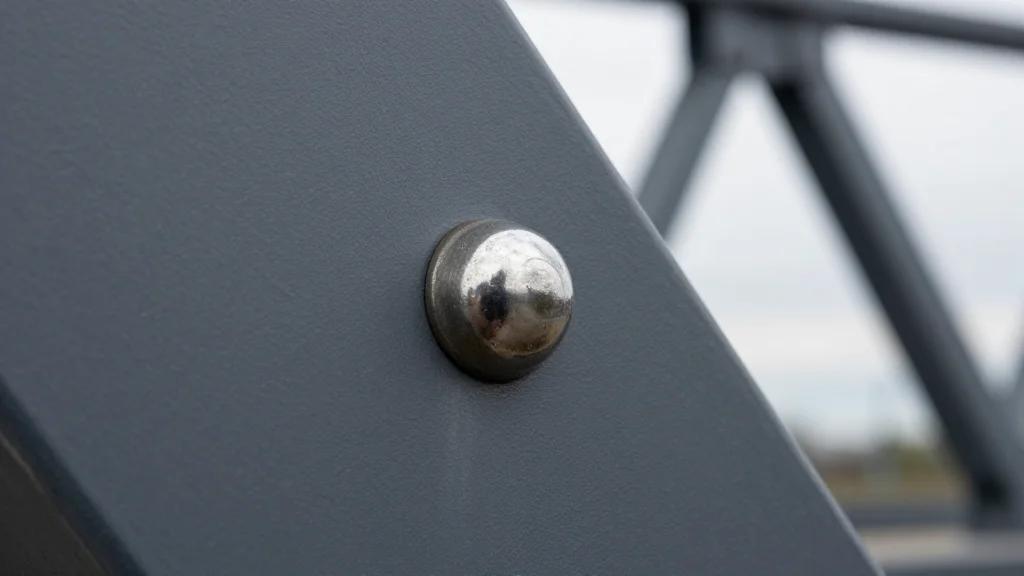
Practical Uses for Solid Rivets in Structural Projects
Why It Matters
The continued reliance on solid rivets delivers cost‑effective, low‑maintenance solutions that enhance project resilience and sustainability across critical infrastructure sectors.
Key Takeaways
- •Solid rivets provide lasting joints without electricity or specialized tools.
- •Bridges and aircraft still rely on rivets for vibration resistance.
- •Riveted assemblies lower maintenance costs and extend service life.
- •Rivets' recyclability reduces construction carbon footprints.
- •Simple installation makes rivets ideal for remote or offshore projects.
Pulse Analysis
The endurance of solid rivets stems from a design that balances minimalism with mechanical robustness. A cylindrical shaft and a deformed tail create a semi‑permanent bond that distributes stress evenly, a principle first applied to 19th‑century railway bridges and still evident in modern steel trusses. Because the process relies on hand‑driven tools rather than electricity or complex machinery, contractors can achieve high‑strength connections in environments where power is scarce or where rapid deployment is essential, such as disaster‑relief sites or offshore platforms.
In contemporary engineering, rivets excel where vibration and fatigue are dominant concerns. Bridge decks, for instance, incorporate thousands of rivets to tie together steel plates, ensuring that dynamic traffic loads are shared across the structure. Aerospace manufacturers favor solid rivets for airframe skins and engine mounts, as the fasteners maintain integrity under cyclic stresses without adding significant weight. Heavy‑equipment builders similarly depend on riveted joints for boom assemblies, where impact resistance is critical, while shipyards value the corrosion‑resistant seals rivets provide against relentless saltwater exposure. Across these sectors, the fastener’s ability to stay tight without loosening under motion translates to longer service intervals and reduced downtime.
Beyond performance, solid rivets contribute to a project’s bottom line and environmental profile. Their long lifespan diminishes the frequency of part replacements, curbing material waste and labor costs. Moreover, the steel components are fully recyclable, allowing end‑of‑life structures to reenter the supply chain with minimal carbon penalty. As sustainability targets tighten, firms are re‑evaluating low‑tech solutions like rivets that deliver durability without the energy intensity of welding or the complexity of high‑grade fasteners. This blend of economic efficiency and ecological responsibility ensures that solid rivets will remain a viable, even preferred, option in the evolving landscape of structural construction.
Practical Uses for Solid Rivets in Structural Projects
Comments
Want to join the conversation?
Loading comments...