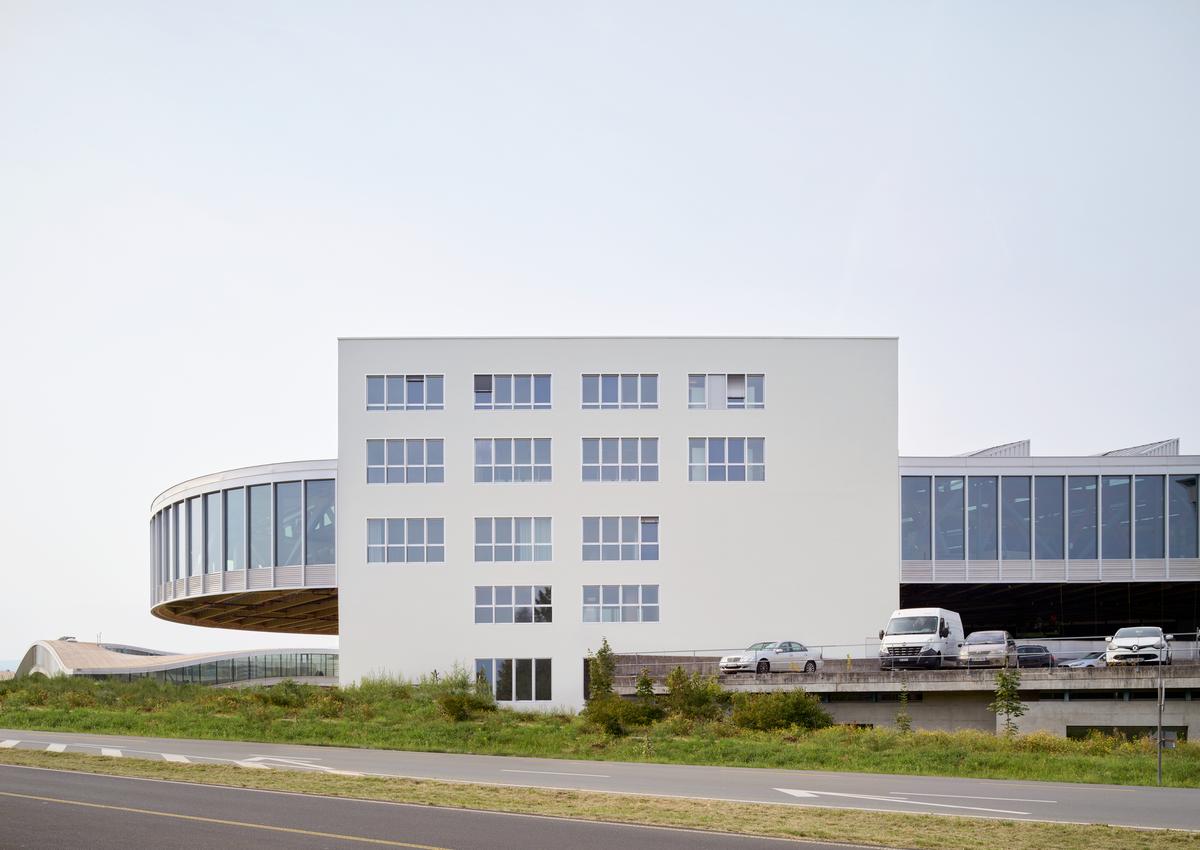
Radio & Television Building (RTS) / OFFICE Kersten Geers David Van Severen
Why It Matters
RTS’s hybrid campus‑media model showcases how broadcasters can fuse content creation with academic research, driving innovation and operational agility in a rapidly evolving industry.
Key Takeaways
- •RTS headquarters located on EPFL/UNIL campus by Lake Geneva
- •Design uses four independent boxes and a suspended field slab
- •Flexible layout supports evolving media production technologies
- •Public venue includes restaurant, café, and educational facilities
- •Warren trusses create distinct structural and color zones
Pulse Analysis
Switzerland’s public broadcaster, Radio Télévision Suisse, has taken a bold step by situating its new headquarters within the vibrant EPFL‑UNIL campus. This strategic placement not only leverages the intellectual ecosystem of two leading universities but also signals a shift toward media entities co‑creating with academic partners. Proximity to research labs and student talent pools enables RTS to pilot cutting‑edge storytelling tools, from immersive VR studios to AI‑driven newsrooms, while offering the public a transparent view of the production process.
Architecturally, the RTS complex departs from conventional monolithic studios. The design revolves around four distinct rectangular “boxes” that house studios, technical workshops, and administrative offices, all anchored by an 8‑meter‑high suspended slab—dubbed the “field.” This open‑plan space, illuminated by a shed roof and framed by Warren trusses, provides a modular canvas that can be reconfigured as production needs evolve. The use of permeable ground floors and flexible façade systems also underscores a commitment to sustainability, reducing energy consumption while maintaining acoustic performance.
For the broadcasting industry, RTS’s adaptive infrastructure sets a new benchmark for resilience. As media consumption habits shift toward on‑demand, multi‑platform content, the ability to quickly retool studios or repurpose office zones becomes a competitive advantage. Moreover, the public‑facing amenities—restaurant, café, and educational venues—forge stronger community ties, positioning RTS as both a content creator and a cultural hub. This model may inspire other broadcasters worldwide to rethink campus design, blending operational efficiency with collaborative innovation.
Radio & Television Building (RTS) / OFFICE Kersten Geers David Van Severen
Comments
Want to join the conversation?
Loading comments...