RAW Design Pivots to Smaller Density Builds as Ontario’s Highrise Condo Market Stalls
Why It Matters
The pivot signals a broader industry move toward cost‑efficient, affordable housing, helping developers stabilize balance sheets while addressing Ontario’s rental shortage.
Key Takeaways
- •Ontario high‑rise condo market collapse forces developers to downsize
- •RAW Design targets affordable rentals in secondary cities like Peterborough
- •Eliminating underground parking cuts costs and reshapes building massing
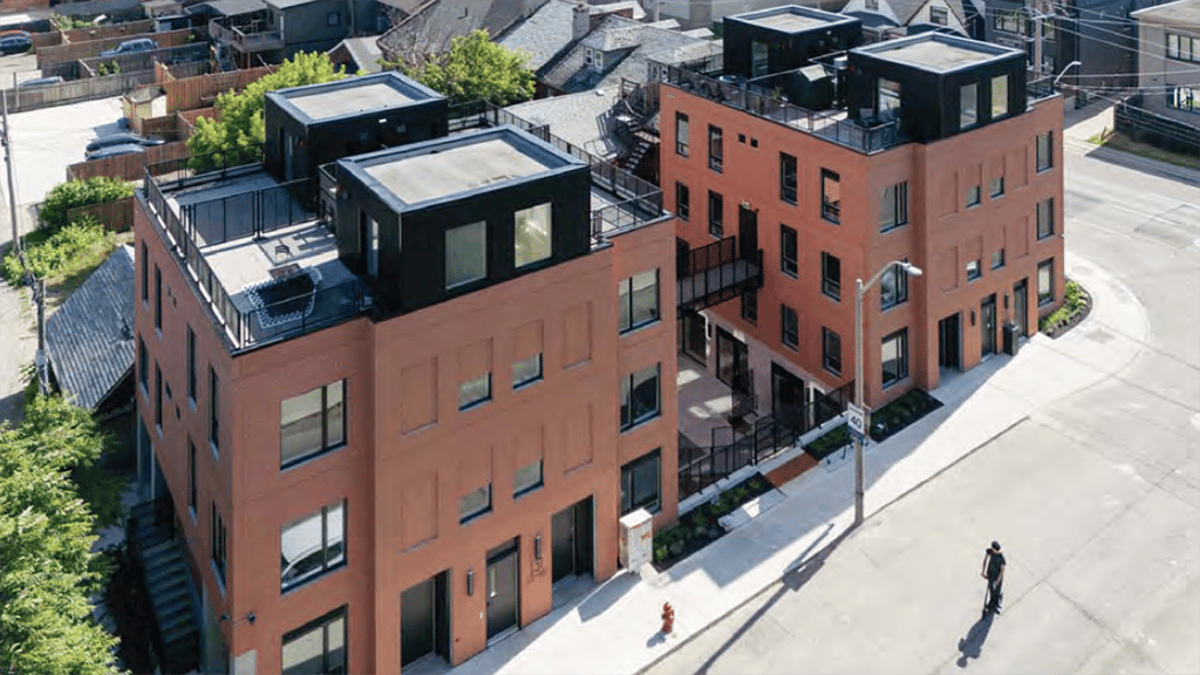
- •Creative catwalk bridge reduces stair costs and creates shared courtyards
- •Municipalities now more open to unconventional density designs
Pulse Analysis
The Greater Toronto Area’s condo boom has run into a sharp correction, leaving developers with excess inventory and dwindling pre‑sale revenues. As financing tightens and buyers retreat, firms are re‑evaluating the viability of 30‑plus‑storey towers that once promised high returns. RAW Design’s strategic shift to mid‑rise, affordable rental projects reflects a market‑wide recalibration toward assets that generate steady cash flow and meet a growing demand for low‑cost housing in Ontario’s secondary cities.
Cost containment is at the heart of RAW’s new design language. By discarding costly underground parking decks and integrating parking into the building envelope—either partially below grade or fully above grade—the firm slashes construction budgets while preserving site density. Innovative solutions such as a catwalk bridge that links twin four‑storey blocks eliminate the need for duplicate stair cores, freeing up floor area for resident amenities like sunken courtyards. These tactics not only reduce material and labor expenses but also earn municipal goodwill, as local planners increasingly favor unconventional approaches that deliver needed housing without overwhelming streetscapes.
The broader implications extend beyond RAW’s portfolio. As municipalities become more receptive to flexible zoning and creative massing, developers across Canada may adopt similar tactics to address the acute affordable‑housing gap. Investors are likely to favor projects that balance scale with cost efficiency, positioning mid‑rise rentals as a resilient asset class in a post‑boom environment. Ultimately, RAW Design’s pivot illustrates how architectural ingenuity can align profitability with social need, setting a template for the next wave of Canadian urban development.
RAW Design pivots to smaller density builds as Ontario’s highrise condo market stalls
Comments
Want to join the conversation?
Loading comments...