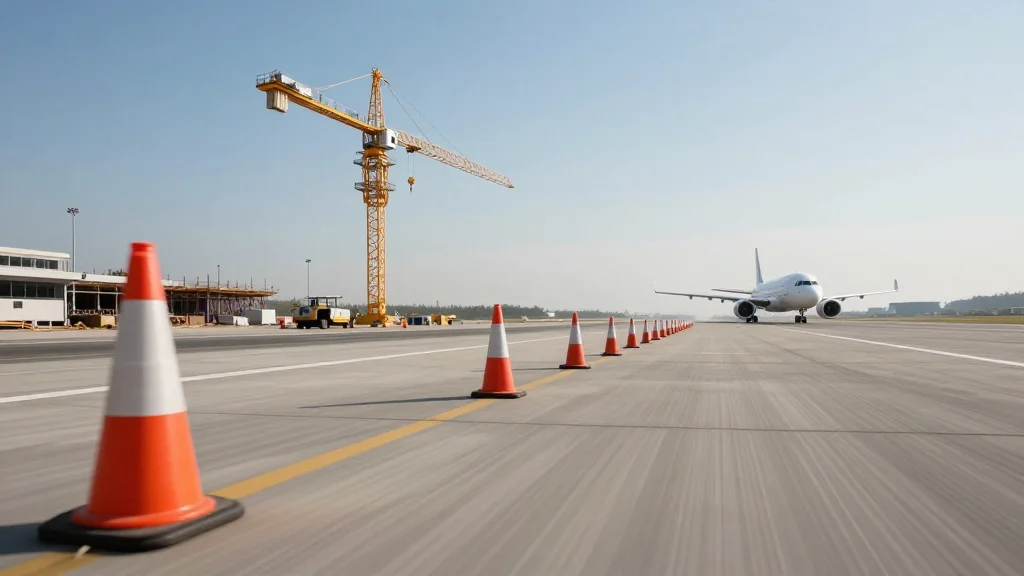
Rival Proposal for Heathrow Expansion Would See Runway Built in Two Phases
Why It Matters
The competing proposals could reshape Heathrow’s expansion timeline, cost structure and environmental impact, influencing UK aviation capacity and economic growth.
Key Takeaways
- •HWL proposes 2,400 m runway opening 2035, later extendable.
- •Initial phase avoids M25 relocation, lowering upfront cost.
- •Terminal 6 designed for 40 m passengers, preserves Green Belt.
- •Major airlines and IATA endorse the two‑phase plan.
- •Government must set rules‑based framework to compare rival schemes.
Pulse Analysis
Heathrow Airport, handling roughly 80 million passengers a year, has long faced pressure to increase capacity as UK air traffic rebounds after the pandemic. The airport’s own £49 bn (≈$62 bn) expansion blueprint, submitted in August 2023, calls for a full‑length 3,500 m third runway, a new “T5X” terminal, three satellite terminals and extensive modernisation, with a projected 150 million annual passengers. While the plan promises a 50 percent lift in capacity, critics point to its hefty price tag—£21 bn for the runway, £12 bn for terminals and £15 bn for upgrades—and the need to relocate sections of the M25 motorway.
The rival scheme presented by the Arora Group through Heathrow West Ltd takes a phased, cost‑conscious route. Phase 1 would deliver a 2,400 m western runway by 2035, avoiding the costly M25 diversion and allowing earlier capacity gains. A later extension would bring the runway to the full 3,500 m length while the airport continues operating with minimal disruption. The accompanying Terminal 6, sized for 40 million passengers, is positioned to protect Green Belt land. Endorsements from IAG, Virgin Atlantic, IATA and Swissport underscore industry confidence that the plan is financeable and passenger‑friendly.
The emergence of two competing proposals forces the Department for Transport and the Civil Aviation Authority to adopt a transparent, rules‑based assessment framework. Such a process would compare affordability, deliverability, environmental safeguards and demand assumptions, giving airlines a clearer voice in the decision. If the phased model wins favor, Heathrow could see incremental capacity growth at a lower upfront cost, potentially accelerating the UK’s recovery in tourism and trade. Conversely, approval of the full‑scale plan would lock in the airport’s long‑term expansion but at a higher financial and infrastructural burden.
Rival proposal for Heathrow expansion would see runway built in two phases
Comments
Want to join the conversation?
Loading comments...