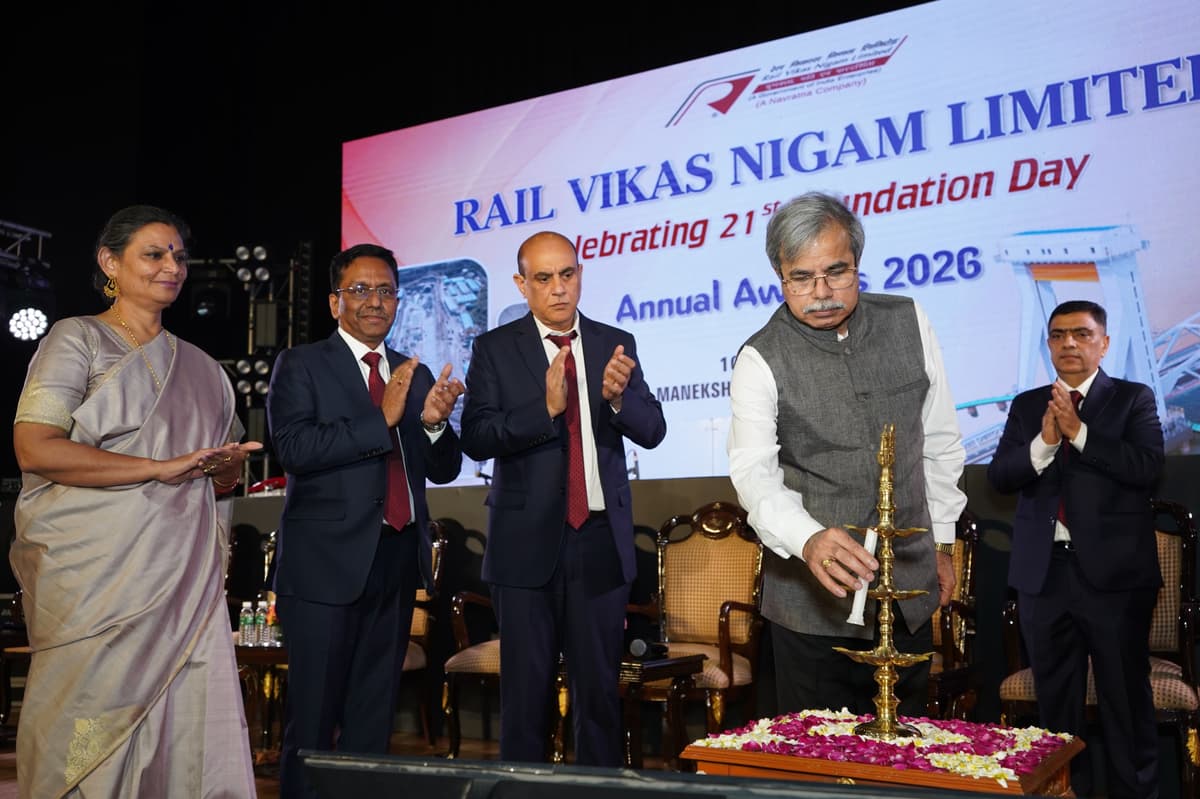
“RVNL Delivers 17,000 Km Rail Projects, Executes ₹2 Trillion Infrastructure:” Railway Board CEO
Why It Matters
RVNL’s scale and diversified portfolio position it as a critical catalyst for India’s infrastructure modernization and a model for public‑private partnership execution. Its global ventures and sustainability focus signal a new era of Indian engineering firms competing internationally.
Key Takeaways
- •RVNL completed over 17,000 km of rail lines, $24 bn projects.
- •New Pamban Bridge inaugurated as India’s first vertical‑lift sea bridge.
- •RVNL expands globally with projects in Maldives, Saudi Arabia, Uzbekistan, Rwanda.
- •Tunnelling work in Himalayas showcases advanced engineering capabilities.
- •Embracing AI, green construction, and digital infrastructure for sustainable growth.
Pulse Analysis
India’s rail network is undergoing a transformation, and RVNL sits at the heart of that surge. By delivering more than 17,000 km of track and managing projects worth roughly $24 billion, the state‑owned firm is directly feeding the government’s ambitious capital‑expenditure agenda. This scale not only improves passenger and freight capacity but also unlocks economic corridors that connect remote regions to major markets, reinforcing the country’s long‑term growth trajectory.
Beyond sheer mileage, RVNL’s portfolio showcases engineering ingenuity and strategic diversification. The New Pamban Bridge, the nation’s first vertical‑lift sea bridge, exemplifies high‑profile, technically demanding work that garners global attention. Simultaneously, the Himalayan tunnelling initiatives demonstrate the company’s capability to tackle challenging terrains, while metro projects in Kolkata and Indore expand urban mobility solutions. By leveraging special purpose vehicles and PPP models, RVNL reduces fiscal risk for the rail ministry and accelerates delivery timelines, setting a benchmark for infrastructure execution in emerging economies.
Looking forward, RVNL is pivoting toward sustainability and digitalization, aligning with global best practices. Investments in green construction, renewable‑energy integration, and 3D‑printed components reduce carbon footprints and operational costs. The adoption of AI‑driven monitoring tools enhances project oversight, while contracts like Bharat Net extend the firm’s reach into broadband infrastructure, signaling a broader definition of “railway” services. As RVNL deepens its presence in markets such as the Maldives, Saudi Arabia, Uzbekistan and Rwanda, it not only diversifies revenue streams but also positions India as a hub for exportable infrastructure expertise.
“RVNL Delivers 17,000 km Rail Projects, Executes ₹2 Trillion Infrastructure:” Railway Board CEO
Comments
Want to join the conversation?
Loading comments...