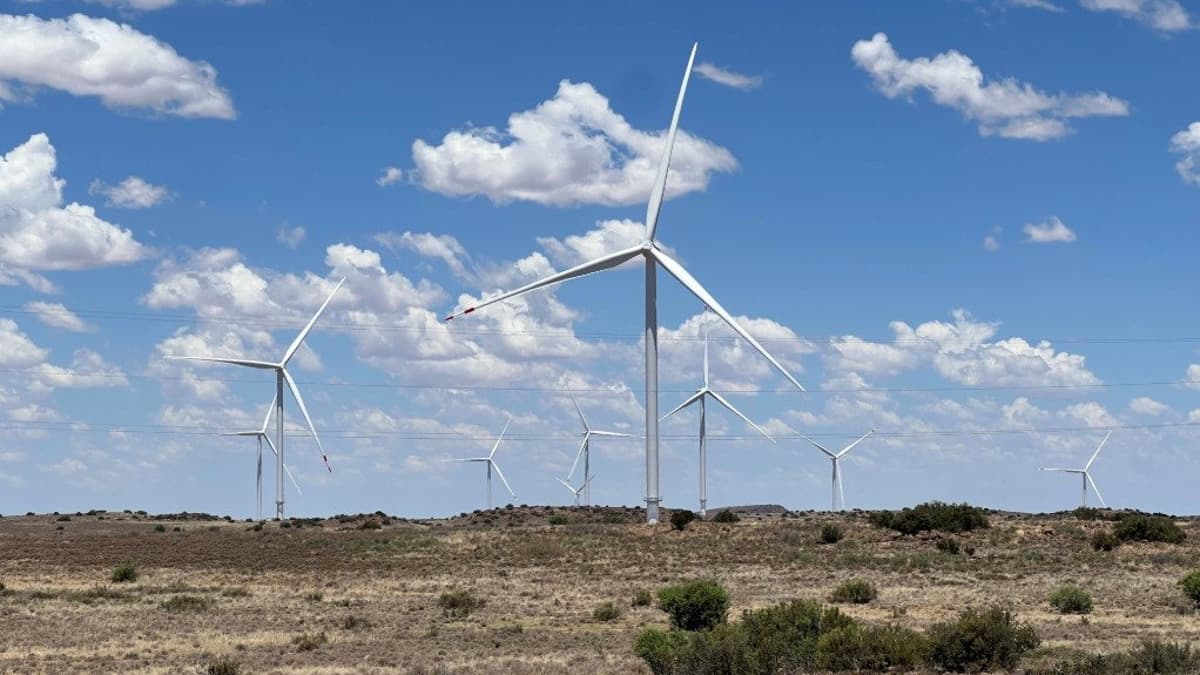
South Africa’s Pipeline of Advanced Wind Projects Stands at 17 GW – GWEC
Why It Matters
South Africa’s sizable, near‑term wind pipeline positions the nation as Africa’s premier renewable market, attracting foreign capital while highlighting the urgent need for grid upgrades to unlock that potential.
Key Takeaways
- •South Africa has 17 GW of advanced wind projects poised for construction.
- •Current operational wind capacity exceeds 4 GW, with 2.8 GW under construction.
- •Grid constraints in Western/Eastern Cape threaten project timelines.
- •Electricity Regulation Amendment Act enables market liberalisation and independent TSO.
- •R440 bn Transmission Plan (~$23 bn) lags behind renewable expansion.
Pulse Analysis
South Africa is emerging as the continent’s wind powerhouse, with the GWEC reporting 17 GW of projects at advanced development stages that could break ground by 2030. This pipeline builds on an existing 4 GW of operating capacity and 2.8 GW under construction, contributing to the Integrated Resource Plan’s target of 43 GW of new wind capacity by 2042. For investors, the sheer volume of projects signals a stable revenue stream, especially as the country seeks to diversify away from coal‑dependent generation and meet its decarbonisation commitments.
Policy momentum is a critical catalyst. The Electricity Regulation Amendment Act creates a legislative framework for a gradual liberalisation of the power sector, paving the way for an independent Transmission System Operator and encouraging private‑sector participation. Simultaneously, the unbundling of Eskom has elevated the National Transmission Company South Africa’s role in grid planning and connection processes. The government’s R440 billion Transmission Development Plan—approximately $23 billion—aims to expand capacity, yet its rollout is lagging behind the rapid surge in renewable projects, creating a mismatch that could curb future installations.
Grid constraints, particularly in the wind‑rich Western and Eastern Cape provinces, remain the most pressing challenge. Limited transmission corridors risk curtailment and delay financial close for new projects, underscoring the need for accelerated infrastructure investment. As global wind capacity approaches the 2 TW milestone by 2029, South Africa’s ability to resolve these bottlenecks will determine whether it can fully capitalise on its wind potential and sustain its status as Africa’s leading renewable market.
South Africa’s pipeline of advanced wind projects stands at 17 GW – GWEC
Comments
Want to join the conversation?
Loading comments...