Why It Matters
Automating acoustic verification cuts project timelines and labor costs, accelerating BIM‑driven HVAC design across the industry.
Key Takeaways
- •Design Assist automates HVAC acoustic calculations within Revit.
- •Large ventilation systems analyzed in under five minutes.
- •Software sizes and places sound attenuators automatically.
- •Plug‑in offered free to BIM‑based ventilation consultants.
Pulse Analysis
The acoustic performance of ventilation systems has long been a bottleneck in building design. Engineers must manually select and size sound attenuators, run calculations, and iterate revisions—a process that can stretch over several days for complex projects. As building information modeling (BIM) becomes the standard for coordination, the disconnect between geometric data and acoustic analysis grows more pronounced. Automating this step not only trims schedule risk but also aligns acoustic verification with the digital twin that architects and MEP teams already rely on.
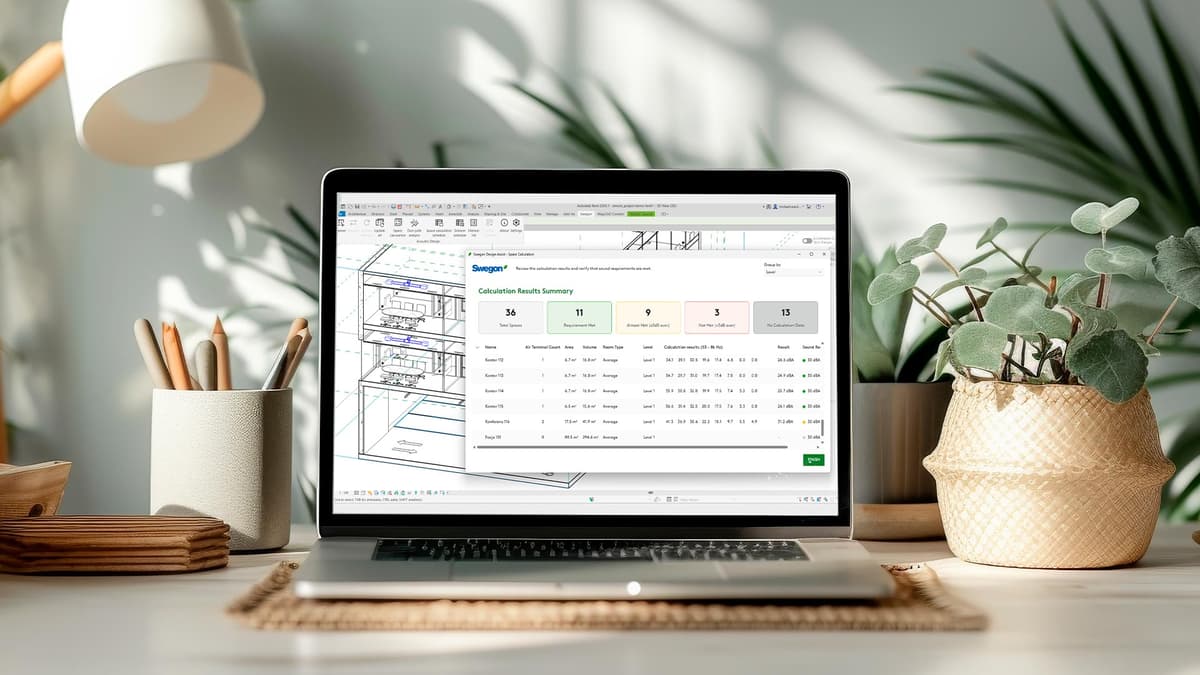
Swegon’s new Design Assist plug‑in embeds directly into Autodesk Revit, pulling space and duct data to perform full acoustic compliance checks in seconds. The tool automatically places the appropriate attenuator, sizes it to the duct dimensions, and regenerates space calculations, delivering results that the company claims are both transparent and highly reliable. For large ventilation networks, the entire analysis completes in under five minutes, a dramatic reduction from the days‑long manual workflow. By offering the plug‑in at no cost to BIM‑enabled consultants, Swegon removes financial barriers and encourages rapid adoption.
The release signals a broader shift toward end‑to‑end automation in the mechanical engineering sector. As firms embrace AI‑driven design assistants, the role of the engineer evolves from repetitive number‑crunching to higher‑level system optimization and interdisciplinary coordination. Competitors that lag in integrating such tools may face longer design cycles and higher labor costs, while early adopters can differentiate themselves with faster delivery and improved acoustic quality. Design Assist therefore not only streamlines a specific task but also sets a precedent for future BIM‑centric, AI‑enhanced workflows across the built environment.
Swegon to automate HVAC acoustic design
Comments
Want to join the conversation?
Loading comments...