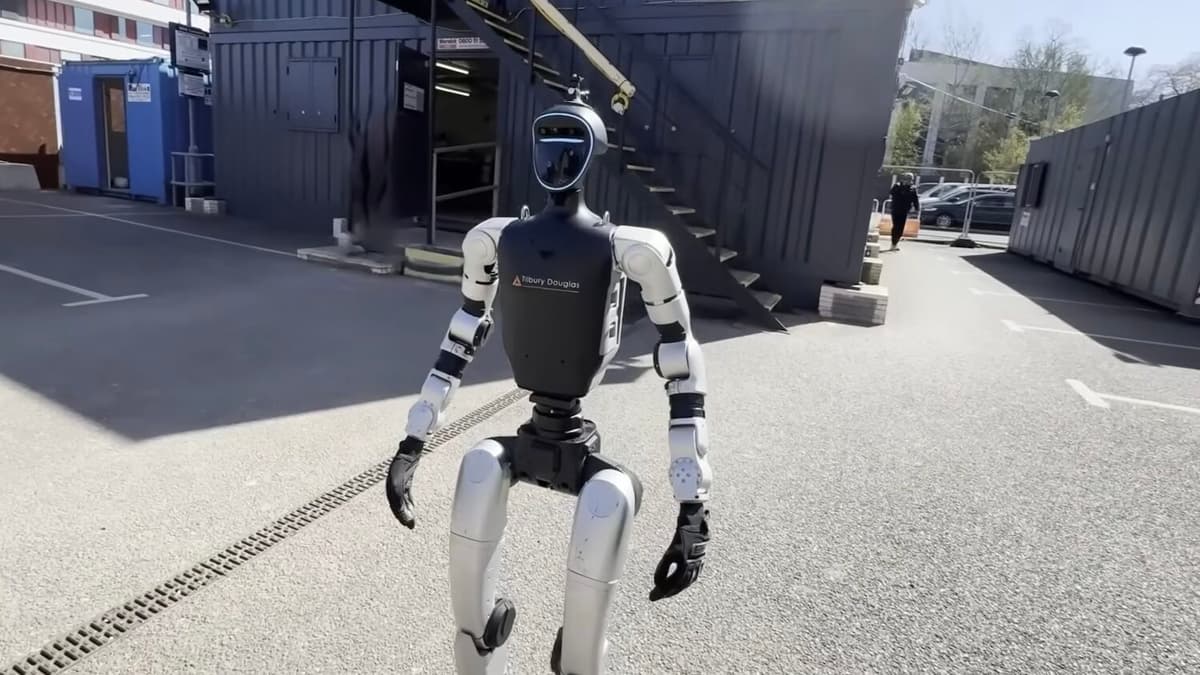
Tempering the Robot Revolution
Companies Mentioned
Why It Matters
Deploying a humanoid robot on a live site signals a new frontier for construction automation, promising efficiency gains while underscoring the need for human oversight and ethical AI practices.
Key Takeaways
- •Tilbury Douglas deployed humanoid robot Douglas on a live construction site
- •Robot uses Unitree G1 platform with LiDAR, depth camera, two‑hour battery
- •Douglas supports defect identification, safety monitoring, and progress reporting
- •All robot outputs require human review to ensure ethical AI use
- •Battery life and stability restrict autonomous operation to test areas only
Pulse Analysis
The introduction of Douglas marks a watershed moment for the construction sector, echoing the disruptive rollout of smartphones a decade ago. By embedding a humanoid form factor on a busy site, Tilbury Douglas demonstrates that AI can move beyond static sensors to interact with dynamic, cluttered environments. This leap is not merely a publicity stunt; it showcases how site managers can leverage real‑time 3‑D mapping and automated defect spotting to accelerate schedules and reduce rework, while still relying on seasoned professionals to interpret insights.
Technically, Douglas is a repackaged Unitree G1 robot, a 35‑kg, 130‑cm platform equipped with 43 joint motors, LiDAR and depth cameras that generate continuous 3‑D environment models. The robot runs Unitree’s UnifoLM perception engine, overlaid with Tilbury’s job‑specific AI trained since 2020. Despite its capabilities, the system is hampered by a two‑hour battery window and occasional stability issues on uneven terrain, necessitating spare batteries and a human handler. Safety protocols, including an emergency stop and blurred‑out video feeds, address workforce concerns about surveillance and ethical AI deployment.
Looking ahead, Douglas serves as a pilot for broader robotic integration across the industry. As battery technology improves—driven by advances in electric vehicles—longer‑lasting autonomous agents could become commonplace, complementing existing automation such as autonomous excavators. Regulatory frameworks remain nascent, but proactive risk assessments and transparent oversight can smooth adoption. If the robot’s ROI mirrors early smartphone economics, firms that master the human‑robot partnership early may secure a competitive edge in a market hungry for productivity and safety enhancements.
Tempering the robot revolution
Comments
Want to join the conversation?
Loading comments...