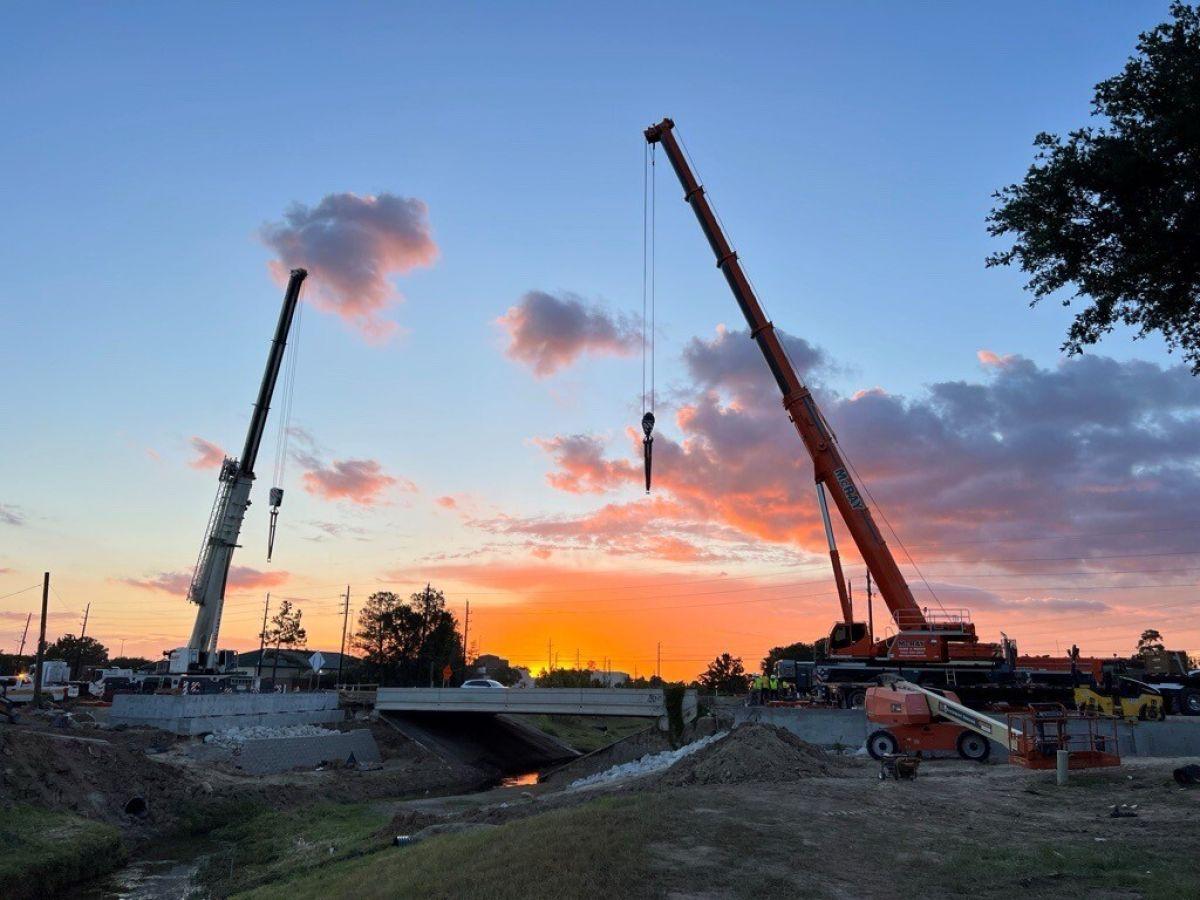
Texas FM 1960 Widening Work Nears Finish
Why It Matters
The expansion improves traffic capacity and safety for a fast‑growing suburban market, supporting regional economic activity and reducing congestion.
Key Takeaways
- •$128 million FM 1960 widening project near completion in Lake Houston.
- •Segment A cost $58.2 million; Segment B $70 million, includes new 2,000‑ft overpass.
- •Contaminated soil from historic Humble Oil Field required specialized remediation.
- •Utility relocations and unknown petroleum pipelines caused schedule delays.
- •11‑ft travel lanes and phased construction kept traffic moving during build.
Pulse Analysis
Texas continues to pour billions into its transportation network, and the FM 1960 widening illustrates how state agencies target high‑growth corridors. The Lake Houston area has seen a surge in residential and commercial development, prompting TxDOT to upgrade the former four‑lane farm‑to‑market road into a six‑lane divided concrete artery. By adding a 2,000‑foot overpass that bypasses three signalized intersections, the project not only boosts capacity but also streamlines freight movement, aligning with broader regional logistics strategies.
The project’s execution highlighted the complexities of modern infrastructure work in legacy environments. Unexpected utility conflicts, including undiscovered petroleum pipelines, and the detection of century‑old contaminated soil from the historic Humble Oil Field forced TxDOT to adapt traffic‑control plans and engage environmental specialists. The use of 11‑ft travel lanes, temporary lane closures, and phased construction allowed traffic to flow while crews performed extensive earthwork, concrete placement, and drainage installation. These tactics minimized congestion and demonstrated how flexible phasing can mitigate schedule overruns.
Upon completion, the widened FM 1960 will accommodate higher traffic volumes, improve safety with median barriers and sidewalks, and support the area’s economic expansion. The project serves as a case study for other jurisdictions facing similar growth pressures and legacy site issues, emphasizing the need for early utility mapping, robust environmental assessments, and adaptable construction sequencing. As Texas pursues its ambitious infrastructure agenda, lessons from FM 1960 will inform future road upgrades, ensuring that capacity gains are delivered without compromising community mobility or environmental compliance.
Texas FM 1960 Widening Work Nears Finish
Comments
Want to join the conversation?
Loading comments...