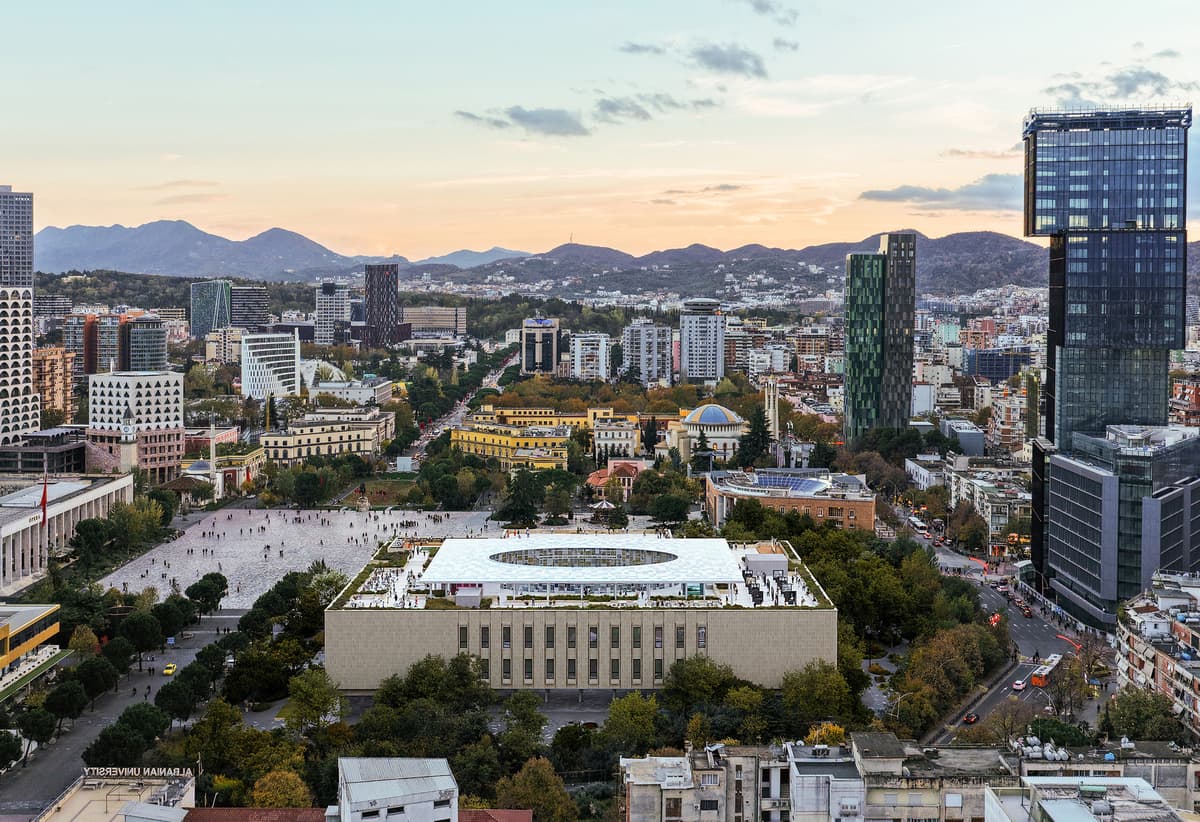
The Albanian Kaleidoscope - Reconstruction and Musealization of the National Historical Museum / Casanova + Hernandez Architects
Why It Matters
The project signals Albania’s shift toward open cultural expression and modern museology, boosting tourism and civic pride. It demonstrates how heritage sites can be revitalized without erasing their historical fabric.
Key Takeaways
- •Plug‑in Kaleidoscope inserts new circulation without demolishing historic structure.
- •Underground Black Box archive opens previously hidden collections to public.
- •Rooftop Square becomes free, year‑round cultural venue with city views.
- •Flexible galleries enable rotating exhibitions and interactive digital experiences.
- •Open ground‑floor plinth adds bookstore, café, and event spaces.
Pulse Analysis
Tirana’s skyline is rapidly evolving, but the city’s cultural backbone is catching up. The National Historical Museum, a relic of the 1980s communist era, once guided visitors through a single, state‑curated storyline. Today, Albania’s post‑communist renaissance demands a museum that reflects a pluralistic past and a forward‑looking identity. By preserving the original shell while inserting a contemporary “Kaleidoscope” layer, the architects honor the building’s heritage and meet global standards for adaptive reuse, a trend gaining momentum across Eastern Europe.
The Kaleidoscope intervention introduces four distinct elements that reshape visitor flow and public interaction. An underground Black Box archive lifts previously inaccessible collections into the public realm, while the elliptical History Windows create a light‑responsive façade that visualizes Albania’s diverse epochs. The new Path of History offers a flexible circulation spine, decoupling exhibition spaces from rigid routes, and the Roof Path—a helical staircase—opens a ticket‑free rooftop square with panoramic views of Skanderbeg Square. Ground‑level spaces now host a bookstore, café, and event venues, turning the former plinth into a vibrant civic hub.
Beyond architecture, the redesign embeds contemporary museology practices. Flexible galleries support rotating shows, and immersive technologies such as AR and VR deepen engagement, especially for younger audiences. By integrating education, digital interactivity, and open public areas, the museum positions itself as a catalyst for cultural tourism and community cohesion. The project illustrates how strategic architectural insertions can rejuvenate legacy institutions, offering a blueprint for other post‑communist capitals seeking to blend history with modern public life.
The Albanian Kaleidoscope - Reconstruction and Musealization of the National Historical Museum / Casanova + Hernandez Architects
Comments
Want to join the conversation?
Loading comments...