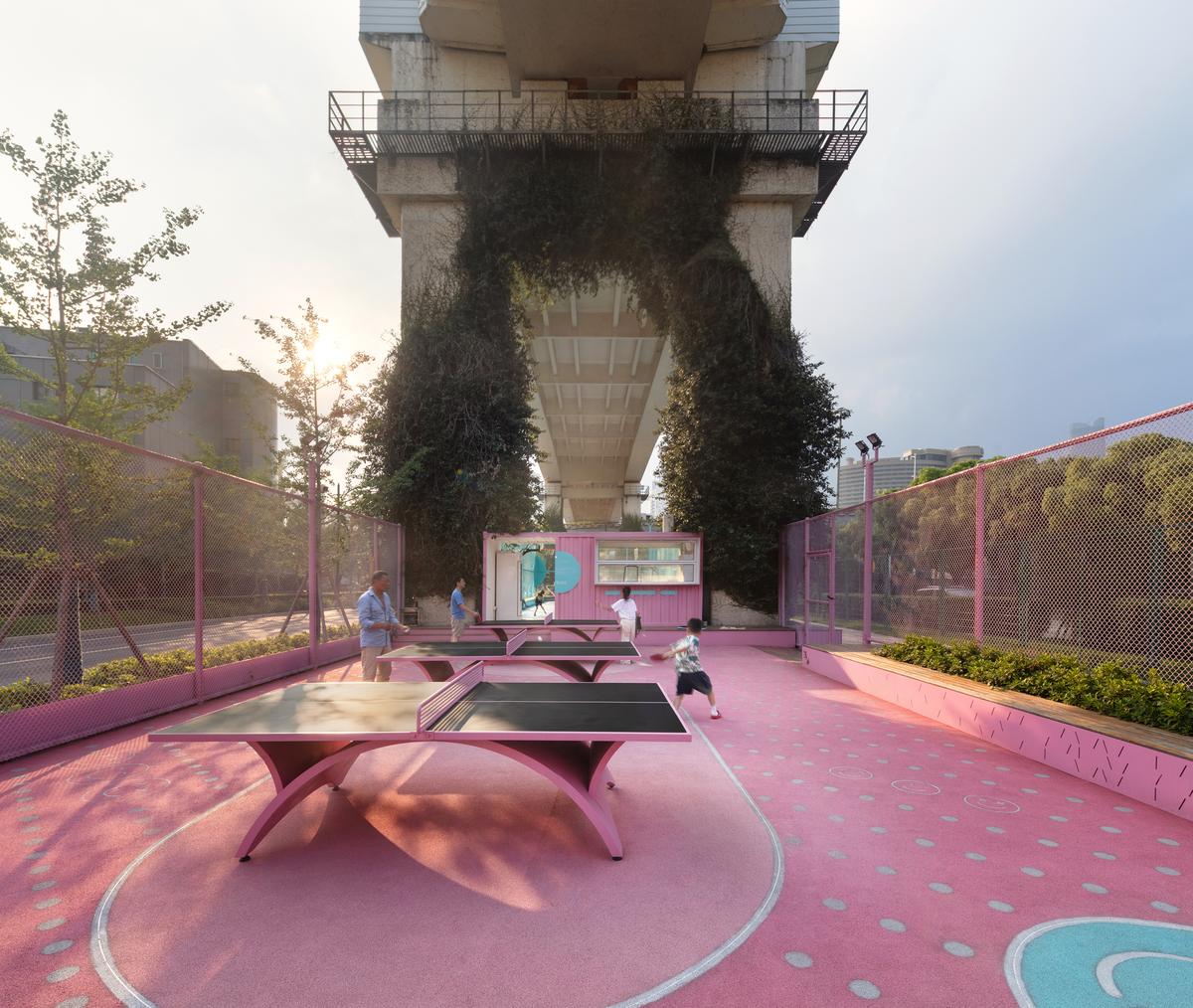
Why It Matters
By converting an underutilized, pollution‑prone space into a vibrant, health‑focused public amenity, the Happy Spot improves commuter well‑being, encourages active lifestyles, and demonstrates a scalable model for dense Asian cities facing similar infrastructure challenges.
Key Takeaways
- •3,540 m² under‑bridge transformed into free multi‑sport hub
- •Bright colour zones guide basketball, badminton, table‑tennis, play area
- •Health study placed high‑intensity sports away from exhaust source
- •Walkable distance to Xujiahui Sports Park reduced by 10 minutes
- •Project completed March 2025, enhancing commuter experience on Line 3
Pulse Analysis
Shanghai’s rapid urbanization has left many infrastructural gaps, especially beneath elevated rail lines where shadowed, underused spaces detract from city livability. The Happy Spot under the Light Rail tackles this issue head‑on, turning a 200‑meter‑long, 18‑to‑26‑meter‑wide undercroft into a vibrant public realm. Leveraging a holistic urban‑design framework, the project aligns spatial logic with community health needs, delivering a free, multi‑sport venue that directly addresses resident demand for accessible fitness options despite the proximity of the larger Xujiahui Sports Park.
The design’s core innovation lies in its three typological zones, each marked by distinct bright colours and low‑, mid‑, or high‑barrier netting. This visual hierarchy not only clarifies function—ranging from children’s play to basketball and table tennis—but also enhances safety and wayfinding. Health assessments guided the placement of high‑intensity activities away from the western side, where exhaust from the Inner Ring Elevated Road concentrates, thereby mitigating exposure to dust, noise, and emissions. By integrating circular graphics and emoji‑style signage, the space creates an engaging, joyful atmosphere that encourages spontaneous use and social interaction among commuters and local residents.
Beyond immediate community benefits, the Happy Spot serves as a replicable template for cities grappling with similar under‑bridge environments. It demonstrates how strategic colour coding, health‑focused zoning, and modest infrastructure investment can transform neglected corridors into public health assets. As Shanghai anticipates over 6.2 million registered vehicles by 2025, such interventions become increasingly vital for offsetting urban pollution impacts and fostering resilient, active neighborhoods.
the Happy Spot under the Light Rail / VIASCAPE design
Comments
Want to join the conversation?
Loading comments...