The Lesotho Highland Water Project Marks Important Milestones
Why It Matters
The infrastructure secures long‑term water supply for South Africa while catalyzing economic growth in Lesotho, demonstrating how cross‑border projects can deliver strategic resource security and inclusive development.
Key Takeaways
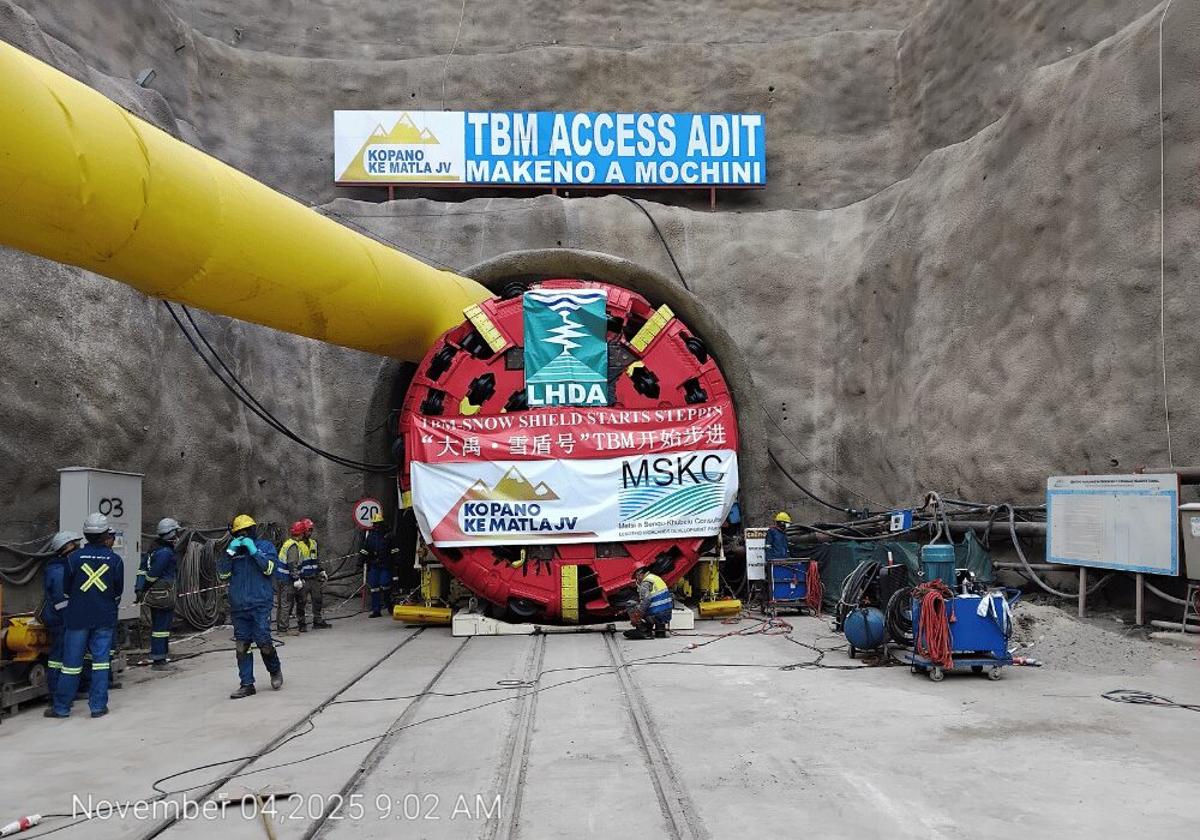
- •Polihali Tunnel excavation underway; TBMs advanced 600 m and 230 m
- •Over 7.7 million m³ rockfill placed; dam height 165 m target
- •Reservoir holds 2.33 billion m³, more than double Phase I capacity
- •825‑m Senqu Bridge, Lesotho’s longest, uses extradosed design
- •Local procurement exceeds $150 million; 3,800+ jobs created
Pulse Analysis
The Lesotho Highlands Water Project’s Phase II marks a turning point for regional water security. By linking the new Polihali Reservoir to the existing Katse system via a 38.5‑km transfer tunnel, the initiative adds roughly 2.33 billion cubic metres of storage—enough to meet growing demand in South Africa’s Gauteng province and buffer against climate variability. The dual‑method tunnelling approach, combining TBM‑driven concrete lining for 34.5 km and drill‑and‑blast for complex zones, balances speed with cost efficiency, setting a benchmark for large‑scale water conveyance projects worldwide.
Beyond the engineering feats, the Polihali Dam’s massive rock‑fill embankment and 165‑metre crest will create Africa’s largest concrete‑faced rock‑fill dam. Its capacity more than doubles that of the earlier Mohale Dam, reinforcing the basin’s ability to regulate flow and generate hydro‑electric power. The accompanying Senqu Bridge, an 825‑metre extradosed structure, not only restores vital road connectivity for remote communities but also showcases innovative design that can withstand fluctuating reservoir levels, a critical consideration for future dam‑linked transport corridors.
Socio‑economic impacts are equally compelling. With over $150 million directed to Lesotho‑based firms and South African contractors, the project injects capital into local supply chains and stimulates skill development for more than 1,100 trainees. Employment figures exceed 3,800, with a 90 percent local hiring rate, underscoring the project’s role as a development catalyst. As a bi‑national treaty‑driven venture, the LHWP illustrates how strategic infrastructure can simultaneously address resource scarcity, foster cross‑border cooperation, and drive inclusive growth across the Southern African region.
The Lesotho Highland Water Project Marks Important Milestones
Comments
Want to join the conversation?
Loading comments...