Why It Matters
Vertical parking maximizes scarce airport real estate, unlocking revenue‑generating amenities and reducing congestion. It offers a scalable, future‑proof solution as passenger numbers and mobility options continue to grow.
Key Takeaways
- •Vertical parking can reduce land use by up to 40%
- •Reclaimed space enables hotels, concessions, or new gates
- •Higher upfront cost offsets with lower maintenance and faster build
- •EV‑ready designs align with airports’ sustainability goals
Pulse Analysis
Air travel demand is on a steady upward trajectory, with IATA reporting a 5.3% increase this year. That growth translates into more vehicles on airport aprons, stretching already cramped access roads, surface lots, and circulation zones. Historically, airports have responded by expanding outward—investing billions in new terminals and sprawling parking fields. While this buys short‑term capacity, it consumes valuable acreage that could otherwise support passenger‑centric amenities, revenue‑generating concessions, or multimodal connections, ultimately limiting long‑term profitability.
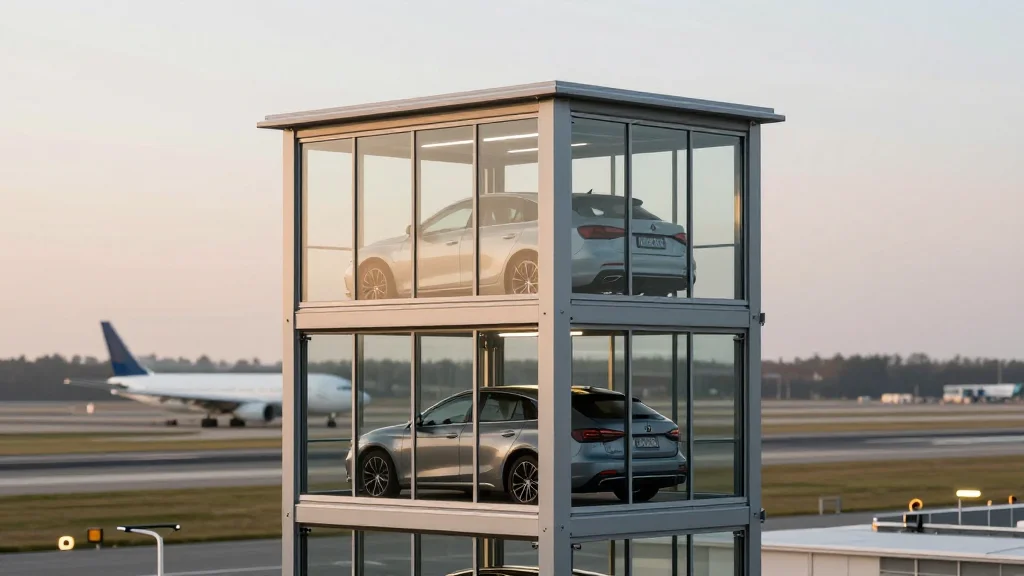
A vertical alternative is gaining traction among forward‑thinking operators. Multi‑level parking structures compress the same number of spaces into a footprint up to 40% smaller, freeing land for higher‑value development. McAllen International Airport’s $176 million terminal expansion incorporates such a design, illustrating how reclaimed acreage can accommodate additional gates, hotels, or logistics hubs. Beyond space efficiency, stacked parking centralises entry and exit points, streamlining vehicle flow and improving wayfinding. Integrated electric‑vehicle charging further aligns with sustainability mandates, positioning airports to meet the rising demand for greener travel options.
Implementing vertical parking requires a disciplined framework: conduct a space audit, model passenger and vehicle flows, and compare lifecycle costs. Although initial capital outlays are higher than surface lots, faster construction timelines, reduced maintenance, and the potential for premium ancillary revenue often yield superior returns. As mobility evolves—rideshare, micro‑mobility, and autonomous vehicles—the flexibility of compact, modular parking becomes a strategic asset. Airports that adopt this approach can shift from merely adding capacity to building adaptable, revenue‑rich ecosystems that future‑proof their operations.
The only way is up!
Comments
Want to join the conversation?
Loading comments...