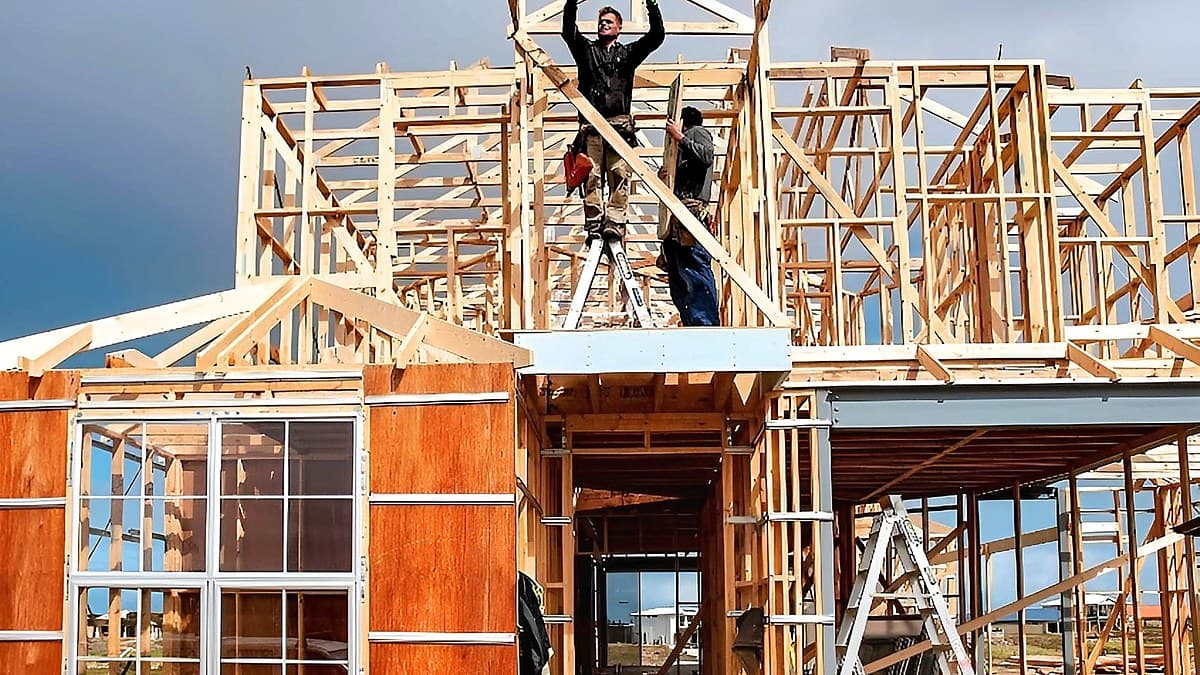
Timber Framing First in Line as Budget Carves Out Negative Gearing
Companies Mentioned
Why It Matters
By channeling tax incentives to new‑build projects, the reform aims to ease Australia’s housing shortage while strengthening the domestic timber industry, creating jobs and reducing reliance on imports.
Key Takeaways
- •Negative gearing now applies only to newly‑built residential properties
- •Estimated $12.3 bn (≈$8.1 bn) tax spend targeted for reduction
- •Timber frame sector poised for surge in new‑build demand
- •$500 m (≈$330 m) EPBC reform funding supports forestry transition
- •Build‑to‑rent investors shift toward mass‑timber apartment projects
Pulse Analysis
Australia’s 2026‑27 budget marks a decisive shift in negative‑gearing policy, limiting the tax break to newly‑constructed residential properties. Treasury Minister Jim Chalmers framed the move as a correction to intergenerational housing inequity, aiming to curb an estimated $12.3 billion (≈$8.1 bn) annual tax outlay. By preserving the 50 % capital‑gains discount for existing investors, the government avoids a broader overhaul while still steering fresh capital toward the construction pipeline. This targeted approach is expected to redirect investor funds from legacy properties into the supply‑side, potentially accelerating the delivery of new homes.
The timber framing and truss industry stands to be the primary beneficiary. Comprising roughly 280 firms, the sector underpins about 80 % of Australia’s detached and semi‑detached housing stock. With the government’s $500 million (≈$330 m) EPBC Act reform package and a dedicated $28 million (≈$18.5 m) transition fund for forestry, the industry gains both regulatory clarity and financial support to scale prefabricated frame, panel and roof‑truss production. These investments align with the nation’s goal of completing 1.2 million homes by June 2029, positioning timber as the default, low‑carbon building material.
Beyond the immediate housing boost, the policy catalyzes a broader shift toward modern construction methods. Institutional investors, already active in the build‑to‑rent market, are channeling capital into mass‑timber apartment towers, exemplified by Sumitomo Forestry’s $1.2 billion (≈$792 m) Trans‑Tasman pipeline and its 51 % stake in Metricon, Australia’s largest housebuilder. The convergence of tax incentives, targeted funding, and growing demand for sustainable building solutions could reshape the country’s construction landscape, delivering faster, greener housing while reinforcing the domestic timber supply chain.
Timber Framing First in Line as Budget Carves Out Negative Gearing
Comments
Want to join the conversation?
Loading comments...