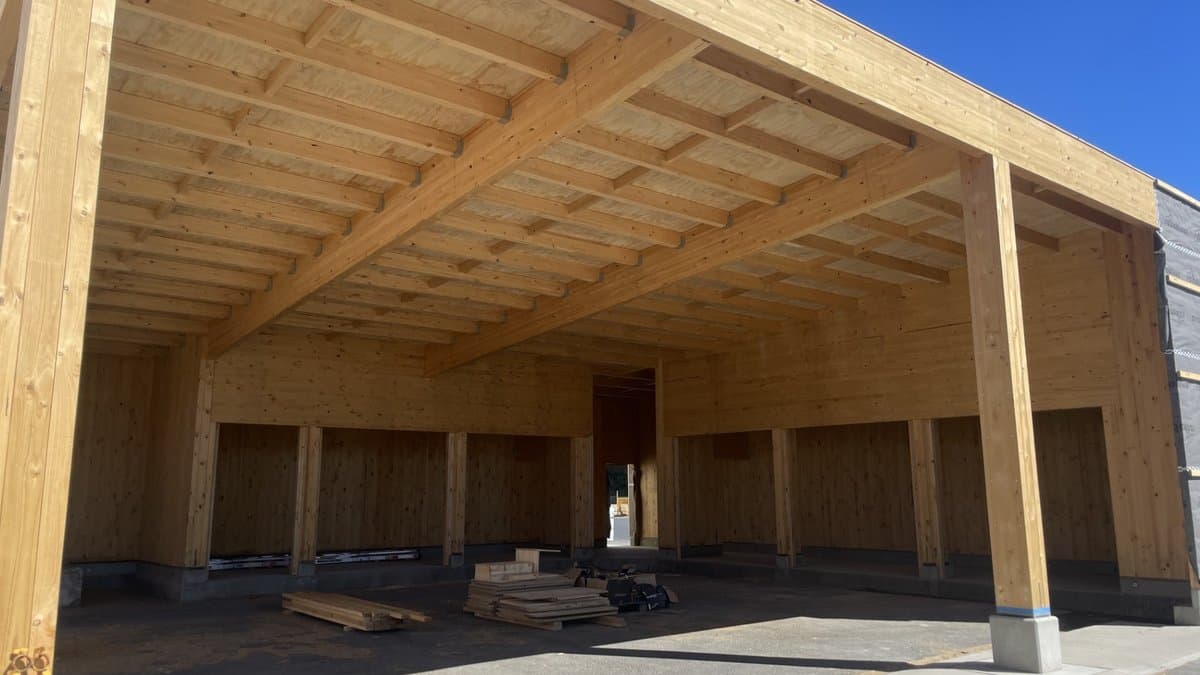
Timberlink Builds a New Charging Facility Out of Its Own NeXTimber
Companies Mentioned
Why It Matters
The shift to an electric fleet cuts greenhouse‑gas emissions and reduces reliance on diesel, while the timber‑based charging hub showcases a carbon‑sequestering alternative to steel structures, positioning Timberlink as a sustainability leader in Australian manufacturing.
Key Takeaways
- •Charging building constructed from Timberlink's own NeXTimber CLT and glulam
- •Centralized facility reduces forklift‑traffic conflicts and improves safety compliance
- •Electric forklift fleet slated to start operations in April 2026
- •Project supports 600‑plus jobs and regional economic growth on Limestone Coast
Pulse Analysis
Timberlink’s NeXTimber plant in Tarpeena marks a milestone for Australia’s nascent mass‑timber sector. As the country’s only combined cross‑laminated timber (CLT) and glulam mill, it supplies engineered radiata pine to domestic builders, reducing dependence on imported panels and keeping carbon locked in wood for the life of a structure. The decision to fabricate the new battery‑charging building from the same NeXTimber products underscores a growing confidence in timber’s structural performance, even in industrial settings where failure is not an option.
The charging hub consolidates power for an upcoming fleet of electric forklifts, slated to roll out in April 2026. Unlike a dispersed network of chargers, the single‑storey timber building houses ventilation systems, battery‑handling zones and safety interlocks that were vetted through a rigorous HAZOP study. By separating charging operations from active material handling areas, Timberlink mitigates fire risk, streamlines maintenance and complies with tighter occupational‑health standards that exceed those required for diesel equipment.
Globally, manufacturers are turning to mass timber for low‑carbon infrastructure such as EV‑charging canopies and fuel‑station roofs, a trend that Timberlink now brings to the heavy‑industry arena. The project not only creates additional jobs on South Australia’s Limestone Coast—contributing to the region’s 600‑plus timber workforce—but also demonstrates a replicable model for other plants seeking to decarbonize. As governments push for greener supply chains, timber‑based solutions that combine structural efficiency with carbon sequestration are likely to attract further investment and policy support.
Timberlink Builds a New Charging Facility Out of its Own NeXTimber
Comments
Want to join the conversation?
Loading comments...