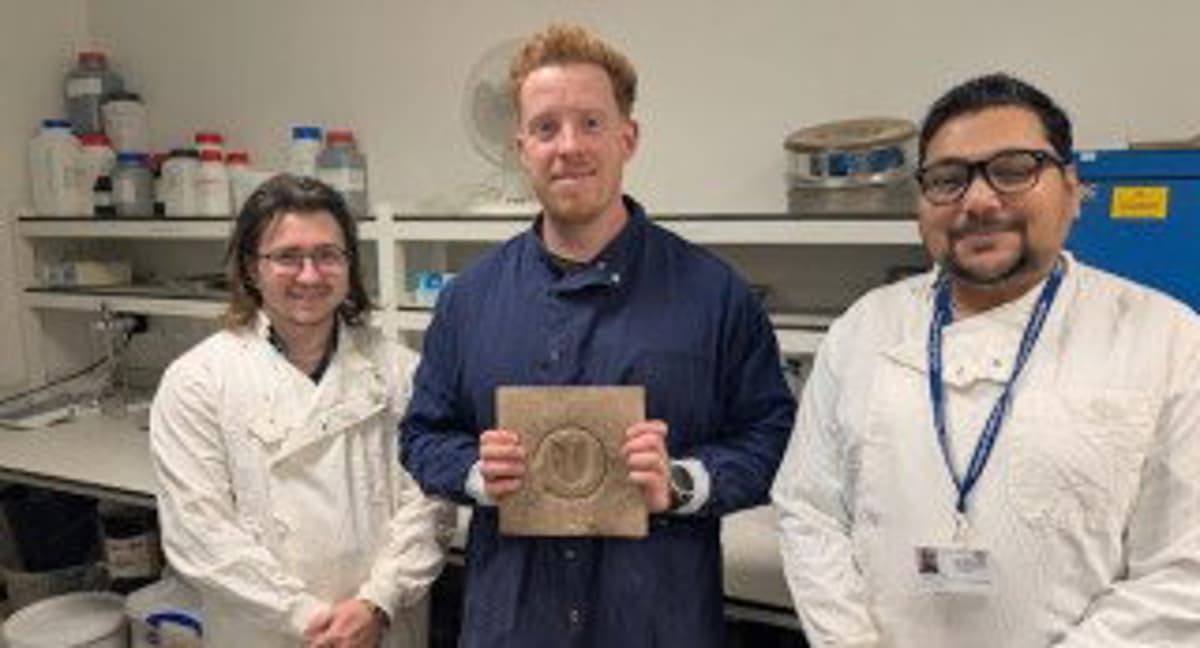
Ureaka Advances Carbon-Negative SCM Technology
Why It Matters
The technology offers a dual climate benefit—diverting construction waste and locking away CO₂—while providing the concrete sector with a drop‑in, lower‑carbon alternative to traditional cement, accelerating industry decarbonisation goals.
Key Takeaways
- •Ureaka recovers calcium, silica from demolition waste for SCMs.
- •Process mineralises CO₂, creating carbon‑negative cement replacement.
- •Moving from lab to factory‑scale modelling and live testing.
- •Seeking grant funding and seed round to accelerate commercialization.
- •SCMs integrate with existing concrete production without equipment changes.
Pulse Analysis
The global cement industry accounts for roughly 8% of total CO₂ emissions, making low‑carbon alternatives a strategic priority. Ureaka’s approach tackles two pain points simultaneously: it diverts inert construction debris from landfills and converts that waste into a value‑added product. By sourcing calcium and silica directly from demolished concrete, the process reduces the need for virgin raw materials, cutting both extraction costs and associated emissions. The captured CO₂ is chemically bound into the SCM, delivering a carbon‑negative footprint that can be quantified for corporate sustainability reporting.
Technically, the spin‑out employs a hydro‑thermal reaction where recovered minerals are slaked and then carbonated under controlled pressure. This mineralisation locks CO₂ in a stable carbonate matrix, ensuring permanence unlike temporary storage solutions. The resulting SCM can replace a significant portion of Portland cement in concrete mixes without altering existing batching equipment or curing regimes. Early lab data suggest comparable strength development and durability, positioning the material as a viable, low‑carbon supplement for a range of construction applications, from residential slabs to high‑rise structures.
Commercially, Ureaka is moving beyond proof‑of‑concept, leveraging the Industrial Biotechnology Innovation Centre’s Spin‑Out Fund to fund pilot‑scale production and third‑party validation. The upcoming seed round will finance scale‑up, market entry, and regulatory approvals. If successful, the technology could unlock new revenue streams for demolition contractors and cement producers alike, while helping governments meet tightening climate targets. Its ability to integrate seamlessly into current concrete supply chains makes it a compelling proposition for investors seeking impact‑driven returns in the built‑environment sector.
Ureaka advances carbon-negative SCM technology
Comments
Want to join the conversation?
Loading comments...