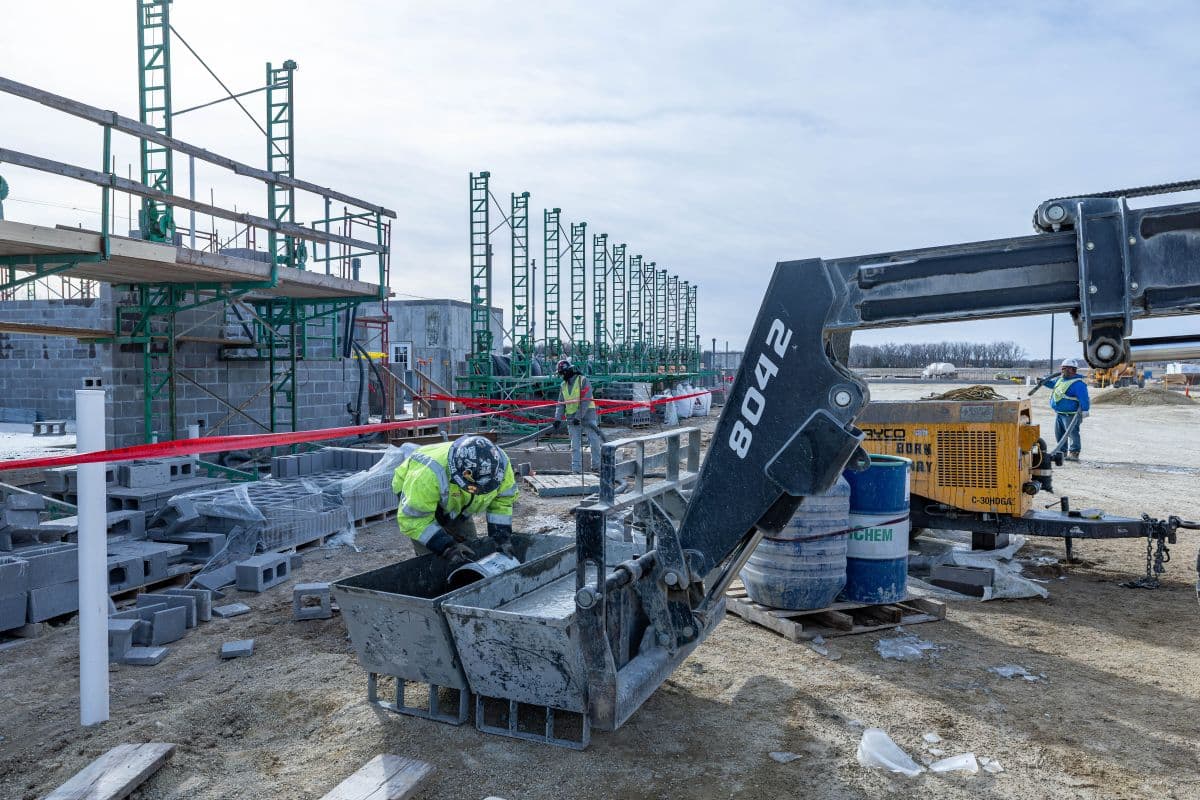
USACE Handles Hangar Construction at Fort Riley, Kan.
Why It Matters
The upgrade expands Fort Riley’s capacity to maintain and deploy critical rotary‑wing assets, directly supporting Army readiness and operational tempo. It also showcases modern construction techniques that can be replicated across other defense installations.
Key Takeaways
- •USACE leads $83 million hangar and runway upgrade at Fort Riley
- •New two‑story admin building and 220‑space lot will support four helicopters
- •Construction includes storm‑water basins and tornado‑resistant design
- •BIM 3D modeling speeds planning and improves accuracy
- •Project slated for completion August 2026, boosting Army readiness
Pulse Analysis
Fort Riley, home to the storied First Infantry Division, is one of the Army’s largest training installations, supporting roughly 15,000 active‑duty soldiers and over 18,000 family members. The latest USACE‑led project injects $83 million into the base’s aviation infrastructure, delivering a purpose‑built hangar for AH‑64 Apache, UH‑60 Black Hawk, and CH‑47 Chinook helicopters. By consolidating utilities, adding a two‑story administration wing, and constructing a 220‑space parking lot, the development addresses a decades‑long gap in modern rotary‑wing facilities, positioning the post as a hub for aircraft maintenance and rapid deployment.
Beyond the visible structures, the project incorporates advanced engineering safeguards tailored to Kansas’s severe weather. Designers installed a 7‑foot security fence, reinforced concrete masonry façades, and underground storm‑water retention basins to mitigate flooding and debris hazards. The runway apron will feature a six‑foot rock subbase topped with a nine‑inch airfield‑grade pavement, ensuring durability under heavy helicopter traffic. Leveraging building information modeling (BIM), engineers generated precise 3D models that accelerated coordination among contractors, reduced rework, and enhanced overall project accuracy—a practice increasingly adopted across military construction portfolios.
Strategically, the new hangar and support facilities will boost the Army’s combat readiness by expanding storage, maintenance, and sortie generation capacity for critical attack and lift platforms. Completion slated for August 2026 aligns with broader Department of Defense initiatives to modernize aging infrastructure and improve force projection. The project also serves as a template for future installations, demonstrating how integrating BIM, resilient design, and comprehensive utility planning can deliver cost‑effective, mission‑critical upgrades for the nation’s defense assets.
USACE Handles Hangar Construction at Fort Riley, Kan.
Comments
Want to join the conversation?
Loading comments...