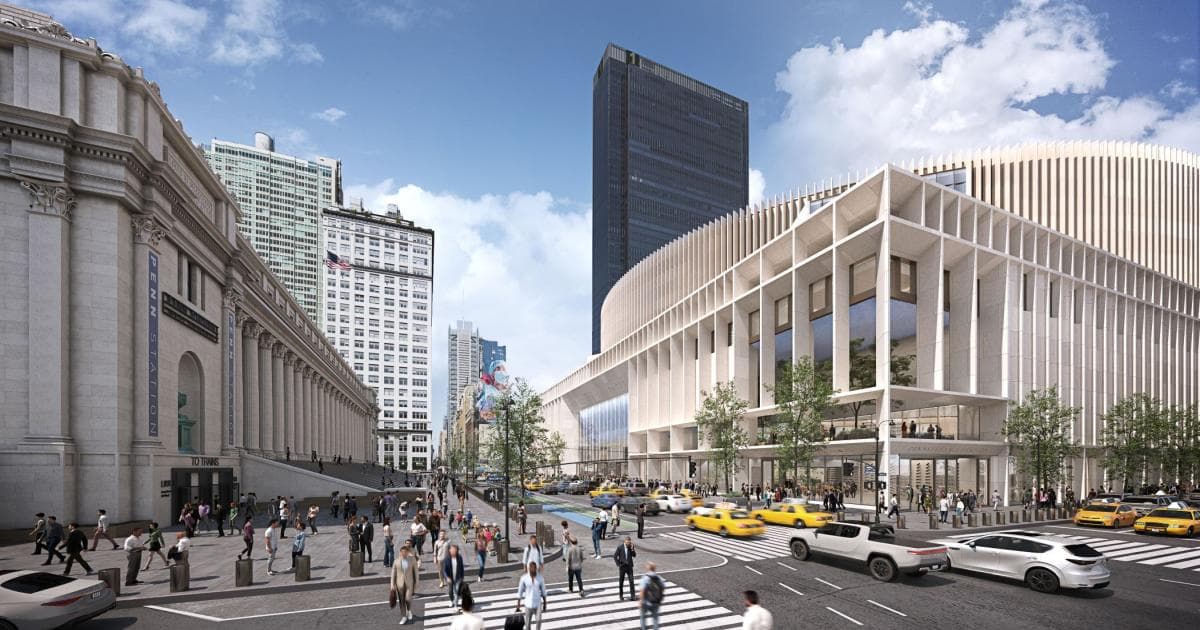
USDOT and Amtrak Name Developers for $7B Penn Station Renovation
Why It Matters
The renovation will boost passenger capacity and modernize a critical transportation hub, driving economic activity in Manhattan’s financial district.
Key Takeaways
- •Halmar and Skanska lead $7 B Penn Station master developer team.
- •New Eighth Avenue entrance and larger concourses improve passenger flow.
- •Track capacity expands with limited through‑running, easing rush‑hour congestion.
- •FRA allocates $200 M for design, accelerating project timeline.
Pulse Analysis
Penn Station, the busiest intercity rail hub in the United States, has operated beyond its design capacity for decades, prompting calls for a comprehensive overhaul. The aging concourse, cramped platforms and limited access points have constrained passenger experience and hindered regional growth. Previous renovation proposals stalled over funding gaps and the complex ownership structure involving the MTA, Amtrak and private stakeholders. The latest federal‑state partnership reflects a renewed political will to modernize the gateway to Manhattan, aligning with broader infrastructure initiatives championed by the Bipartisan Infrastructure Law.
The Department of Transportation and Amtrak announced Penn Transformation Partners—led by construction giants Halmar and Skanska—as the master developer for a $7 billion transformation. Key elements include a new Eighth Avenue entrance, expanded concourses, upgraded wayfinding, and a reconfigured track layout that adds limited through‑running to boost capacity. Crucially, the design avoids displacing Madison Square Garden, preserving a major entertainment venue. The Federal Railroad Administration is injecting $200 million for design and permitting, accelerating the schedule with construction targeted to start before the close of 2027. The developer consortium brings global expertise in large‑scale transit projects, promising efficient delivery.
Beyond the physical upgrades, the project is poised to reshape New York’s economic landscape. Enhanced passenger flow and increased train frequency will attract more commuters and tourists, supporting retail and hospitality sectors in the surrounding Midtown corridor. By shifting oversight from the MTA to Amtrak and USDOT, the renovation underscores a federal commitment to rail infrastructure, potentially unlocking additional private investment in adjacent real‑estate developments. Industry analysts anticipate that the modernized Penn Station will strengthen Amtrak’s market position, improve on‑time performance, and serve as a template for similar upgrades at legacy stations nationwide.
USDOT and Amtrak name developers for $7B Penn Station Renovation
Comments
Want to join the conversation?
Loading comments...