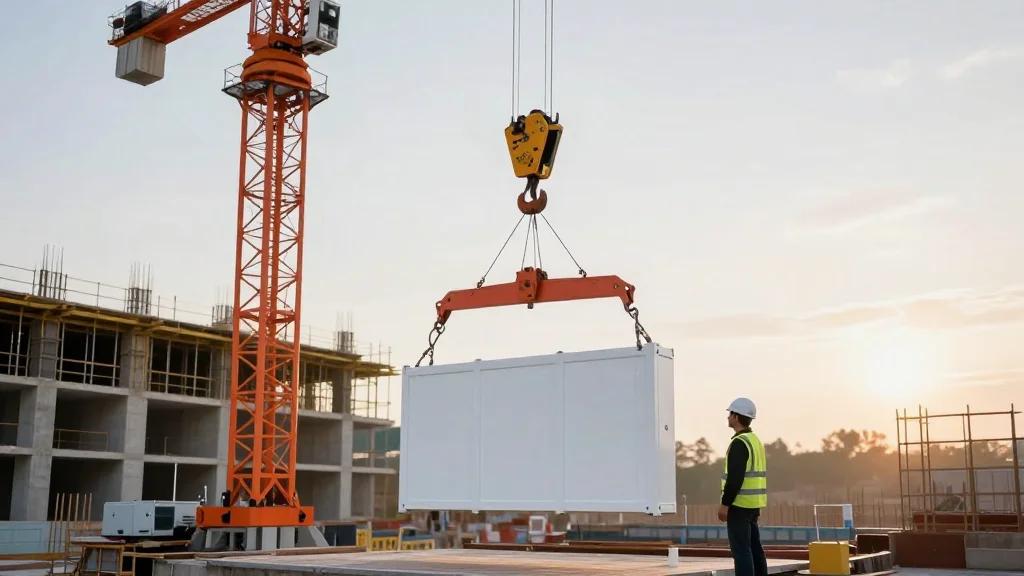
Victoria Building Future Construction Skills
Why It Matters
A skilled MMC workforce will enable faster, higher‑quality housing delivery while supporting economic growth and diversifying construction jobs. This initiative directly addresses Victoria’s housing shortage and national skills gaps.
Key Takeaways
- •Centre offers micro‑credentials for MMC upskilling
- •MMC could boost housing delivery 20‑50%
- •Certificate III in Prefabrication Installation bridges skills gap
- •Industry Advisory Panel guides curriculum relevance
- •Off‑site construction creates safer, flexible jobs
Pulse Analysis
Victoria’s target of 800,000 new homes by 2034 sits against a looming population of 10.3 million by 2051, putting pressure on traditional building methods. Modern methods of construction (MMC)—including modular, panelised and prefabricated systems—promise 20‑50 percent faster delivery and higher quality, yet adoption remains limited in Australia. The bottleneck is not land or approvals but a skilled workforce capable of designing, fabricating and assembling components off‑site. Addressing this gap requires coordinated policy, industry engagement and a training infrastructure that can keep pace with rapid technological change.
The Future of Housing Construction Centre of Excellence, housed at Melbourne Polytechnic’s Heidelberg campus, is the state’s response to that skills shortage. Funded through the 2024‑2029 National Skills Agreement, the Centre maps the MMC ecosystem, convenes an Industry Advisory Panel, and delivers targeted education. Its inaugural course reached 84 students in 2025, and a suite of six micro‑credential pathways—ranging from BIM for trades to logistics fundamentals—will launch in 2026. By offering flexible programs from one‑day workshops to six‑month certifications, the Centre aligns vocational education with employer needs, creating a pipeline of ready‑to‑work talent.
Beyond speed, MMC reshapes construction labour dynamics. Off‑site manufacturing moves work into controlled, digitally enabled factories, attracting workers who prefer predictable hours and safer environments, including women and career‑changers. The new Certificate III in Prefabrication Installation bridges the gap between factory production and on‑site assembly, ensuring precision and compliance. As TAFEs and polytechnics embed these curricula, the broader industry can expect reduced waste, lower carbon footprints, and more resilient supply chains. In the long run, a skilled MMC workforce will be a cornerstone of Victoria’s housing strategy and a model for national construction reform.
Victoria building future construction skills
Comments
Want to join the conversation?
Loading comments...