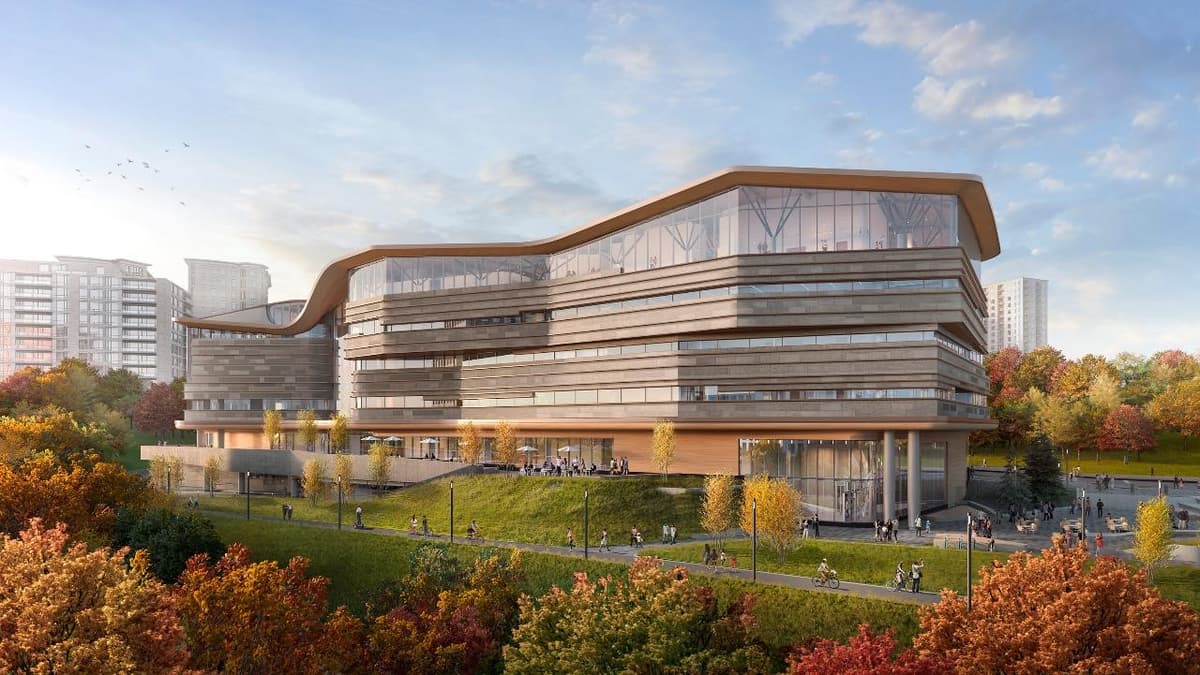
Wave-Roofed Ādisōke Library Advances with Indigenous Design, Net-Zero Features
Why It Matters
The project demonstrates how civic infrastructure can fuse Indigenous cultural narratives with high‑performance sustainability, setting a benchmark for future public buildings. Its net‑zero target and community‑focused spaces aim to cut operational emissions while deepening public engagement.
Key Takeaways
- •$334 million CAD (≈ $244 million USD) library project in Ottawa.
- •Wave roof and red cedar echo Ottawa River and Indigenous heritage.
- •Net‑zero design uses solar panels, district‑energy, green concrete.
- •Custom fixtures and Indigenous art extend construction timeline.
- •216,000 sq ft facility will house public library and national archives.
Pulse Analysis
Ottawa’s new Ādisōke library is more than a replacement for an aging branch; it is a statement of how public architecture can honor place‑based storytelling while meeting aggressive climate goals. The $334 million CAD investment, now roughly $244 million USD, funds a five‑storey, 216,000‑square‑foot structure whose wave‑shaped roof mirrors the Ottawa River and whose red cedar façade references Algonquin traditions. By integrating Indigenous motifs—such as ceramic‑fritted windows that depict strawberry healing symbols—the design embeds cultural relevance into every surface, positioning the library as a living museum of local heritage.
Sustainability sits at the core of Ādisōke’s engineering. The building achieves net‑zero carbon status through a blend of on‑site solar arrays, connection to a district‑energy system, and the use of low‑embodied‑carbon “green” concrete. Triple‑glazed windows, airtight construction, and extensive daylighting cut heating and cooling loads, while a green roof and vertical garden manage storm‑water and improve indoor air quality. Reclaimed wood and locally sourced materials further reduce embodied emissions, illustrating a holistic approach that balances operational efficiency with material stewardship.
The library’s delayed timeline underscores the challenges of marrying custom cultural elements with cutting‑edge green technology, but it also signals a shift in public sector priorities. As municipalities worldwide grapple with climate commitments and calls for reconciliation, projects like Ādisōke provide a replicable template: prioritize community narratives, adopt net‑zero standards, and embed flexible, low‑carbon infrastructure. The outcome is a civic hub that not only serves as a repository of knowledge but also models the future of sustainable, inclusive public spaces.
Wave-roofed Ādisōke library advances with Indigenous design, net-zero features
Comments
Want to join the conversation?
Loading comments...