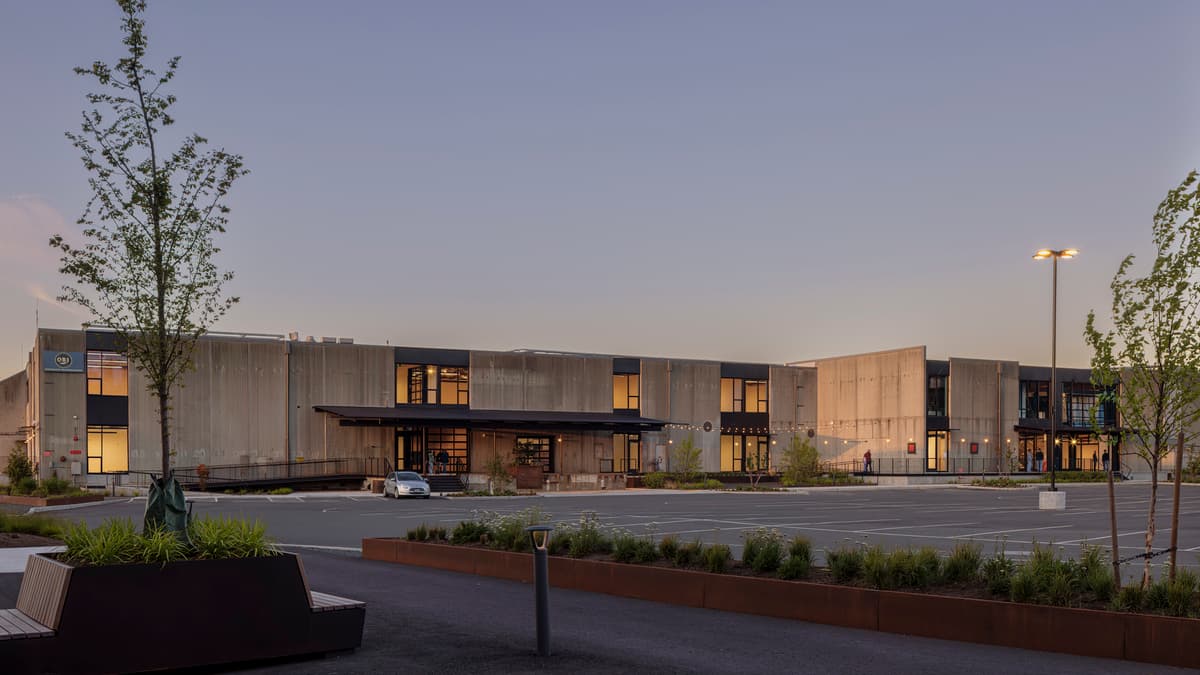
Why It Matters
The adaptive‑reuse injects new economic activity into a dormant industrial zone, creating a model for waterfront redevelopment that balances heritage preservation with modern flexibility.
Key Takeaways
- •30,000 sq ft freezer converted into light‑filled mixed‑use campus.
- •Glass façade and skylight “zipper” introduce daylight to former industrial core.
- •Steel and mass‑timber mezzanines add flexible, two‑level tenant spaces.
- •1,000 ft of wharf frontage positions site for marine‑related businesses.
- •First phase of multi‑decade waterfront revitalization between Ballard and Queen Anne.
Pulse Analysis
Seattle’s Ship Canal corridor has long been a hub for fishing and maritime commerce, but many of its industrial structures fell into disuse as the city’s economy shifted toward tech and services. Adaptive reuse projects like West Canal Yards illustrate a broader trend where cities repurpose legacy facilities to meet contemporary demand for flexible workspaces, while preserving the cultural memory of waterfront labor. By converting a 30,000‑square‑foot freezer into a bright, multi‑tenant campus, developers tap into underutilized real estate without the environmental cost of new construction.
The architectural strategy hinges on transparency and material contrast. Large glass panels replace portions of the original tilt‑up concrete, creating visual connections to the water and allowing natural light to penetrate deep into the 22‑foot‑tall volume. A central “zipper” of skylights runs the building’s length, while steel and mass‑timber mezzanines introduce a second level without compromising the historic shell. These interventions not only improve energy efficiency but also attract a diverse tenant mix—makers, marine‑tech firms, and public‑facing businesses—who benefit from the site’s 1,000 feet of wharf frontage and ample parking.
Beyond the immediate site, West Canal Yards signals a shift in Seattle’s zoning and planning approach. Navigating complex shoreline and marine‑industrial regulations, the project demonstrates how flexible, phased development can reconcile regulatory constraints with long‑term urban revitalization goals. As the first step in a multi‑decade waterfront renaissance, the Yards set a precedent for other post‑industrial cities seeking to blend heritage preservation with modern economic drivers, potentially spurring investment, job creation, and a renewed maritime identity for the region.
West Canal Yards / Graham Baba Architects
Comments
Want to join the conversation?
Loading comments...