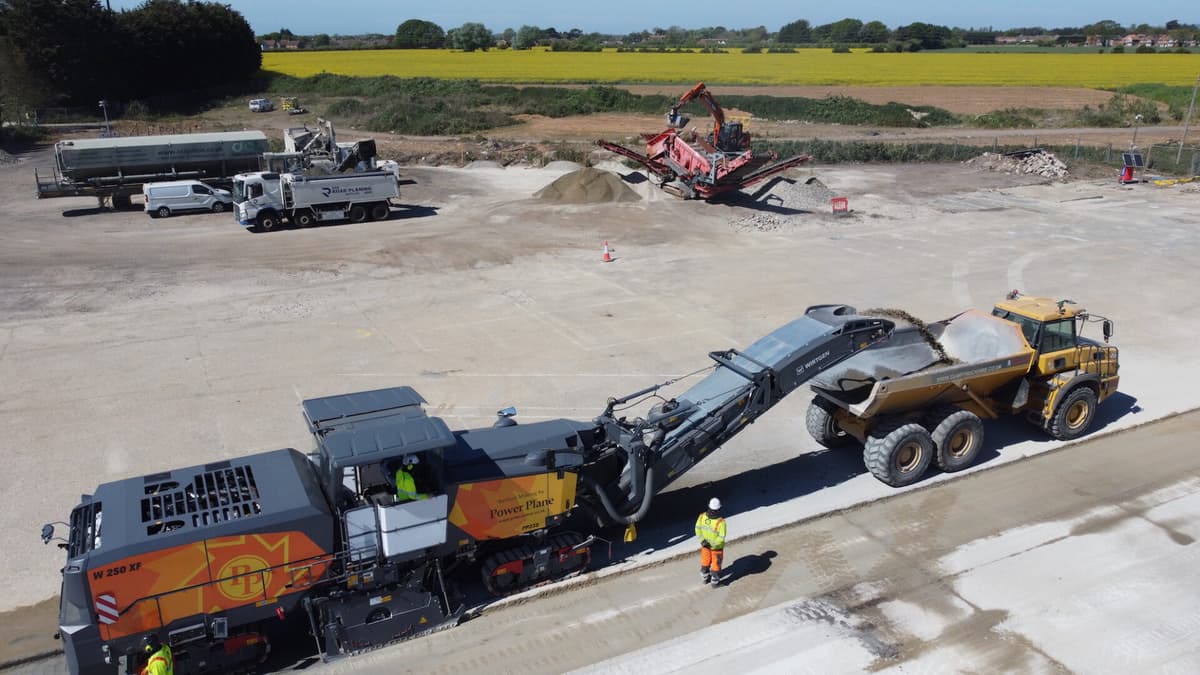
WWII-Era Runway Recycled for New Housing Development
Companies Mentioned
Why It Matters
Recycling the runway cuts haulage, lowers carbon emissions and reduces material costs, setting a precedent for sustainable large‑scale housing projects in the UK.
Key Takeaways
- •OCL Regeneration repurposes WWII runway into recycled aggregate for Vistry project
- •1,500-home Fordham development will use reclaimed concrete for foundations
- •Recycling cuts haulage, lowering carbon emissions and project costs
- •Hazardous waste in runway base requires specialized treatment to meet regulations
- •Project slated for completion by year‑end, showcasing circular construction
Pulse Analysis
The Ford Airfield project illustrates how the construction sector is embracing circular economy principles. By grinding down the 250‑mm‑thick WWII concrete runway, OCL Regeneration creates a Type 1 recycled aggregate that can serve as sub‑base and capping for the new Vistry neighbourhood. This approach eliminates the need for freshly quarried stone, conserves natural resources, and cuts the carbon intensity associated with cement production. As housing demand surges across the UK, such material‑reuse strategies offer a scalable path to greener, more resilient building practices.
Reusing historic infrastructure is not without regulatory hurdles. The runway’s underlying asphalt base contains hazardous waste that must be treated to meet Environment Agency standards before it can be re‑processed. OCL employs in‑situ stabilisation followed by specialised milling and washing to isolate contaminants, then blends the clean fraction into a certified recycled aggregate. This rigorous remediation not only safeguards local ecosystems but also demonstrates that legacy sites can be transformed safely, opening a new supply chain for low‑carbon construction materials.
The 1,500‑home Fordham development, slated for completion by year‑end, showcases the financial upside of material circularity. By sourcing aggregate on‑site, Vistry reduces haulage distances, slashing fuel consumption and associated emissions while trimming transport costs. OCL estimates a 15 % reduction in overall project carbon footprint, a figure that resonates with investors increasingly focused on ESG performance. If replicated across the UK’s housing pipeline, such closed‑loop recycling could free millions of tonnes of aggregate, lower construction budgets, and accelerate delivery of affordable homes.
WWII-era runway recycled for new housing development
Comments
Want to join the conversation?
Loading comments...