Young Adults Report More Interest in the Construction Trades: 2026 Survey
Why It Matters
Higher youth interest, driven by pay incentives, could alleviate the chronic labor gap that inflates housing costs and stalls deficit reduction. The data gives builders a clearer lever—competitive wages—to attract the next generation of tradespeople.
Key Takeaways
- •Interest in construction trades among 18‑25s rose from 3% to 6%
- •Good pay and skill acquisition are top perceived benefits
- •Career certainty dropped from 74% to 65% over decade
- •Half of undecided youths would consider trades for $90k salary
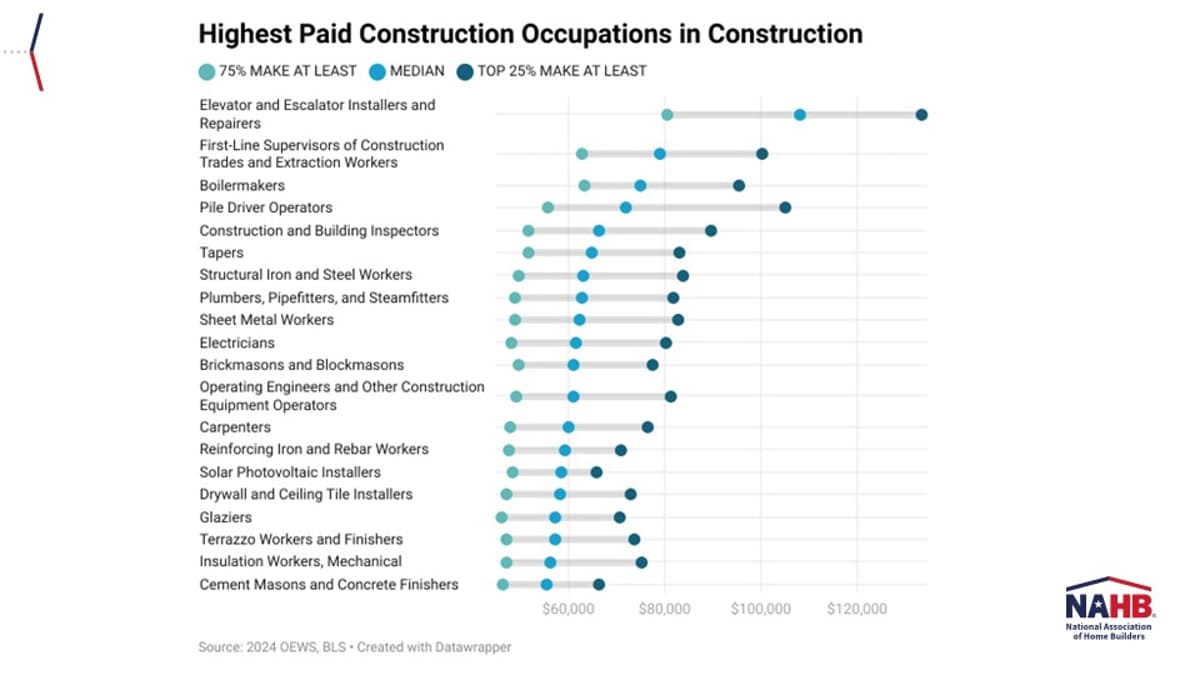
- •Construction wages already meet $60‑$90k thresholds for many occupations
Pulse Analysis
The United States faces a structural housing shortfall of roughly 1.2 million units, a gap amplified by a chronic shortage of skilled construction workers. NAHB estimates the labor deficit adds about $11 billion each year in higher costs and delayed builds, pressuring homebuilders to seek new talent pipelines. As the industry leans on technology and modular methods, the human element remains irreplaceable, making the recruitment of younger workers a strategic priority for closing the deficit.
The 2026 NAHB survey of adults aged 18‑25 reveals a modest but meaningful shift in attitudes toward the trades. While only 6% now express direct interest—double the 2016 figure—career certainty has slipped from 74% to 65%, reflecting broader economic uncertainty. Compensation emerged as a decisive factor: 30% would seriously consider a trade career if salaries reached $60,000‑$90,000, and 48% of the undecided would change their stance for the right paycheck. Good pay (73%) and the acquisition of marketable skills (65%) topped the perceived benefits, underscoring the importance of clear wage signals in recruitment messaging.
For builders, the data translates into actionable insight. Competitive wage packages that meet or exceed the $60,000‑$90,000 threshold align with existing median earnings for many construction occupations, making them realistic targets rather than aspirational offers. Companies can pair higher pay with apprenticeship programs that highlight skill development, addressing both financial and professional growth motivations. Policymakers and industry groups might also consider tax incentives or subsidies to support wage enhancements, thereby accelerating labor inflow and helping to narrow the housing deficit. In sum, aligning compensation with the expectations of today’s young adults could be the catalyst needed to rejuvenate the construction workforce and stabilize housing markets.
Young Adults Report More Interest in the Construction Trades: 2026 Survey
Comments
Want to join the conversation?
Loading comments...