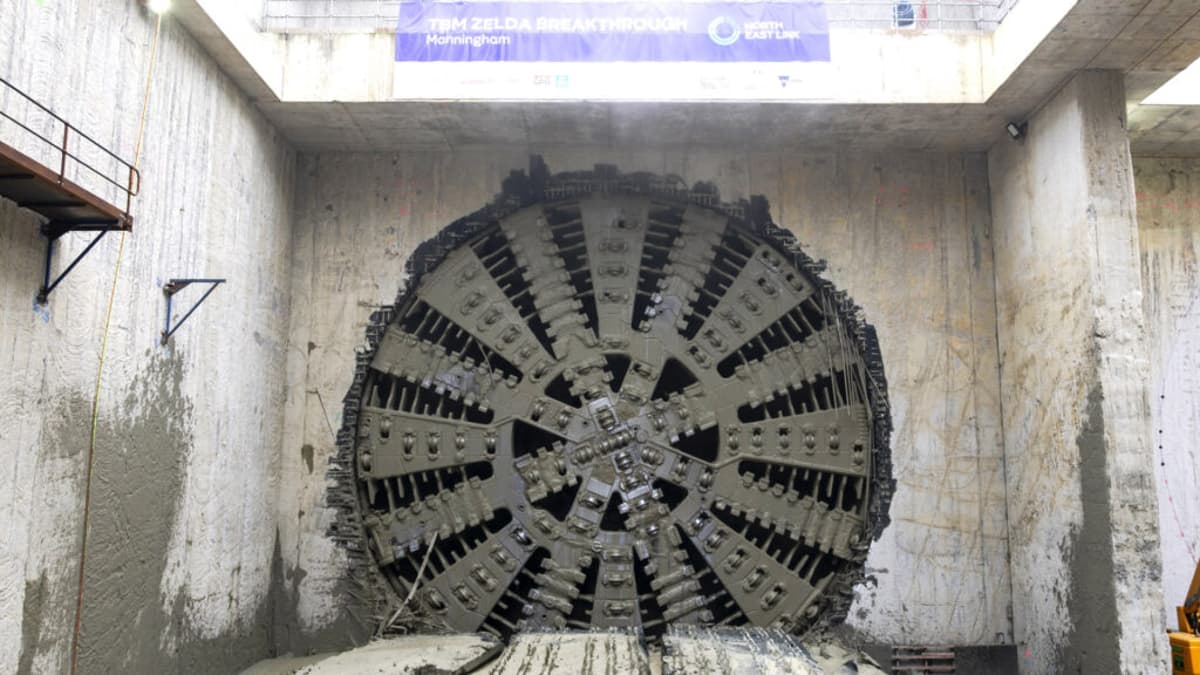
Zelda Breaks Through on North East Link
Why It Matters
The tunnel’s completion removes a critical bottleneck in Melbourne’s road network, promising faster commutes and reduced freight traffic on surface streets. It also showcases Australia’s capability to deliver large‑scale underground infrastructure on schedule.
Key Takeaways
- •Zelda TBM completed 5.3 km northbound tunnel excavation
- •Gillian TBM has excavated 4.5 km of southbound tunnel
- •Project aims to cut travel times by up to 35 minutes
- •North East Link scheduled to open to traffic in 2028
- •Scheme will divert roughly 15,000 trucks daily from local roads
Pulse Analysis
Melbourne’s North East Link is Australia’s largest road infrastructure undertaking, stitching together the Eastern Freeway and the M80 Ring Road with twin 15.6‑meter diameter tunnels. The project, valued at billions of dollars, reflects a strategic push to alleviate chronic congestion in a city where commuter travel times have surged in recent years. By delivering a direct, high‑capacity corridor, the link is set to become a backbone for both passenger vehicles and freight, reinforcing Victoria’s position as a logistics hub in the Asia‑Pacific region.
The breakthrough of TBM Zelda marks a technical milestone. Designed specifically for the project’s geological profile, the 90‑meter‑long, 4,000‑ton machine has already installed more than 21,000 precast concrete segments, creating a robust, watertight tunnel lining. Its sister machine, Gillian, mirrors this performance on the southbound side. Continuous operation of these massive boring machines minimizes surface disruption, a critical factor in densely populated suburbs like Bulleen and Watsonia. The engineering feat demonstrates the maturity of Australian tunnelling expertise, positioning local firms for future underground transport and utility projects.
Beyond engineering, the North East Link promises measurable economic benefits. Forecasts suggest up to 35‑minute reductions in peak‑hour travel, translating into productivity gains for commuters and logistics firms alike. Diverting an estimated 15,000 trucks from local streets will lower emissions, noise, and road wear, supporting broader sustainability goals. With excavation slated to finish in 2026 and traffic opening in 2028, the project sets a timeline that aligns with the state’s broader transport plan, signaling confidence in delivering large‑scale infrastructure on schedule and on budget.
Zelda breaks through on North East Link
Comments
Want to join the conversation?
Loading comments...