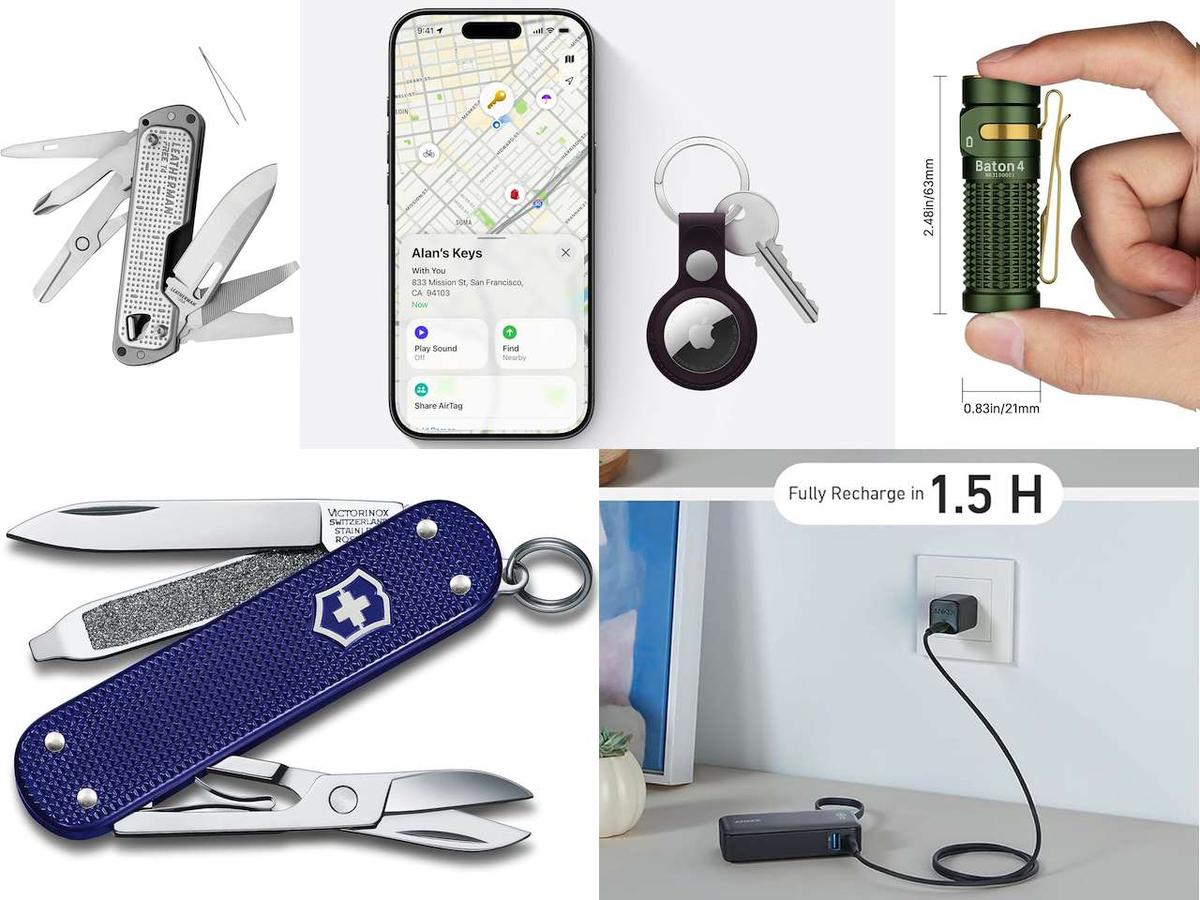
5 EDC Tools the Whole Family Ends Up Sharing
•February 16, 2026
0
Why It Matters
Shared, easy‑to‑use EDC tools streamline daily chores, cut costs, and boost safety by ensuring every household member can access the right tool without assistance. This shifts the market toward accessibility‑focused design rather than niche enthusiast specs.
Key Takeaways
- •Family-friendly EDC prioritizes low opening force
- •Magnetic charging eliminates forgotten battery issues
- •Multi‑tool design covers ~80% household tasks
- •AirTag simplifies shared item tracking across devices
- •Compact power bank keeps devices alive on the go
Pulse Analysis
The rise of family‑oriented everyday carry reflects a broader shift in product design toward inclusivity and convenience. Brands like Victorinox, Olight, and Leatherman are moving beyond the traditional enthusiast market, engineering knives, flashlights, and multitools with low‑force mechanisms, magnetic charging, and intuitive controls. This evolution addresses a real‑world problem: household drawers often contain tools that are either too bulky or too difficult for younger or less‑strong users, leading to under‑utilization and frequent replacements. By simplifying operation, these products become true shared assets, reducing the need for multiple single‑person kits.
Each of the five recommended items solves a specific friction point in modern homes. The Classic SD Alox’s feather‑light weight and easy‑pull scissors make it ideal for quick fixes, while the Baton 4’s USB‑C magnetic charger ensures the flashlight is always ready without hunting for a charger. Leatherman’s Free T4 multitool uses magnetic tool deployment to let teenagers and adults alike access scissors, bottle openers, or screwdrivers with a single thumb press. Apple’s AirTag leverages the ubiquitous Find My network to eliminate the “where’s my keys?” routine, and Anker’s Nano power bank delivers fast, dual‑device charging in a compact, matte‑finished chassis that stays put in a bag or car cup holder. Together, they cover the most common household tasks—cutting, lighting, fastening, locating, and powering—without requiring specialized knowledge.
For consumers, the implication is clear: investing in a small set of well‑designed, universally accessible tools yields long‑term savings and smoother daily operations. Families can replace a collection of niche gadgets with a unified toolkit that adapts to any user, reducing clutter and the environmental impact of disposable items. Retailers and manufacturers that prioritize ergonomic design, simple interfaces, and cross‑device compatibility are likely to capture a growing segment of the EDC market that values practicality over performance hype. As more households adopt these shared solutions, we can expect a ripple effect—more products will be built with multi‑user scenarios in mind, reinforcing the trend toward truly inclusive consumer tech.
5 EDC Tools the Whole Family Ends Up Sharing
0
Comments
Want to join the conversation?
Loading comments...