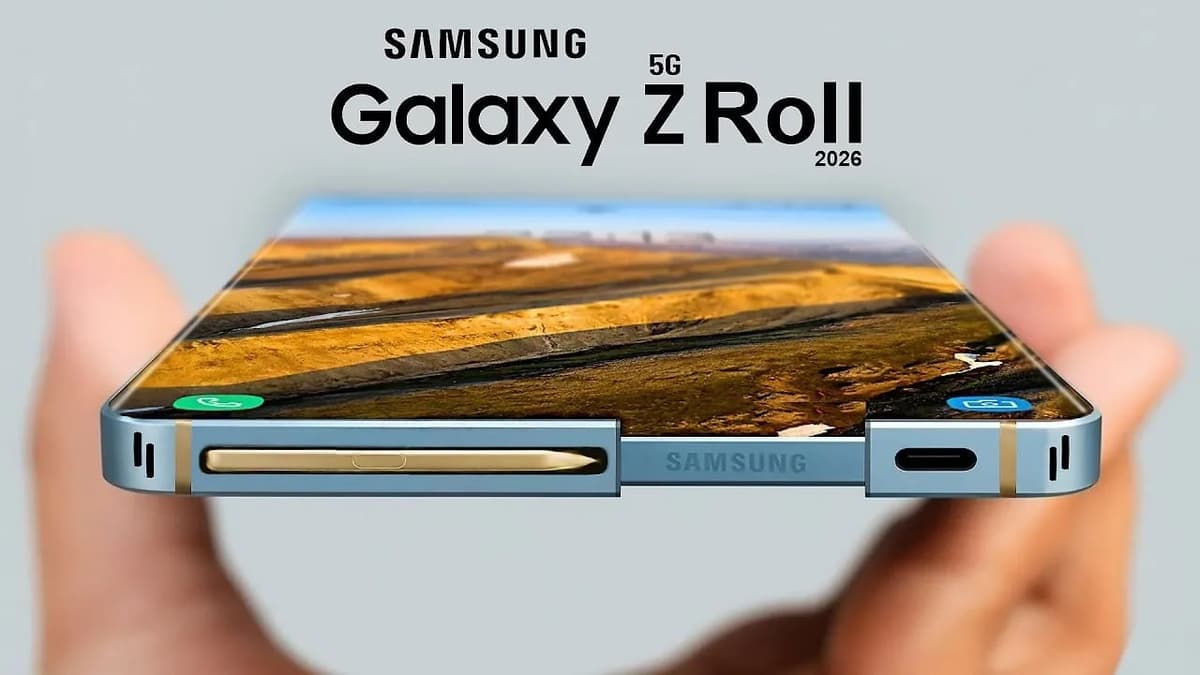
Beyond the Crease: The Real Engineering Hurdles Facing The Samsung Galaxy Z Roll 5G
Key Takeaways
- •Motor must balance fast rollout with substrate stress, targeting 2‑3 seconds.
- •Micro‑gears need hundreds of thousands of cycles and emergency retraction capability.
- •Dust‑proof nano‑coating must seal a moving roller track for IP68 compliance.
- •8,000 mAh dual‑cell battery creates lopsided weight distribution when extended.
- •Successful rollable could shift market focus from folding to motorized smartphones.
Pulse Analysis
The Galaxy Z Roll 5G represents a bold engineering pivot from traditional folding phones to a motor‑driven rollable display. Unlike a hinge that users open manually, the device relies on micro‑motors to unspool a 12.4‑inch flexible AMOLED panel. This introduces a delicate trade‑off: the motor must be swift enough to avoid user frustration while applying only gentle force to prevent tearing the ultra‑thin substrate. Samsung’s solution will likely involve precision‑engineered gear trains, real‑time torque monitoring, and firmware that can trigger an emergency retraction if a drop is detected, ensuring durability without sacrificing speed.
Beyond the motor, the rollable form factor amplifies the classic dust‑and‑water sealing challenge that foldables have spent years refining. A moving roller track acts like a conveyor, pulling any particle that slips past the outer seal directly onto the display. To meet an IP68 rating, Samsung is rumored to apply a nano‑coating and develop a hermetic seal around the track—an unprecedented task that demands both material science breakthroughs and ultra‑tight tolerances. Failure to keep the interior pristine could result in permanent internal scratches, undermining the device’s premium positioning.
If Samsung can integrate an 8,000 mAh silicon‑anode battery, a 324 MP camera module, and the S Pen into the static chassis while maintaining a balanced feel, the Z Roll could shift consumer expectations. A crease‑free, tablet‑sized screen that folds back into a conventional‑thickness phone would blur the line between smartphones and portable media displays. Success would not only reinforce Samsung’s reputation as the display innovator but also pressure rivals—Huawei’s tri‑folds and Apple’s yet‑to‑materialize flexible screens—to explore motorized alternatives, potentially reshaping the premium mobile market for the next decade.
Beyond the Crease: The Real Engineering Hurdles Facing The Samsung Galaxy Z Roll 5G
Comments
Want to join the conversation?