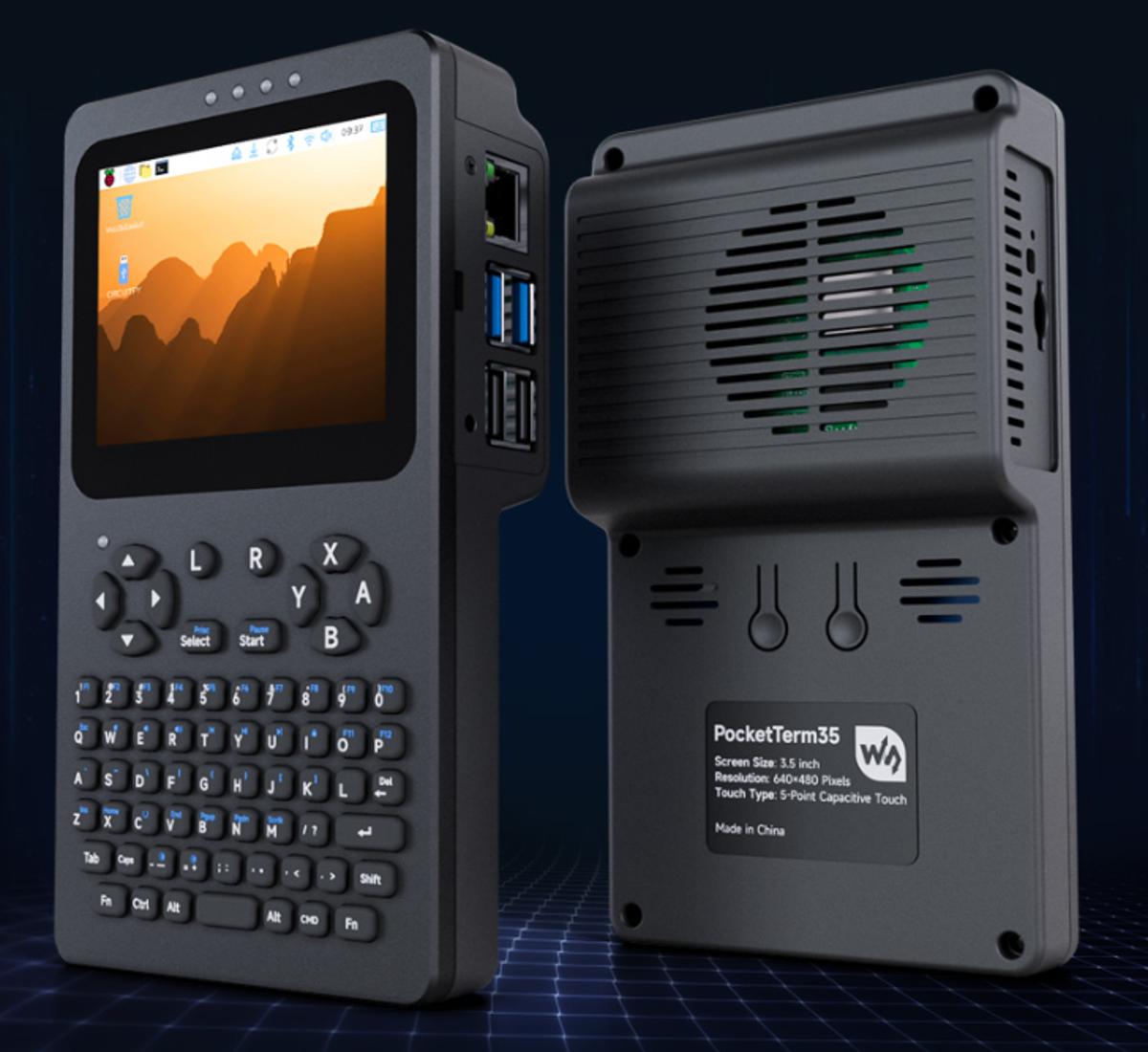
PocketTerm35-Pi5 Handheld Linux Terminal with Raspberry Pi 5 and 3.5″ Display
Key Takeaways
- •PocketTerm35‑Pi5 bundles Raspberry Pi 5, 64 GB storage, 5 W speaker.
- •3.5‑inch IPS touchscreen with optical bonding and 5‑point capacitive input.
- •Supports up to 5000 mAh battery, UPS‑style charging for uninterrupted use.
- •Exposes Gigabit Ethernet, USB 3.0, USB 2.0, and I²C header for expansion.
- •Priced at $148.99, under $180 for Pi 4B variant.
Pulse Analysis
The handheld Linux terminal market has accelerated as developers seek true mobility without sacrificing the power of a full‑featured OS. Devices such as the GPD Pocket, PinePhone, and now WaveShare’s PocketTerm35‑Pi5 blend compact design with desktop‑grade capabilities. The PocketTerm35‑Pi5 distinguishes itself by leveraging the latest Raspberry Pi 5 chipset, offering a 1 GB RAM core, 64 GB of onboard storage, and a 3.5‑inch IPS display with optical bonding that improves readability in bright environments. Its 67‑key silicone keyboard and five‑point capacitive touchscreen provide a familiar input experience, while the integrated RP2040 microcontroller handles peripheral control, keeping the main CPU free for user workloads.
From a business perspective, the device’s extensive I/O—Gigabit Ethernet, USB 3.0/2.0, audio jack, and an exposed I²C header—makes it a versatile tool for field service engineers, network administrators, and educators. The UPS‑style power management and support for up to a 5000 mAh lithium‑ion pack ensure continuous operation even when charging, a critical feature for remote diagnostics or on‑site development. At $148.99, the PocketTerm35‑Pi5 undercuts many competing handhelds, lowering the barrier for small teams to adopt portable Linux environments for scripting, container testing, or secure shell access.
Looking ahead, the PocketTerm35‑Pi5 could catalyze a broader ecosystem of Raspberry Pi‑based portable devices. Its modular design, including an I²C expansion header, invites third‑party accessories such as sensor arrays or custom input modules, aligning with the maker community’s appetite for hackable hardware. As the Raspberry Pi 5 continues to gain traction in edge computing, a low‑cost, fully integrated terminal like this one may become a standard reference platform for developers building and deploying lightweight Linux workloads outside the traditional desktop or server settings.
PocketTerm35-Pi5 Handheld Linux Terminal with Raspberry Pi 5 and 3.5″ Display
Comments
Want to join the conversation?