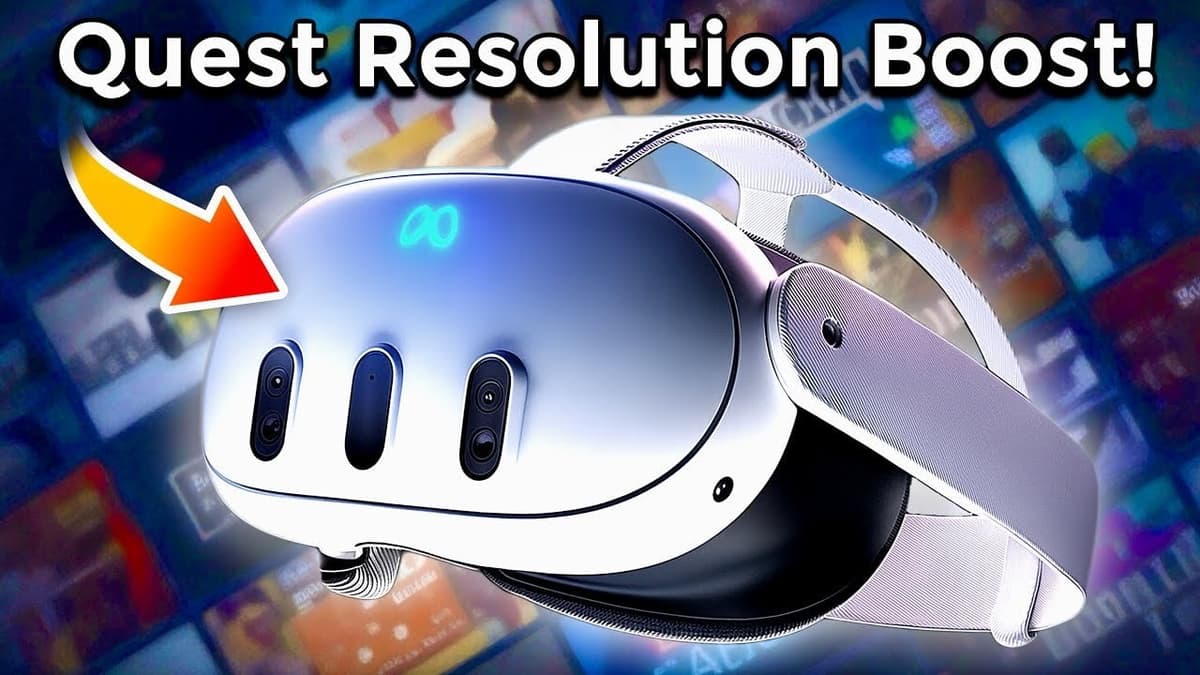
Quest 3 Graphics Just Received a Generational Leap Update
Key Takeaways
- •MetaQuest Super Resolution upscales textures for sharper standalone VR visuals
- •FidelityFX CAS adds adaptive sharpening without major frame‑rate loss
- •Both features work on PC‑VR streaming via Quest Optimizer
- •Enabling them increases heat and shortens battery life
- •Ideal for reviving older or low‑res VR titles
Pulse Analysis
Meta’s latest software push reflects a broader industry trend: VR headsets must deliver console‑grade visuals without tethered hardware. By embedding MetaQuest Super Resolution—a Snapdragon‑powered AI up‑scaler—Meta aims to extract more pixels from the Quest 3’s modest GPU, a tactic reminiscent of console up‑scaling solutions that have become standard in PlayStation and Xbox ecosystems. Coupled with AMD’s FidelityFX Contrast Adaptive Sharpening, the device can now present textures that rival entry‑level PC VR, positioning the Quest 3 as a viable alternative for gamers who prioritize visual fidelity over raw performance.
Technically, Super Resolution analyzes each frame, predicts missing detail, and reconstructs higher‑resolution imagery before it reaches the display. FidelityFX CAS then applies a contrast‑aware sharpening filter that preserves edge definition while minimizing halo artifacts. In practice, titles like Resident Evil 4 and Red Matter 2 show noticeably crisper environments and more defined character models, especially in high‑contrast scenes. The trade‑off is a modest increase in GPU workload, which translates to higher power consumption and additional heat generation—issues that can shave 20‑30 minutes off the Quest 3’s battery life during intensive sessions.
For developers, the new optimizer settings open a pathway to future‑proof older catalog titles without extensive re‑authoring. By allowing end‑users to toggle these enhancements, Meta empowers a broader audience to experience legacy VR games with a modern visual polish. Consumers, meanwhile, must weigh the immersive gains against practical constraints like heat and battery life, potentially adopting external power packs for marathon play. As the VR market matures, software‑centric upgrades such as these may become the primary differentiator among headsets, driving adoption and encouraging developers to design with adaptive scaling in mind.
Quest 3 Graphics Just Received a Generational Leap Update
Comments
Want to join the conversation?