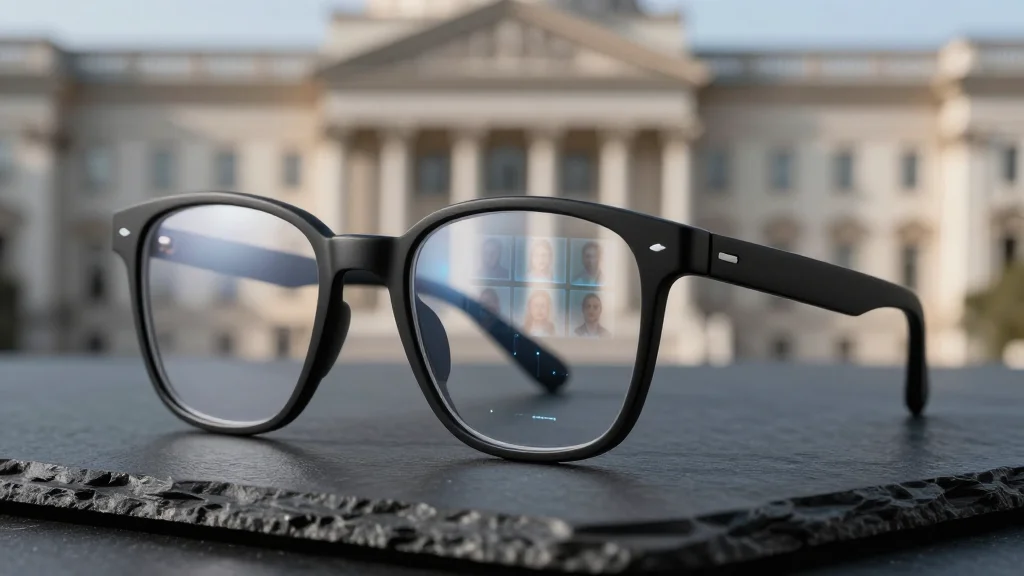
Smart Glasses for the Authorities

Key Takeaways
- •ICE plans to equip agents with AI‑powered smart glasses
- •Glasses can query federal biometric databases in real time
- •Experts warn error‑prone facial recognition could lead to wrongful arrests
- •Lack of oversight may enable abuse against protesters and minorities
- •Apple rumored to test camera‑enabled AirPods, raising consumer privacy concerns
Pulse Analysis
The United States Immigration and Customs Enforcement agency is moving beyond traditional badge‑and‑radio tools, testing smart glasses that fuse AI‑driven facial‑recognition, gait analysis and other biometric identifiers with instant access to federal data repositories. By leveraging platforms originally built for overseas counter‑terrorism—such as the Automated Biometric Identification System (ABIS) and the Biometric Entry and Watch List (BEWL)—the glasses promise agents the ability to identify a suspect within seconds, effectively turning every officer into a mobile surveillance node.
Privacy advocates argue that this rollout sidesteps critical safeguards. Facial‑recognition algorithms still struggle with accuracy, especially in low‑light or crowded environments, and large, error‑laden databases increase the risk of false matches. Historical abuses—ranging from mis‑entries on no‑fly lists to unauthorized tracking of activists—highlight how unchecked biometric tools can erode civil liberties. Without robust legislative limits, independent oversight, and transparent audit mechanisms, the technology could be repurposed for political repression, targeting protestors, minority communities, or anyone on a secret watchlist.
The conversation extends beyond law‑enforcement hardware. Reports that Apple may introduce camera‑equipped AirPods signal a broader convergence of surveillance capabilities into consumer electronics. When everyday devices can capture and transmit visual data, the boundary between public safety and mass data harvesting blurs, potentially normalizing invasive monitoring. Policymakers must grapple with a dual challenge: regulating government‑grade surveillance tools while establishing standards for private‑sector products that could otherwise embed similar capabilities into the hands of millions.
Smart Glasses for the Authorities
Comments
Want to join the conversation?