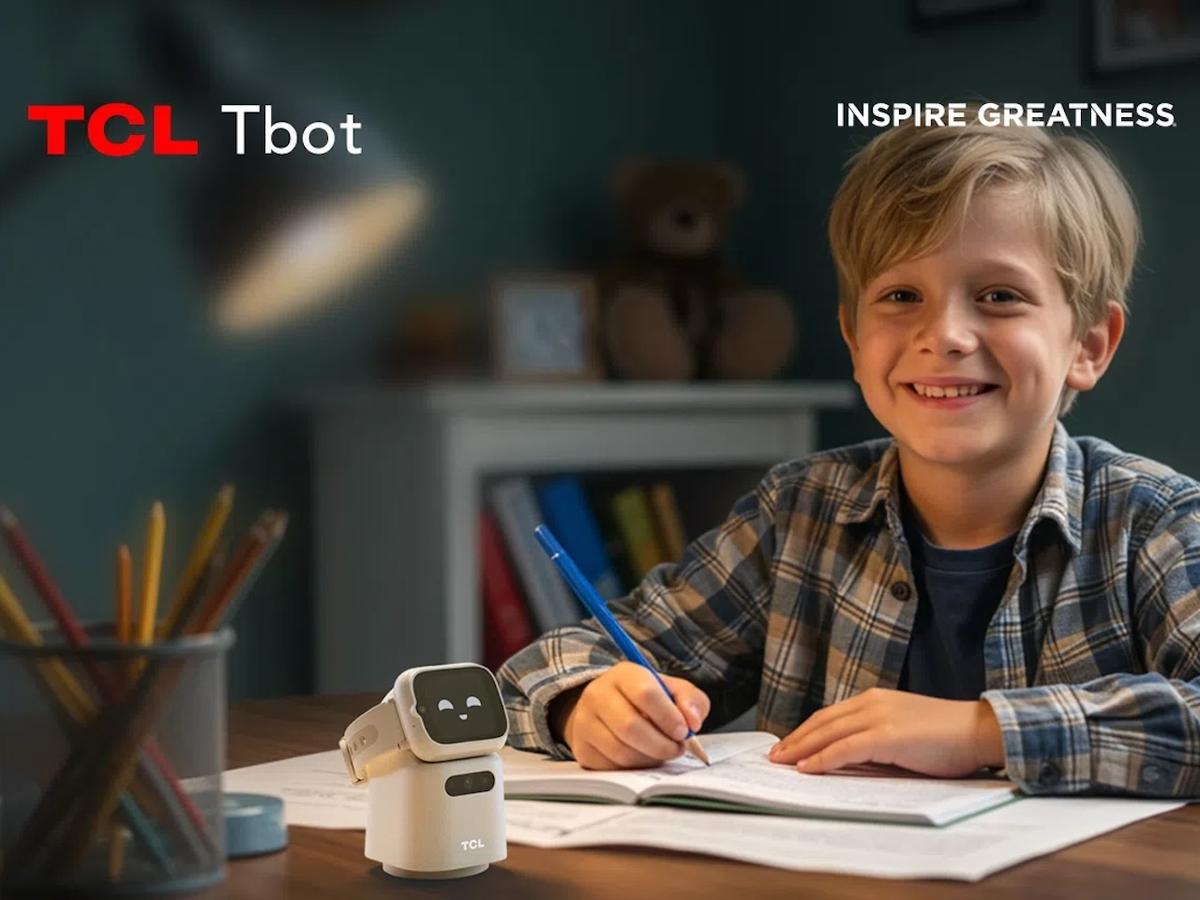
This Kids Smartwatch Becomes a Desktop Robot at Home
•March 5, 2026
0
Key Takeaways
- •Watch docks magnetically, activating desktop AI companion.
- •AI assists with alarms, study timers, bedtime stories.
- •Parental permission required for all AI features.
- •Concept shown at MWC 2026, no release date.
- •Focus on structured learning, not entertainment.
Summary
TCL unveiled Tbot, a magnetic‑dock desktop robot that transforms the MOVETIME MT48 kids smartwatch into an AI‑powered study and bedtime companion. The watch charges on the robot, triggering features such as alarms, Pomodoro‑style timers, guided learning sessions, and story‑telling. All AI functions require explicit parental permission, emphasizing privacy and safety. Tbot remains a concept presented at MWC 2026, with no pricing or launch timeline disclosed.
Pulse Analysis
TCL’s Tbot concept pushes the envelope of children’s tech by merging a wearable safety watch with a desktop AI companion. The magnetic docking mechanism does more than charge the MT48 smartwatch; it acts as a physical trigger that shifts the device from wrist‑bound connectivity to a stationary learning hub. This seamless handoff reduces the need for multiple gadgets, streamlining parental oversight while delivering a richer, context‑aware experience that adapts to a child’s daily routine.
Privacy and parental control sit at the core of Tbot’s design. Every AI interaction—whether it’s setting a wake‑up alarm, guiding a study session, or narrating a bedtime story—must be approved by a parent, aligning the product with stringent child‑safety regulations such as COPPA and GDPR‑K. By sandboxing content within age‑appropriate modules and offering granular notification settings, TCL differentiates Tbot from generic voice assistants that often lack robust safeguards for younger users. This approach not only mitigates the risk of inappropriate content but also builds trust among caregivers wary of AI‑driven toys.
While Tbot remains a prototype, its market implications are significant. If TCL can navigate manufacturing costs, secure regulatory approvals, and convince parents of the robot’s educational value, it could redefine the kids‑tech landscape, moving away from screen‑heavy tablets toward purpose‑built, hybrid devices. The concept also signals a broader industry trend: leveraging existing wearables to extend functionality into the home environment, thereby creating a continuous, managed ecosystem for children’s digital interactions. Success would likely inspire competitors to explore similar dual‑mode solutions, reshaping how families think about safety, learning, and entertainment in a connected world.
Comments
Want to join the conversation?