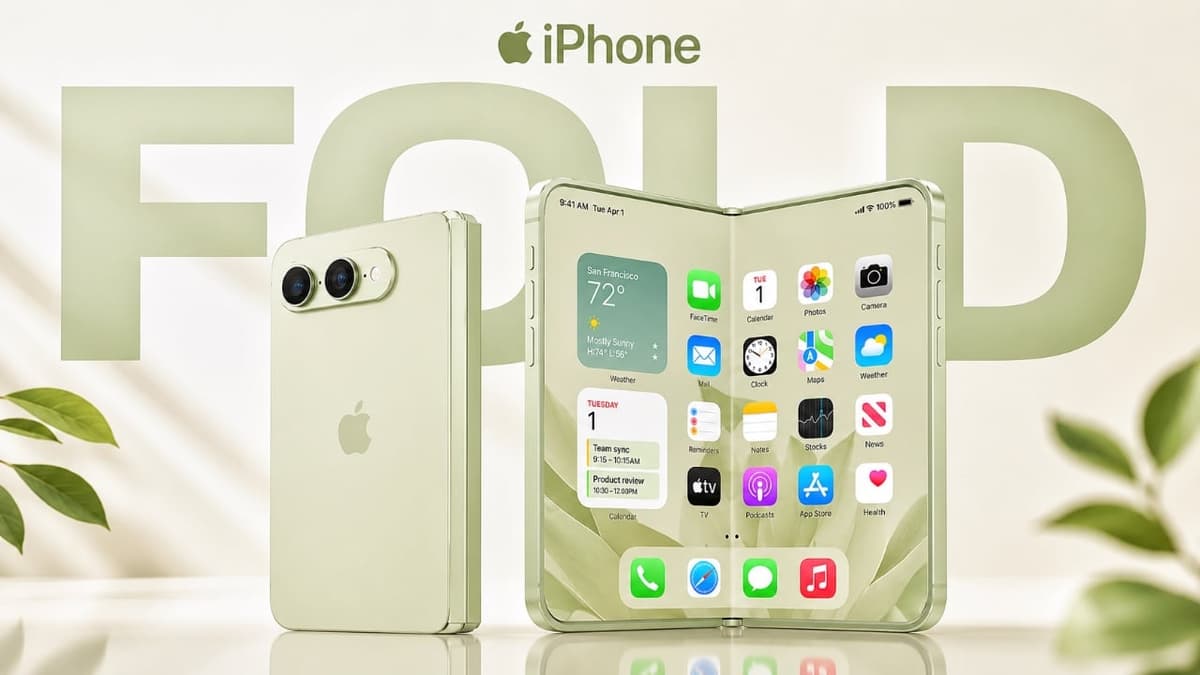
Why Apple’s iPhone Ultra Fold Changes Everything We Know About Smartphones
Key Takeaways
- •Apple targets premium foldable segment with $2,000 Ultra Fold.
- •A20 2nm chip and 12 GB RAM promise flagship performance.
- •Robust titanium hinge aims to solve durability concerns.
- •iOS will add multitasking and continuity for foldable use.
- •Launch could force rivals to accelerate foldable innovation.
Pulse Analysis
Apple’s decision to launch the iPhone Ultra Fold during its September 2026 event underscores a strategic shift from treating foldables as niche experiments to embedding them in the core product lineup. The timing aligns with a broader industry push toward larger, more versatile screens, yet Apple’s premium pricing—starting near $2,000—signals confidence that its brand equity can command a higher price point. By entering a market dominated by Samsung’s Galaxy Z series and Google’s Pixel Fold, Apple is poised to attract power users who have previously hesitated due to durability concerns.
The Ultra Fold’s hardware stack is designed to address the most common criticisms of existing foldables. A 7.8‑inch inner LTPO OLED panel paired with a 5.5‑inch outer display delivers tablet‑like real estate without sacrificing pocketability, while the A20 chip built on TSMC’s 2 nm process and 12 GB of RAM promise performance on par with the iPhone 18 Pro models. Apple’s titanium‑alloy hinge and ultra‑thin 4.5‑mm folded profile aim to eliminate the creases and wobble that have plagued competitors. Software-wise, iOS will introduce split‑screen multitasking, seamless app continuity, and refined gestures, turning the foldable form factor into a genuine productivity tool rather than a gimmick.
If Apple can deliver on its durability and software promises, the Ultra Fold could become a catalyst for industry‑wide change. Competitors may be compelled to invest more heavily in hinge engineering, crease‑reduction technologies, and OS‑level multitasking to stay relevant. Consumers, reassured by Apple’s track record for quality and long‑term support, might finally adopt foldables at scale, expanding the market beyond early adopters. In the long run, Apple’s entry could accelerate the convergence of smartphones and tablets, setting a new benchmark for what mobile devices can achieve.
Why Apple’s iPhone Ultra Fold Changes Everything We Know About Smartphones
Comments
Want to join the conversation?