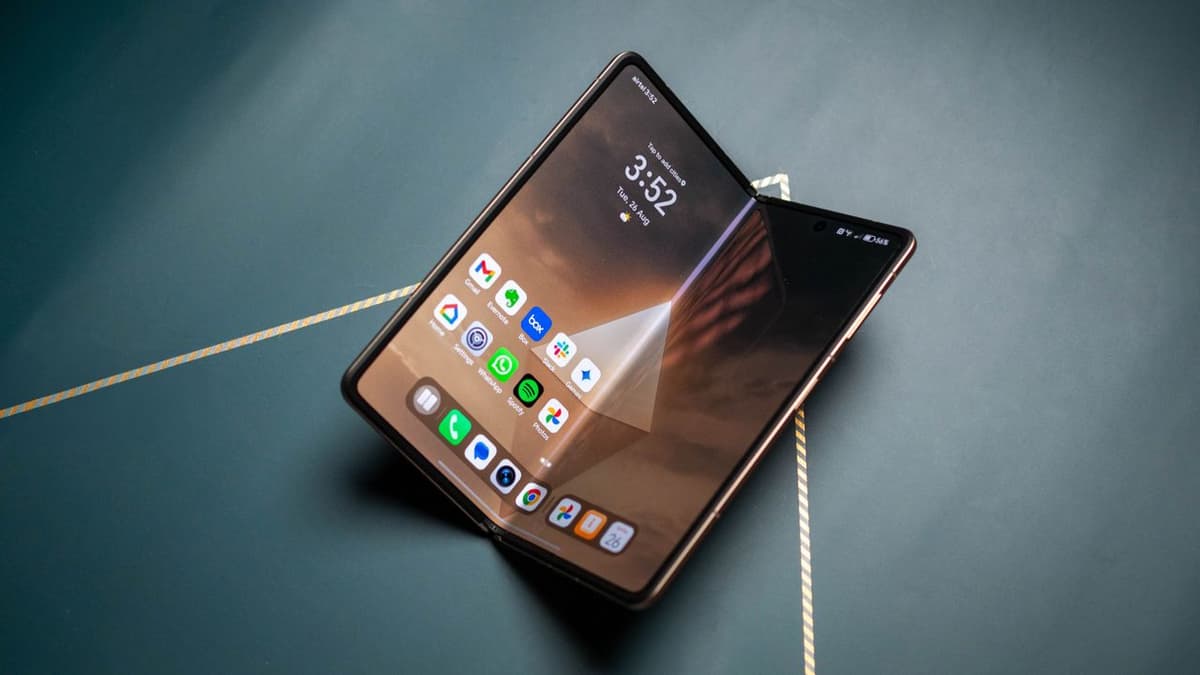
A 'Striking' Red Honor Magic V6 Is so Thin and Tough that It's Rewriting What Device Strength Means
•February 24, 2026
0
Why It Matters
The Magic V6 sets a new benchmark for foldable durability, challenging the trade‑off between slim design and ruggedness that has limited consumer adoption. Its advanced protection could accelerate market acceptance of foldables as mainstream premium devices.
Key Takeaways
- •Red edition showcases unique hair‑like back texture.
- •Achieves both IP68 and IP69 dust‑water resistance ratings.
- •Features 2800 MPa Super Steel hinge for structural integrity.
- •Advanced Display Protection offers 1.5% reflection, high wear resistance.
- •Durability test used phone as zipline core supporting adult.
Pulse Analysis
The foldable smartphone segment has been dominated by a handful of players, with Samsung’s Galaxy Z series long considered the gold standard. Honor’s Magic V5 already proved the brand could produce a thinner alternative, but durability concerns lingered. By introducing the Magic V6, Honor aims to rewrite that narrative, positioning itself as a serious contender that blends sleek aesthetics with industrial‑grade resilience, a combination that could sway enterprise buyers and tech enthusiasts alike.
Technical innovation lies at the heart of the Magic V6’s appeal. The device not only secures IP68 and IP69 certifications—rare for foldables—but also incorporates a 2800 MPa Super Steel hinge, delivering unprecedented structural integrity without adding bulk. Its Advanced Display Protection reduces screen reflection to 1.5%, while a reinforced UTG glass layer enhances impact resistance. Together, these features enable a remarkably thin chassis that does not compromise on wear resistance, addressing a key barrier that has kept many consumers hesitant about foldable durability.
The upcoming MWC 2026 debut will be a litmus test for market reception. If the Magic V6’s durability claims hold up under real‑world scrutiny, it could set a new durability benchmark, prompting competitors to elevate their own engineering standards. Moreover, the bold red edition and eye‑catching back texture serve as a marketing hook, reinforcing Honor’s strategy to blend performance with distinctive design. Success at MWC could accelerate adoption across both consumer and enterprise segments, reshaping expectations for what a premium foldable can deliver.
A 'striking' red Honor Magic V6 is so thin and tough that it's rewriting what device strength means
0
Comments
Want to join the conversation?
Loading comments...