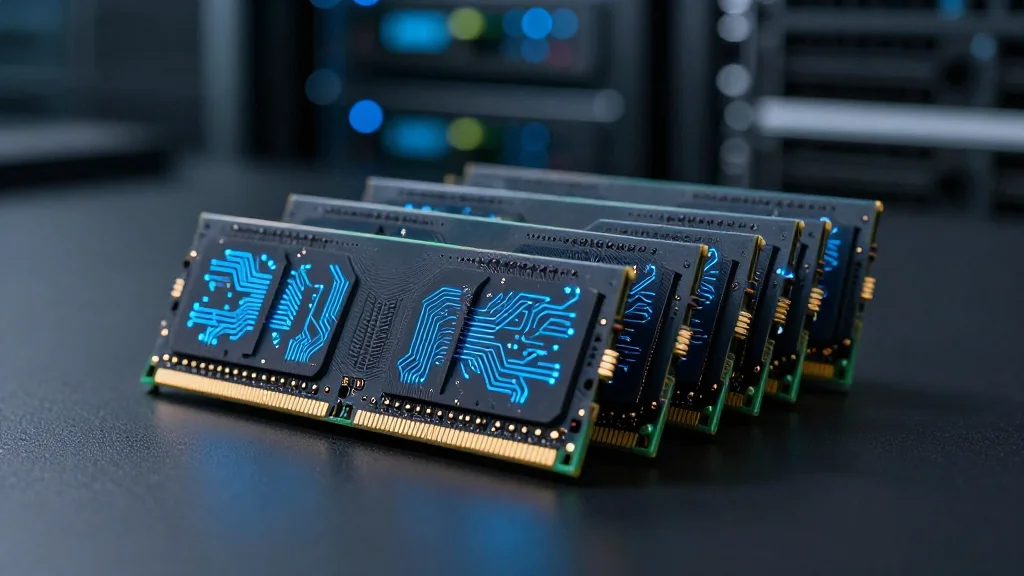
AI‑Driven Memory Shortage Pushes Laptop, Phone and Console Prices Higher

Companies Mentioned

Why It Matters
The RAM shortage links AI’s rapid expansion directly to everyday consumer spending, turning a largely invisible supply‑chain issue into a visible price shock for millions. As devices become more expensive, price‑sensitive buyers may delay upgrades, slowing the adoption cycle for new hardware and potentially curbing revenue growth for OEMs. If regulators act on the perceived AI‑driven scarcity—through taxes, rationing or tighter export controls—the cost structure for data‑center operators and chip makers could shift dramatically. Such policy moves would reverberate through the entire tech ecosystem, from component suppliers to end‑user pricing, and could accelerate efforts to diversify memory sourcing or accelerate alternative memory technologies.
Key Takeaways
- •AI data‑center expansion is identified as the primary driver of a global DRAM shortage.
- •Laptop prices have risen $150‑$300, with Dell commercial models up to 30% since Dec 2025.
- •Gaming hardware sees 15‑30% price hikes; a Framework DDR5 module jumped from $40 to $160.
- •Experts warn the tight memory supply will persist through 2026 and only modestly improve by 2028.
- •Potential policy responses in Seoul, Brussels and Washington could reshape AI hardware economics.
Pulse Analysis
The current RAM surge is a textbook case of demand‑side shock spilling over into consumer markets. Historically, memory shortages have been cyclical, but the AI boom has amplified the effect by orders of magnitude. Companies like NVIDIA have publicly celebrated the scarcity as a competitive advantage, yet that rhetoric risks alienating the broader public when price tags climb on everyday gadgets.
From a market‑structure perspective, the imbalance gives memory manufacturers leverage to raise prices without immediate competitive pushback, because the alternative—delaying AI workloads—is often untenable for cloud providers. This creates a feedback loop: higher AI spend drives up DRAM prices, which in turn inflates consumer device costs, potentially throttling demand for the very hardware that fuels the AI ecosystem.
Looking forward, the industry’s response will hinge on capacity expansion and diversification. New DRAM fabs slated for 2028 could relieve pressure, but the lag time means manufacturers must either absorb higher costs or pass them on for at least two more years. Meanwhile, policymakers may intervene to curb what could be framed as an AI‑induced inflationary externality, especially if consumer backlash grows. Companies that can demonstrate transparent supply‑chain strategies or invest in alternative memory technologies may gain a competitive edge in a market where price sensitivity is resurfacing as a decisive factor.
AI‑Driven Memory Shortage Pushes Laptop, Phone and Console Prices Higher
Comments
Want to join the conversation?
Loading comments...