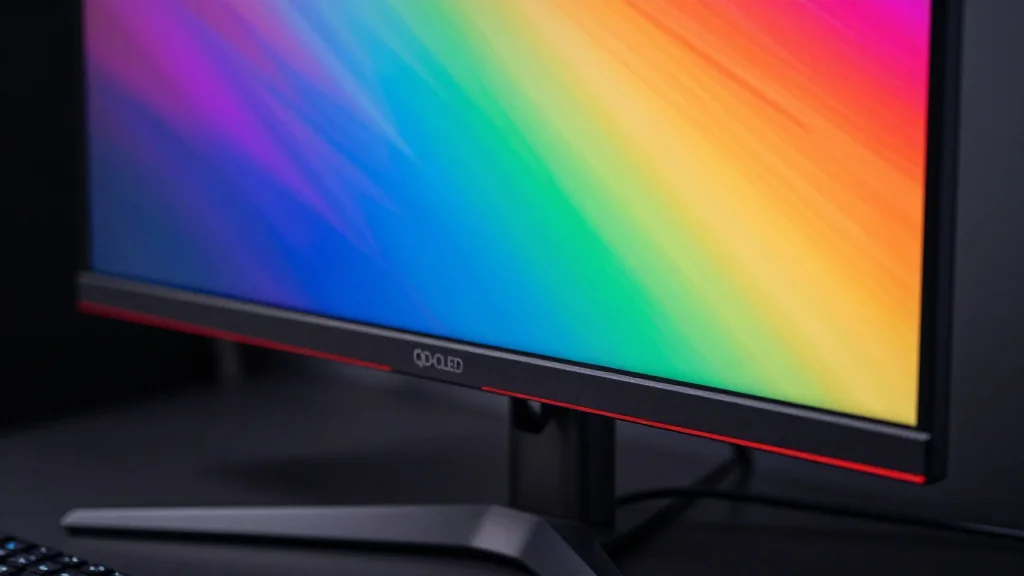
Alienware Unveils $350 27‑Inch QD‑OLED Gaming Monitor, Undercutting Competitors

Companies Mentioned


Why It Matters
The launch reshapes the competitive dynamics of the high‑end gaming monitor market by introducing a price point that was previously reserved for mid‑range panels. By making QD‑OLED technology affordable, Alienware could accelerate consumer adoption of OLED displays, driving demand for related components such as high‑bandwidth cables and graphics cards capable of sustaining 240 Hz output. For the broader consumer tech ecosystem, the move pressures other manufacturers to justify higher price tags through differentiated features or to follow suit with more aggressive pricing. This could lead to a faster price decline for OLED panels overall, benefiting not only gamers but also creators and professionals who value color accuracy and contrast.
Key Takeaways
- •Alienware AW2726DM launched at $349.99, a $200‑plus discount from its predecessor.
- •Features a 27‑inch QD‑OLED panel with 2560 × 1440 resolution, 240 Hz refresh, and 0.03 ms response time.
- •Supports AMD FreeSync Premium; lacks Nvidia G‑Sync, differentiating it from the prior model.
- •Comes with a three‑year OLED burn‑in warranty, addressing durability concerns.
- •Pricing undercuts typical QD‑OLED monitor prices ($500+) from competitors like Asus, LG, MSI, and Samsung.
Pulse Analysis
Alienware’s aggressive pricing is a calculated gamble that leverages Dell’s scale to absorb thinner margins while expanding the user base for OLED displays. Historically, premium OLED monitors have been niche products, limited by high manufacturing costs and a perception of fragility. By slashing the price to $349.99, Alienware not only challenges that perception but also forces the supply chain to adapt—panel manufacturers may need to increase volume to meet demand, potentially driving down unit costs across the board.
From a competitive standpoint, the move could fragment the market along GPU lines. AMD users gain a high‑refresh, color‑accurate monitor at a bargain, while Nvidia enthusiasts may feel left out, prompting them to either switch GPUs or seek alternative displays that retain G‑Sync. This bifurcation could accelerate AMD’s market share gains in the gaming segment, especially if other OEMs follow Alienware’s lead and bundle FreeSync‑only monitors with their hardware.
Looking forward, the monitor’s success will hinge on consumer confidence in OLED durability and the real‑world performance of its 0.03 ms response claim. If early adopters report minimal burn‑in and consistent high‑frame‑rate output, the product could set a new baseline for what gamers expect at a sub‑$400 price. Conversely, any widespread issues could reinforce the premium pricing model for OLED, limiting the broader market impact. Either scenario will shape OEM pricing strategies and the pace at which OLED becomes a mainstream choice for PC displays.
Alienware Unveils $350 27‑Inch QD‑OLED Gaming Monitor, Undercutting Competitors
Comments
Want to join the conversation?
Loading comments...