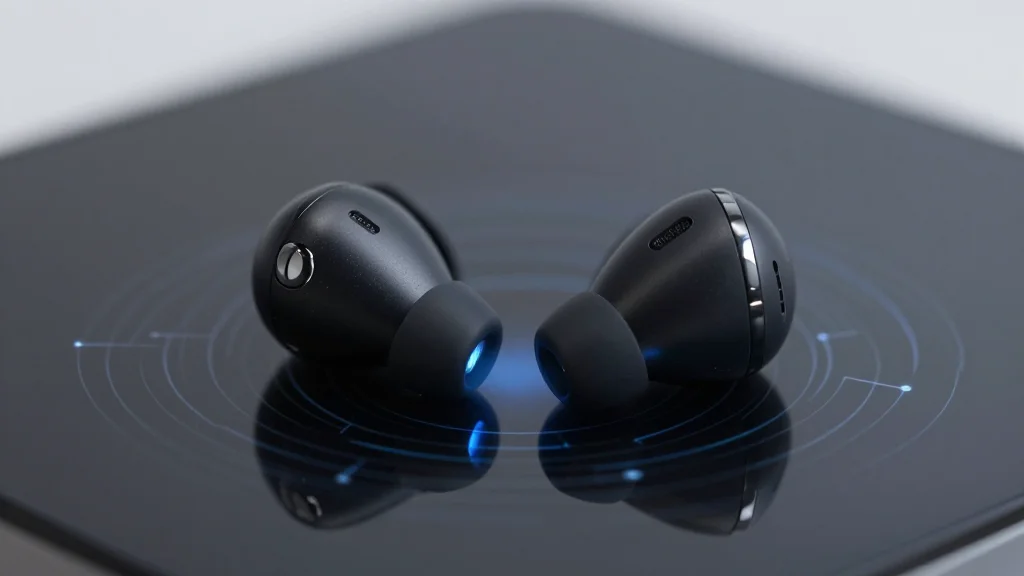
Anker Launches Soundcore Liberty 5 Pro Earbuds with First Consumer AI Audio Chip

Companies Mentioned
Why It Matters
The debut of a dedicated AI audio chip in a mass‑market earbud reshapes expectations for on‑device intelligence, offering lower latency, better privacy, and richer features without relying on cloud services. By proving that neural‑network processing can run efficiently within the tight power envelope of earbuds, Anker sets a new benchmark that could accelerate AI integration across the entire consumer electronics stack, from wearables to IoT devices. If the THUS chip proves successful, it may catalyze a wave of hardware‑first AI solutions, prompting competitors to invest in similar compute‑in‑memory designs. This could lead to a broader shift toward edge AI, reducing data‑center load and opening new use cases such as real‑time language translation, adaptive sound profiling, and health‑monitoring sensors embedded in everyday accessories.
Key Takeaways
- •Anker launches Soundcore Liberty 5 Pro ($169.99) and Liberty 5 Pro Max ($229.99) with THUS AI chip
- •THUS chip uses compute‑in‑memory architecture, cutting power use and latency for on‑device AI
- •ANC performance claimed to be 100% stronger than previous model; battery life 6.5 hrs (ANC) up to 28 hrs total
- •Whisper Clear Calls earns Guinness World Record for call clarity; Adaptive ANC 4.0 processes audio 384,000 times per second
- •Max version adds AI‑powered note‑taking and larger 1.78‑inch AMOLED case display
Pulse Analysis
Anker’s decision to embed a bespoke AI processor in a consumer‑grade earbud is a bold bet on edge computing at a price point that competes directly with Apple’s AirPods Pro and Sony’s WF‑1000XM series. Historically, AI in audio has been a software overlay—Apple’s Adaptive EQ, Samsung’s Voice Pickup—relying on the phone’s chipset or cloud inference. By moving the inference engine onto the earbud, Anker sidesteps bandwidth constraints and privacy concerns, a move that could resonate with privacy‑conscious users and enterprise customers who need secure communications.
The compute‑in‑memory design mirrors trends in data‑center accelerators, where reducing data movement is the primary efficiency lever. Translating that concept to a sub‑100‑gram device is technically impressive, but market adoption will hinge on perceived audio quality gains versus the modest battery penalty. Early reviewers note the 6.5‑hour ANC runtime is lower than competing models, yet the promise of on‑device voice isolation and faster voice‑command response may justify the trade‑off for power users.
Looking ahead, the THUS platform could become Anker’s differentiator across its product line. If the chip scales to larger form factors—smart speakers, portable projectors, or even smartphones—Anker could leverage economies of scale to lower costs and accelerate AI feature rollouts. Competitors may respond by forming partnerships with established silicon vendors or by acquiring niche AI chip startups. The next quarter will reveal whether the Liberty 5 Pro’s AI edge translates into measurable market share, but the launch undeniably raises the bar for what consumers can expect from “smart” audio hardware.
Anker Launches Soundcore Liberty 5 Pro Earbuds with First Consumer AI Audio Chip
Comments
Want to join the conversation?
Loading comments...