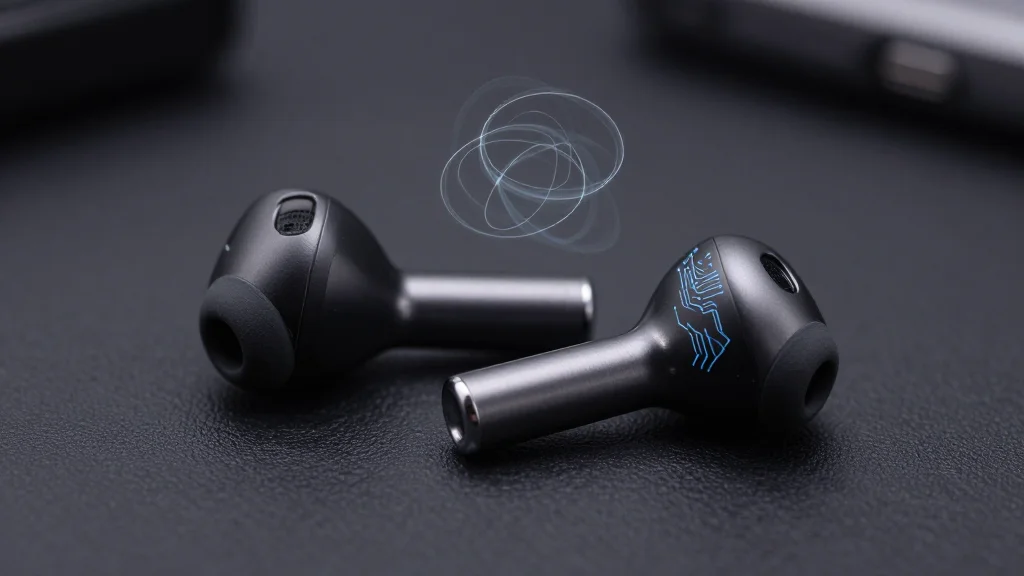
Anker's Liberty 5 Pro Earbuds Debut with First Consumer Neural‑Net AI Chip

Companies Mentioned
Why It Matters
The introduction of a consumer‑grade compute‑in‑memory AI chip could redefine the performance envelope for battery‑constrained devices. By eliminating the energy‑intensive data shuttling that has hampered on‑device neural networks, Anker opens a path for richer, real‑time AI features in earbuds, smart watches, and other wearables. This shift may accelerate the adoption of privacy‑preserving on‑device processing, reducing reliance on cloud inference and associated latency. For the broader consumer tech ecosystem, the Thus chip signals a new competitive frontier. Companies that continue to rely on traditional DSP or low‑power MCU designs may find their products lagging in audio quality, voice recognition, and adaptive sound personalization. The move also pressures silicon vendors to develop CIM solutions or risk losing market share in the fast‑growing wearables segment.
Key Takeaways
- •Anker launched soundcore Liberty 5 Pro ($170) and Pro Max ($230) earbuds with the Thus neural‑net CIM chip.
- •Thus embeds computation inside NOR Flash, cutting data‑movement power use from >90% to near zero.
- •The chip supports AI models several million parameters large – about 10× larger than conventional earbud chips.
- •Guinness World Records certified for highest speech quality score among true‑wireless earbuds.
- •Anker claims a 150× peak performance boost for noise‑cancellation versus its previous DSP.
Pulse Analysis
Anker’s decision to integrate a compute‑in‑memory AI processor into a mass‑market earbud is a bold bet on hardware‑level differentiation. Historically, audio wearables have relied on incremental DSP improvements, with AI features constrained by power and memory limits. By collapsing memory and compute, Anker not only sidesteps the von Neumann bottleneck but also creates a new design space where AI can be as pervasive as the sensors themselves. This could force rivals to either license similar architectures or invest heavily in alternative low‑power AI approaches, such as spiking neural networks or ultra‑efficient ASICs.
The market impact will hinge on real‑world validation. While the 150× noise‑cancellation claim is framed against Anker’s own legacy chip, consumers will compare the Liberty 5 Pro against Apple’s AirPods Pro and Samsung’s Galaxy Buds, which already offer sophisticated ANC and voice isolation. If Anker’s on‑device AI delivers noticeably clearer calls and adaptive sound without sacrificing battery life, it could carve out a niche among power‑conscious users and enterprise customers who prioritize data privacy. Moreover, the announced developer SDK could catalyze a third‑party ecosystem, turning the Thus chip into a platform rather than a proprietary feature.
Looking ahead, the success of this architecture may ripple through the broader IoT landscape. Compute‑in‑memory could become the default for any device where milliwatt‑scale power budgets intersect with the need for complex inference – from health monitors that run continuous ECG analysis to AR glasses that process visual data locally. Anker’s early move positions it as a potential standards‑setter, but it also invites scrutiny from chipmakers who may accelerate their own CIM roadmaps to stay competitive.
Anker's Liberty 5 Pro Earbuds Debut with First Consumer Neural‑Net AI Chip
Comments
Want to join the conversation?
Loading comments...