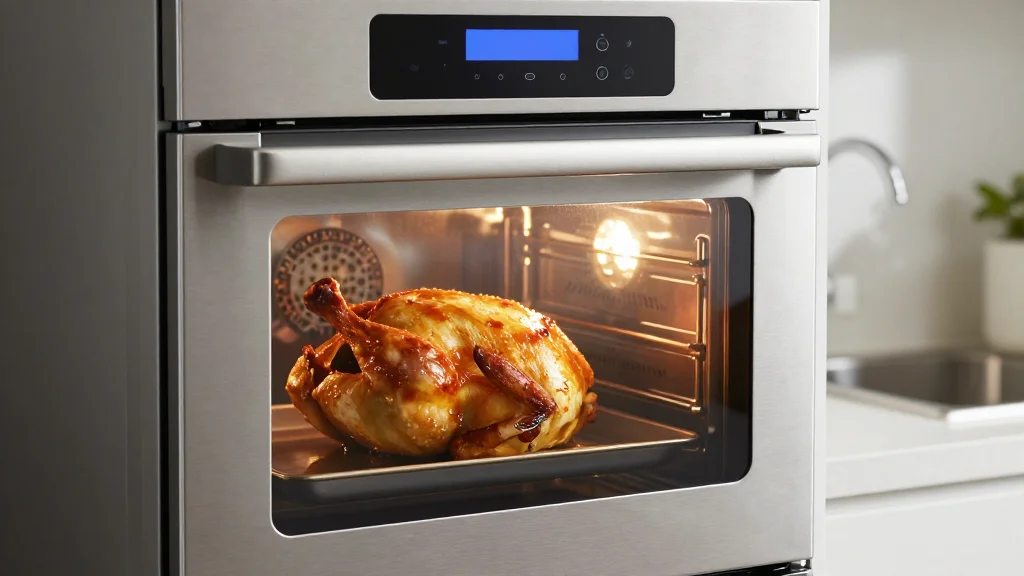
App‑Controlled Ovens Promise 30‑Minute Roasts, Accelerating the Smart‑Kitchen Shift

Companies Mentioned
Why It Matters
The rollout of app‑controlled ovens signals a broader shift in consumer expectations for kitchen appliances, moving from isolated hardware to integrated, data‑driven experiences. By reducing cooking times and adding remote monitoring, these devices address the time‑poverty of modern households while preserving the capacity of a full‑size oven. The trend also illustrates how premium brands can capture higher margins through software services, data analytics and subscription‑based recipe content, potentially reshaping revenue models across the home‑appliance sector. Furthermore, the convergence of AI vision, voice control and adaptive heating technologies creates a new competitive frontier. Companies that can deliver reliable, user‑friendly interfaces while protecting consumer data will likely dominate the emerging smart‑kitchen ecosystem, influencing everything from retail shelf placement to the next generation of home‑automation standards.
Key Takeaways
- •Smeg Omnichef offers 30‑minute chicken roast using combined traditional, microwave and steam heating.
- •Haier’s ID Series 6 oven uses AI cameras and the hOn app to auto‑adjust temperature and learn user preferences.
- •Fisher & Paykel combi‑steam ovens (≈ $1,280) feature voice‑activated doors controllable via a mobile app.
- •Jag Sandhu of ASKO highlights rising demand for guided cooking, remote monitoring and low‑complexity tech.
- •Smart‑appliance market projected to exceed $30 billion by 2028, driven by premium connected ovens.
Pulse Analysis
The emergence of app‑controlled ovens reflects a maturation of the smart‑home narrative: early adopters have already embraced connected lighting, thermostats and security cameras, but the kitchen remains the last major frontier. By integrating AI vision and adaptive heating, manufacturers are turning the oven from a passive heat source into an active cooking assistant. This not only shortens cooking cycles but also creates a data feedback loop that can be monetised through personalized recipe recommendations and predictive maintenance services.
Historically, kitchen innovation has been incremental—microwaves added speed, air fryers added health‑focused crispness. The current wave differs because it leverages software to enhance hardware performance, effectively compressing the cooking timeline without sacrificing capacity. Brands that can balance sophisticated features with intuitive user experiences will capture the premium segment, while the trickle‑down effect could democratise these capabilities as component costs fall. In the next 12‑18 months, we should watch for standardisation of open APIs that allow third‑party developers to build on top of oven platforms, potentially spawning a new ecosystem of cooking apps, diet‑tracking integrations and even grocery‑ordering services directly from the oven interface.
From a competitive standpoint, legacy appliance makers like Bosch and Whirlpool are forced to accelerate their R&D pipelines or risk losing market share to tech‑savvy entrants such as Haier and Smeg. The convergence of hardware and software also raises regulatory questions around data privacy and safety, especially as ovens gain the ability to make autonomous temperature adjustments. Companies that proactively address these concerns while delivering seamless, low‑friction experiences will set the benchmark for the next generation of connected kitchens.
App‑Controlled Ovens Promise 30‑Minute Roasts, Accelerating the Smart‑Kitchen Shift
Comments
Want to join the conversation?
Loading comments...