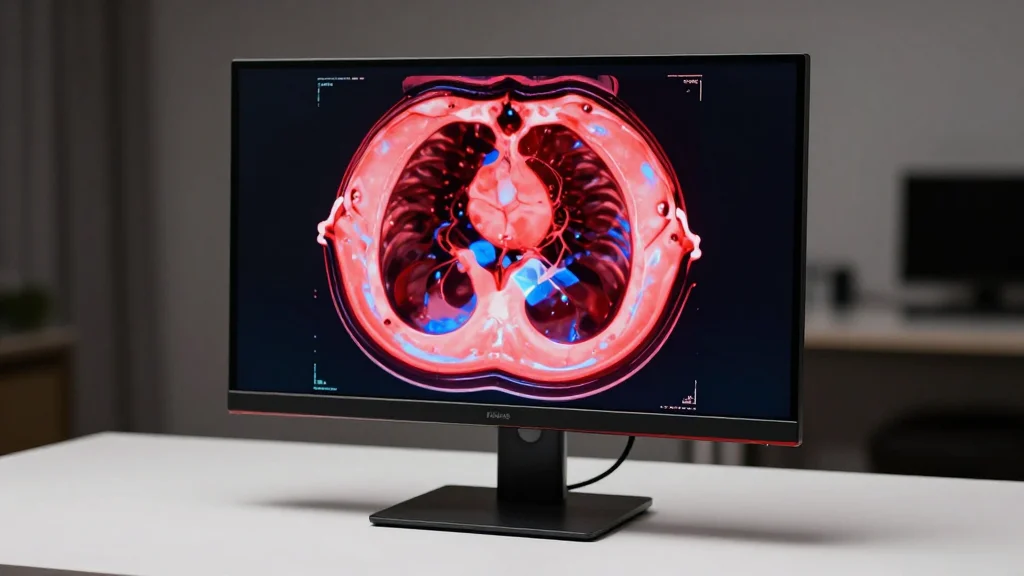
Apple Unveiled a New High-End Market Opportunity This Week
Companies Mentioned
Why It Matters
The clearance gives Apple a regulatory gateway into a high‑value healthcare segment, promising cost‑effective, secure imaging solutions that could shift purchasing decisions away from legacy vendors.
Key Takeaways
- •FDA cleared Apple’s Medical Imaging Calibration for Studio Display XDR.
- •Apple’s $2,899 display rivals $15,000 radiology workstations.
- •On‑device AI in Apple Silicon enables secure, low‑latency imaging analysis.
- •Entry into $42.6 B medical imaging market expands Apple’s enterprise reach.
- •Lower TCO and privacy strengths attract hospitals adopting Apple ecosystem.
Pulse Analysis
Apple’s Studio Display XDR received FDA clearance for its new Medical Imaging Calibration feature, marking the company’s first regulatory foothold in the medical‑device arena. The clearance validates the display’s ability to meet stringent accuracy standards required for diagnostic imaging, positioning the $2,899 monitor as a viable alternative to traditional radiology workstations that often exceed $15,000. With the global medical imaging market valued at roughly $42.6 billion, Apple now has a clear pathway to capture a slice of a high‑growth, technology‑driven segment that has historically been dominated by specialist vendors.
The advantage stems from Apple’s in‑house silicon, which runs on‑device AI models with low latency and robust privacy controls. Radiologists can pair the calibrated display with macOS‑compatible software such as Visage Imaging or OsiriX MD, eliminating the need for costly, proprietary hardware. A typical deployment—four Mac minis linked via Thunderbolt 5 to a single Studio Display—can be assembled for under $10,000, delivering performance that rivals $15,000‑plus workstations while simplifying maintenance and support. This cost efficiency aligns with enterprise IT trends that prioritize total cost of ownership and streamlined device ecosystems.
Beyond immediate cost savings, Apple’s entry reshapes the competitive landscape. By leveraging its reputation for privacy, seamless integration, and the emerging visionOS platform, Apple can offer clinicians a unified workflow that spans desktop, tablet, and mixed‑reality headsets. Hospitals that adopt the ecosystem gain consistent security policies across devices, reducing the attack surface that has plagued legacy imaging solutions. As AI‑driven diagnostics mature, Apple’s on‑device processing and calibrated displays could become the de‑facto standard, prompting other OEMs to accelerate their own regulatory and hardware strategies.
Apple unveiled a new high-end market opportunity this week
Comments
Want to join the conversation?
Loading comments...