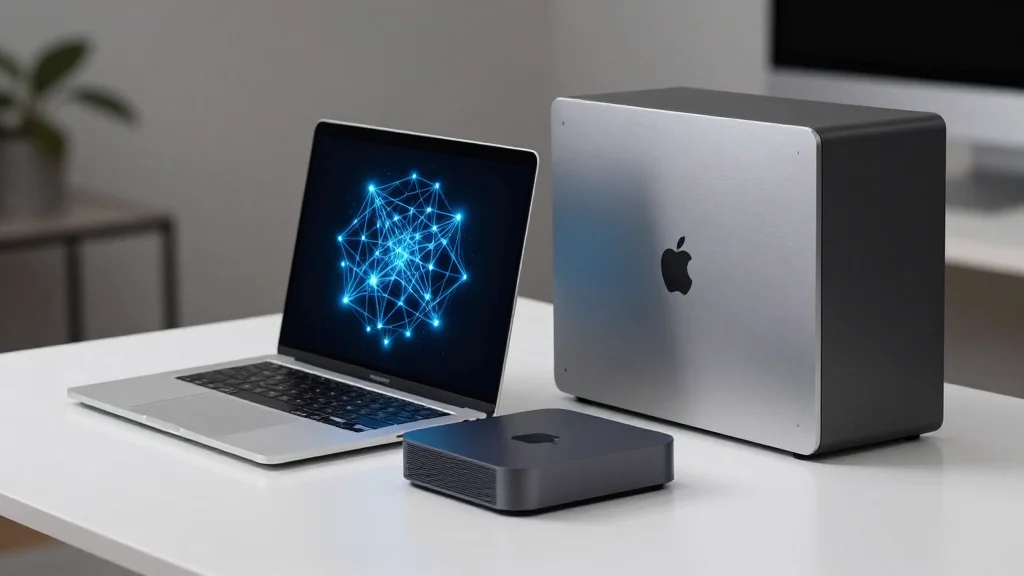
Apple's Mac Revenue Jumps to $8.4 B as AI Workloads Fuel Unexpected Surge

Companies Mentioned
Why It Matters
The unexpected Mac sales lift signals a broader shift in consumer hardware preferences toward devices that can run generative‑AI locally, reducing reliance on cloud services and lowering latency for creators and professionals. For the PC industry, Apple’s performance forces rivals to accelerate AI‑hardware roadmaps, potentially reshaping product portfolios and pricing strategies. Moreover, the surge in first‑time Mac buyers expands Apple’s ecosystem, increasing cross‑sell opportunities for services, accessories, and future hardware. In markets like China, where the Mac mini topped desktop sales, the AI demand also reflects regional appetite for powerful yet affordable AI workstations. This could spur local developers to build more AI‑centric applications on macOS, further entrenching Apple’s platform advantage.
Key Takeaways
- •Apple reported $8.4 billion in Mac revenue for Q2, beating low‑$8 billion forecasts.
- •Mac sales grew 6% year‑over‑year, driven by AI‑related demand.
- •MacBook Neo pre‑orders sold out within weeks; demand described as “off the charts.”
- •Mac mini became the top‑selling desktop in China amid an “OpenClaw frenzy.”
- •Apple expects several months to balance supply for high‑demand Mac mini and Studio models.
Pulse Analysis
Apple’s Q2 results reveal that generative AI is no longer a niche add‑on but a mainstream driver of hardware purchases. The company’s custom silicon, especially the M‑series chips, offers a compelling on‑device AI experience that rivals cloud‑based solutions in speed and privacy. This advantage has translated into tangible sales, as evidenced by the Neo’s rapid sell‑out and the Mac mini’s dominance in China. Historically, Apple’s Mac line has been a modest contributor to total revenue, often eclipsed by iPhone and Services. The current surge could mark the beginning of a new growth trajectory, provided Apple can resolve its supply constraints.
Competitors are unlikely to sit idle. Microsoft’s Surface line and Dell’s XPS series have already hinted at AI‑optimized hardware, but they lack the tight integration of Apple’s silicon and software stack. If Apple can sustain its AI‑centric momentum, it may force the broader PC market to prioritize on‑device AI capabilities, potentially accelerating the rollout of dedicated AI accelerators across Windows laptops.
Looking ahead, the key question is whether the AI‑driven demand is a temporary spike or a lasting shift. Apple’s roadmap—new Mac models with upgraded GPUs, expanded AI‑specific APIs, and tighter integration with services like iCloud AI—will be critical. If the company can deliver a steady pipeline of AI‑ready devices while scaling supply, the Mac could transition from a peripheral revenue source to a central pillar of Apple’s consumer tech ecosystem.
Apple's Mac Revenue Jumps to $8.4 B as AI Workloads Fuel Unexpected Surge
Comments
Want to join the conversation?
Loading comments...