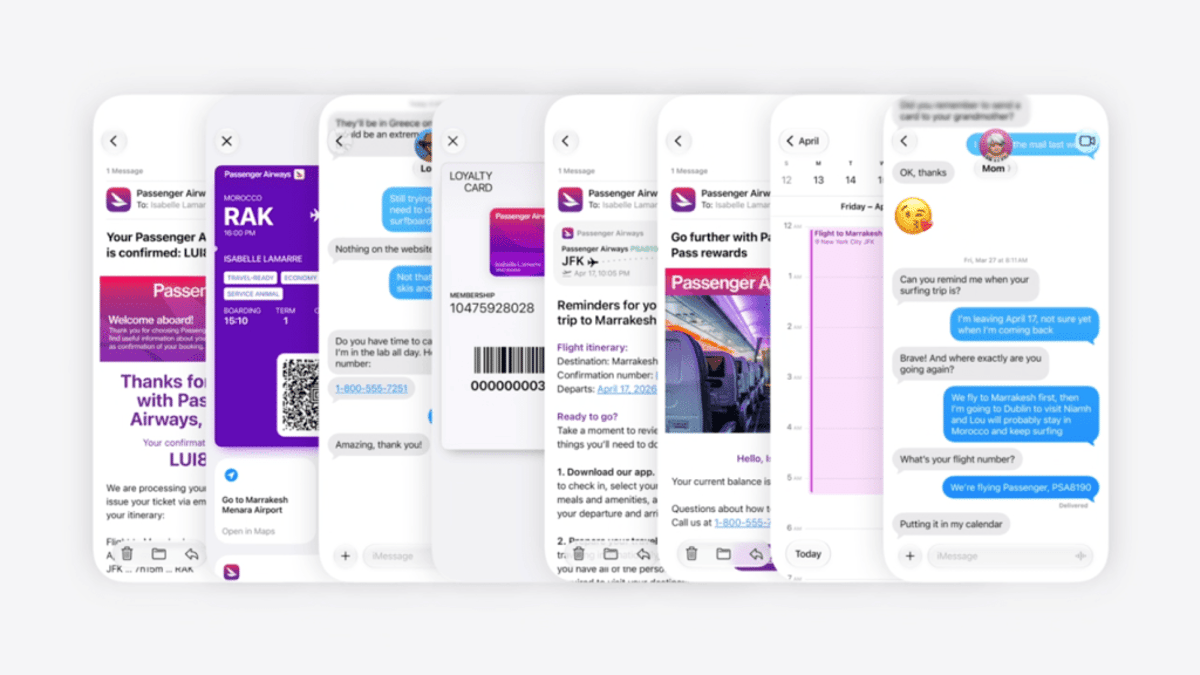
Apple’s Rebuilt Siri Opens New Doors for Travel Apps
Companies Mentioned
Why It Matters
If Siri becomes the default gateway for trip planning, travel brands can capture high‑intent users earlier in the booking funnel, driving engagement and loyalty. The shift also forces companies to modernize APIs and data flows to stay competitive in a voice‑first ecosystem.
Key Takeaways
- •Siri now processes personal context for in‑app actions
- •Travel apps can expose itinerary data via voice commands
- •Apple’s on‑device AI preserves user privacy
- •Developers must link backend systems for bookings
- •Siri could become primary entry point for trip planning
Pulse Analysis
Apple’s latest Siri overhaul marks a decisive step toward a truly conversational travel assistant. By embedding large‑language‑model capabilities directly on iOS devices, Siri can interpret nuanced requests—such as “move my flight to a later time” or “show me my hotel loyalty points”—and act on them within third‑party apps. This on‑device approach differentiates Apple from cloud‑centric rivals like Google Assistant, offering faster response times and a stronger privacy guarantee that aligns with Apple’s brand promise. For travel firms, the technical upgrade opens a new integration layer that can surface real‑time itinerary data through natural language, reducing friction for users who juggle multiple confirmations across email, calendars, and loyalty accounts.
From a business perspective, the ability to surface travel information via voice could reshape the consumer decision journey. Travelers often start planning on their phones, and a Siri‑driven experience positions Apple as the first point of contact, potentially diverting traffic from traditional OTA websites and apps. Companies that expose their APIs to Siri’s Intents framework can capture high‑intent traffic, personalize offers, and embed loyalty incentives directly into the dialogue. Moreover, the local AI model mitigates data‑privacy concerns, a critical factor for users wary of sharing passport details or payment information with cloud services.
However, the opportunity comes with integration challenges. Siri can only execute actions that are exposed through a developer’s backend, meaning airlines, hotels, and OTAs must invest in robust, real‑time APIs and secure authentication flows. Legacy reservation systems may require modernization to meet the latency and data‑format expectations of voice‑first interactions. Firms that move quickly to map their booking engines to Siri’s intent schema stand to gain a competitive edge, while those that lag risk losing a growing segment of voice‑savvy travelers. In sum, Apple’s rebuilt Siri could become a pivotal channel for travel commerce, provided the industry aligns its technology stack with the new conversational paradigm.
Apple’s Rebuilt Siri Opens New Doors for Travel Apps
Comments
Want to join the conversation?
Loading comments...