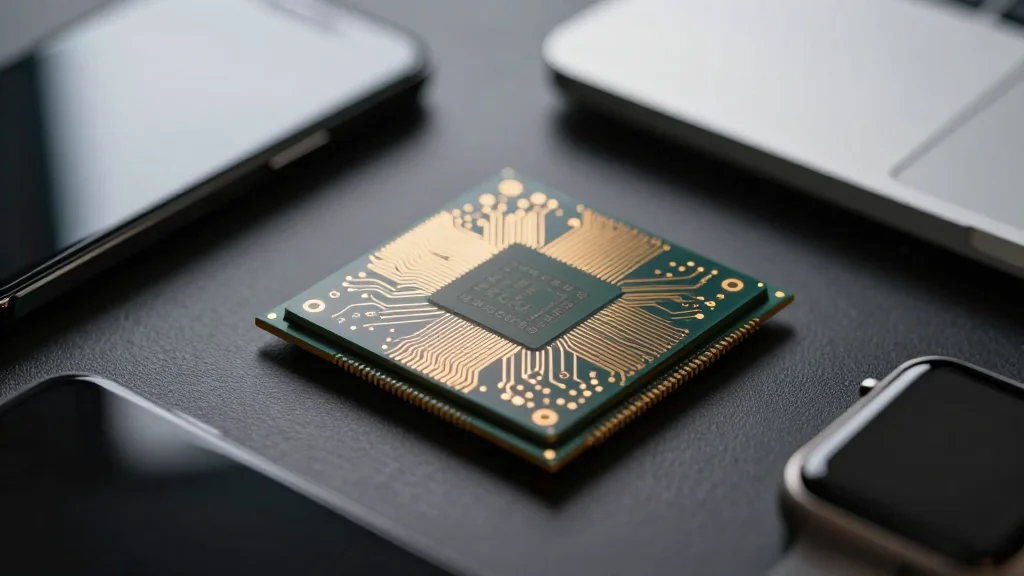
Arm and Qualcomm Duel Over AI Chips as Consumer Devices Crave On‑Device Intelligence

Companies Mentioned

Why It Matters
The contest between Arm and Qualcomm matters because it determines the architecture that will power the billions of consumer devices adopting on‑device AI. A dominant, cost‑effective ARM‑based solution could accelerate AI adoption in budget laptops, extending AI benefits to students and small businesses that previously could not afford premium hardware. Conversely, a fragmented market could keep AI features premium, slowing the diffusion of productivity‑enhancing tools such as real‑time translation and intelligent noise cancellation. Beyond pricing, the rivalry influences the broader semiconductor supply chain. As memory and GPU prices climb, manufacturers are seeking silicon that delivers high performance per watt. Qualcomm’s Snapdragon C and Arm’s client‑chip strategy both promise low power draw, which could ease thermal constraints in thin form‑factors and reduce reliance on high‑end x86 CPUs. The winner of this race will shape OEM design choices, software ecosystem support, and ultimately the user experience of AI‑enabled consumer tech for years to come.
Key Takeaways
- •Qualcomm unveiled Snapdragon C, an entry‑level ARM processor for laptops priced around $300.
- •Arm announced it will sell its own client‑chip designs directly to customers, with Meta as the first major buyer.
- •Snapdragon X2 Elite powers Lenovo's $1,000 Yoga Slim 7x, delivering 45 TOPS AI performance.
- •Supply‑chain pressures are driving OEMs toward power‑efficient silicon, as noted by Wiwynn chair Emily Hong.
- •Both companies will showcase their AI roadmaps at Computex 2026, alongside Nvidia, Intel and AMD.
Pulse Analysis
Arm’s decision to move from a pure licensing model to selling its own client silicon marks a watershed for the ARM ecosystem. Historically, the company’s revenue came from royalties on designs used by partners such as Qualcomm, Apple and MediaTek. By entering the client market, Arm can capture higher margins and directly influence product roadmaps, but it also risks alienating its traditional partners who may see Arm as a competitor. The first major win – Meta – suggests that large cloud and AI service providers are eager to lock in custom silicon that can run inference workloads locally, reducing latency and bandwidth costs.
Qualcomm’s Snapdragon C platform is a calculated response that leverages its deep expertise in mobile power management while expanding into the PC space. By pricing the chip at $300 and targeting fanless, thin laptops, Qualcomm aims to democratize AI capabilities that were previously limited to premium devices. The integrated NPU, though modest at under 40 TOPS, is sufficient for everyday AI tasks and could set a new baseline for entry‑level laptops. If OEMs adopt the platform at scale, Qualcomm could secure a foothold in a segment that Intel and AMD have traditionally dominated, forcing the incumbents to accelerate their own low‑power roadmaps.
The broader market dynamics are shaped by rising component costs and the relentless demand for AI‑enhanced experiences. Nvidia’s $150 billion annual spend in Taiwan underscores how critical the supply chain is for AI hardware, and the pressure on memory and GPU pricing highlighted by Emily Hong adds urgency for more efficient designs. In this environment, Arm and Qualcomm’s competing strategies could converge: Arm’s client chips may eventually power the next generation of Snapdragon‑class devices, while Qualcomm’s aggressive pricing could push Arm to offer more competitive licensing terms. The outcome will dictate whether the consumer tech market coalesces around a unified ARM‑based standard for AI or fragments into multiple competing ecosystems, with direct consequences for device pricing, software compatibility, and the speed of AI adoption across the global consumer base.
Arm and Qualcomm Duel Over AI Chips as Consumer Devices Crave On‑Device Intelligence
Comments
Want to join the conversation?
Loading comments...