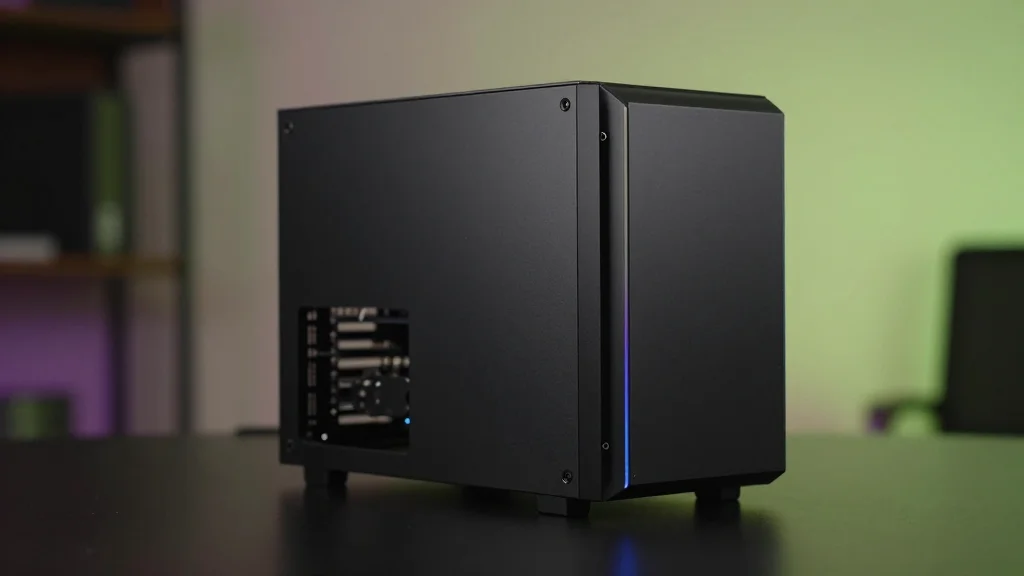
Asus Launches ROG NUC 16 Mini Gaming PC at $4,420, Pushing Premium NUC Market

Why It Matters
The ROG NUC 16 represents a pivotal test of consumer appetite for ultra‑compact, high‑performance gaming hardware. Its launch arrives at a time when memory and GPU supply constraints are inflating prices across the board, forcing manufacturers to balance performance gains against cost. If Asus can convince gamers that the convenience of a mini‑PC outweighs the modest benchmark improvements, it could cement the NUC form factor as a viable alternative to full‑size desktops for premium gaming. Conversely, a lukewarm market response may signal that the niche is too small to sustain such high price points, prompting a shift toward more affordable, modular solutions. Additionally, the device’s pricing and spec strategy could influence Intel’s roadmap for future NUC designs. A successful ROG NUC 16 could encourage Intel to further integrate high‑end laptop GPUs and expand memory capacity, potentially reshaping the mini‑PC segment’s performance ceiling.
Key Takeaways
- •Asus ROG NUC 16 launches at 29,999 CNY (~$4,420), with a premium white variant near $4,490
- •Features Intel Core Ultra 9 290HX CPU, up to Nvidia RTX 5080 laptop GPU, and 128 GB DDR5 RAM
- •Benchmarks show only a 3 % performance uplift over the previous NUC 15 generation
- •Pricing exceeds the $3,400 entry model of the NUC 15 and approaches $5,300 for higher‑end configs
- •Launch occurs amid a global RAM shortage, raising concerns about component costs and supply
Pulse Analysis
Asus’s decision to push the ROG NUC 16 into the premium tier reflects a broader industry trend: manufacturers are betting on form factor differentiation to justify higher price tags. The mini‑PC market has long been dominated by modest‑performance devices that appeal to hobbyists or office users. By marrying Arrow Lake’s top‑end silicon with an RTX 5080, Asus is attempting to rewrite that narrative, targeting gamers who value desk space as much as raw horsepower.
Historically, the NUC platform suffered from a perception of limited upgradability and a price premium that didn’t always translate into proportional performance. The 3 % benchmark gain cited by Asus suggests that the hardware improvements are incremental rather than revolutionary. However, the real value proposition may lie in the convenience of a pre‑built, compact system that eliminates the need for a separate tower, power supply, and cooling solution. For urban dwellers and esports arenas where space is at a premium, that convenience could outweigh the modest performance delta.
The launch also highlights the ripple effects of the ongoing component crunch. With DDR5 memory prices soaring, a 128 GB configuration could add several hundred dollars to the bill of materials, inflating the retail price further. Asus’s omission of detailed GPU options on its product page may be a strategic move to keep the narrative focused on the CPU and overall system capability, rather than exposing potential supply bottlenecks.
Looking ahead, the ROG NUC 16 could set a benchmark for future mini‑gaming PCs if it gains traction. Success would likely encourage Intel to continue refining its NUC designs for high‑end workloads, possibly integrating even more powerful discrete GPUs or expanding thermal solutions. Failure, on the other hand, would reinforce the notion that gamers still prefer traditional desktops or larger laptops for flagship performance, leaving the mini‑PC niche to serve only a niche of space‑constrained users.
Asus Launches ROG NUC 16 Mini Gaming PC at $4,420, Pushing Premium NUC Market
Comments
Want to join the conversation?
Loading comments...