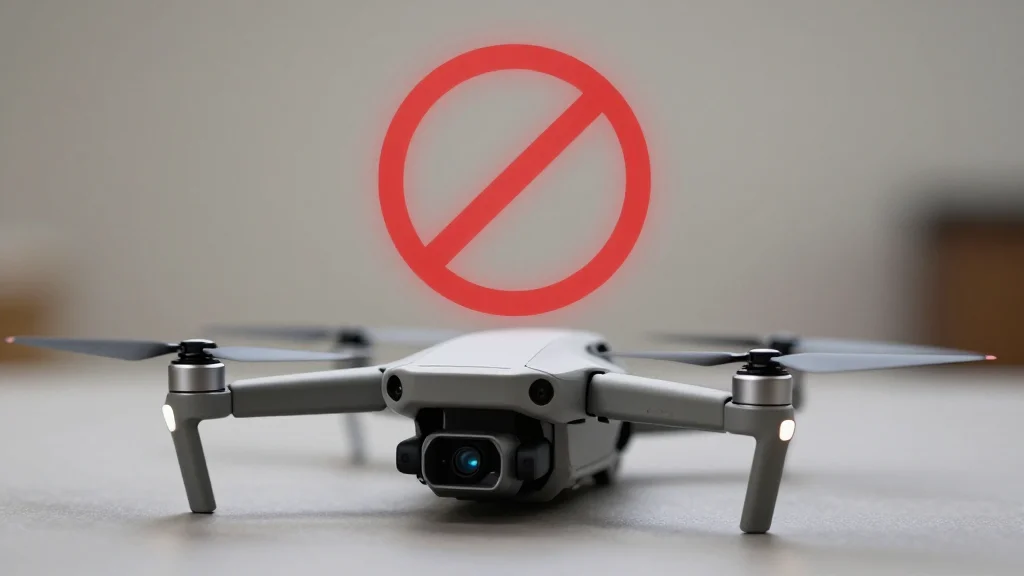
Beijing Enforces Citywide Drone Ban, Halting Sales and Flights From May 1

Why It Matters
The Beijing drone ban directly curtails the largest domestic market for consumer drones, threatening the revenue streams of manufacturers like DJI that rely on Chinese hobbyists and small‑business users. By limiting sales in the capital, the ordinance could depress overall demand, prompting firms to shift focus to export markets or to diversify into professional‑grade equipment that falls under the exemption clauses. Beyond the immediate commercial impact, the ban underscores Beijing’s tightening grip on technologies deemed sensitive for national security. It aligns with broader regulatory trends—such as the U.S. FCC’s restrictions on foreign drones—and may set a precedent for other Chinese cities to impose similar controls. The move could reshape global supply chains, accelerate the growth of underground markets, and influence how foreign governments assess the security risks of Chinese‑made consumer tech.
Key Takeaways
- •Beijing bans all consumer drone sales and flights citywide starting May 1, 2026.
- •Violations carry a fine of 500 yuan (≈$73) and possible confiscation of the drone.
- •DJI stores in Beijing ordered to clear drone inventory by early May.
- •Only universities, research institutes, and public‑safety agencies may fly drones with police permission.
- •The ban could shrink China’s domestic consumer‑drone market, affecting global supply chains.
Pulse Analysis
Beijing’s abrupt drone prohibition is a textbook case of regulatory risk reshaping a high‑growth tech segment. Historically, China’s consumer‑drone boom was fueled by lax local rules, cheap manufacturing, and a massive hobbyist community. The city’s decision to close the market overnight removes a key demand engine, forcing manufacturers to either pivot to export‑oriented models or accelerate development of professional‑grade platforms that qualify for the limited exemptions. In the short term, DJI’s revenue forecasts may be revised downward as the Beijing market—home to millions of enthusiasts—shrinks. Longer‑term, the ban could spur a bifurcation of the Chinese drone ecosystem: a tightly regulated, government‑approved tier for public‑safety and research, and a shadow market catering to hobbyists willing to risk fines.
Internationally, the move reinforces perceptions that Chinese tech firms operate under a security‑first paradigm, a narrative already leveraged by the United States and Europe to justify import bans and stricter certification standards. If other Chinese municipalities emulate Beijing, the domestic market could fragment, raising compliance costs for manufacturers and potentially eroding the economies of scale that have kept Chinese drones competitively priced. Conversely, the restriction may drive innovation in compliance technologies—such as built‑in geofencing and remote‑disable features—to satisfy the narrow set of permitted uses, giving Chinese firms a new export proposition.
Investors should monitor how quickly DJI and peers can reallocate inventory, whether the central government will issue clarifications or broaden exemptions, and how foreign regulators respond to China’s tightening stance. The drone ban is a reminder that consumer‑tech fortunes can pivot on policy as much as on product cycles, and that geopolitical considerations increasingly dictate the rules of the market.
Beijing Enforces Citywide Drone Ban, Halting Sales and Flights from May 1
Comments
Want to join the conversation?
Loading comments...