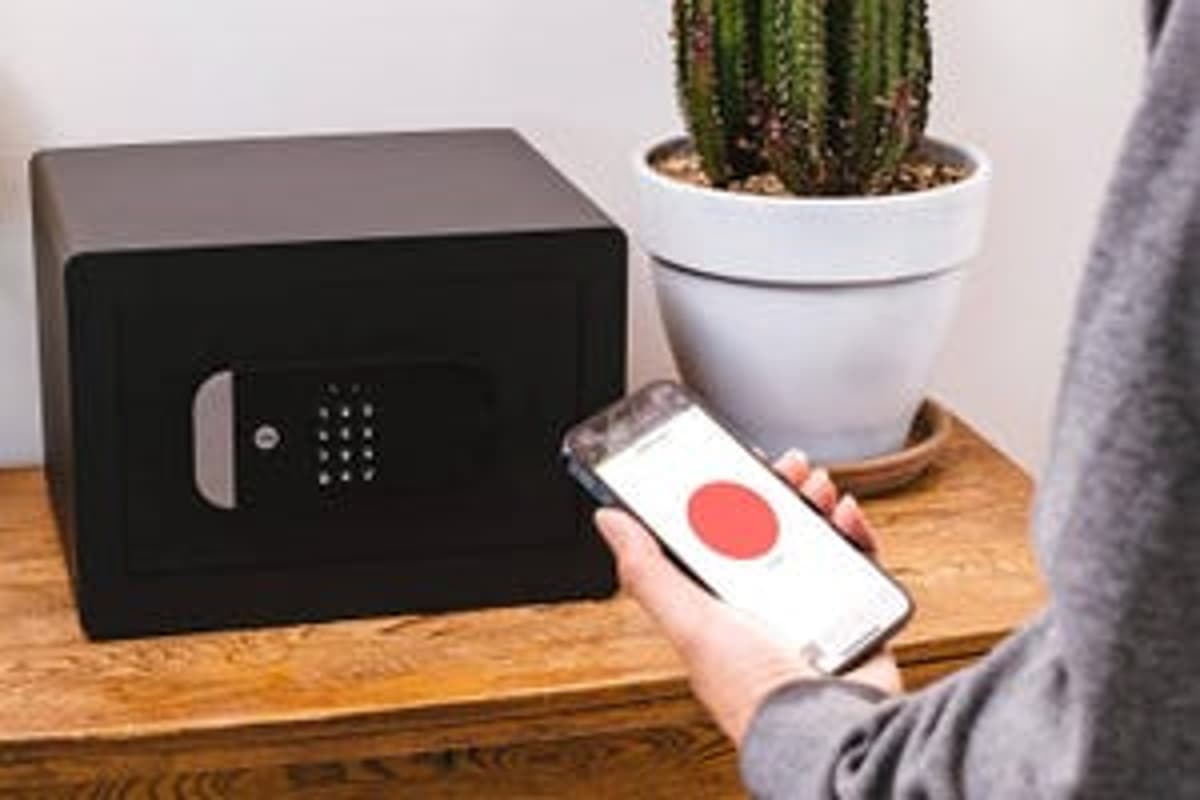
Best Smart Home Safes for 2026: Tamper Sensing and More
Why It Matters
Smart‑connected safes blend physical security with remote monitoring, meeting growing consumer demand for integrated home protection. Choosing the right model can safeguard valuables while fitting into a connected lifestyle, influencing both personal safety and the broader smart‑home market.
Key Takeaways
- •Yale safe adds Alexa, Google, Apple Watch control for $238.
- •Lockly offers fingerprint access and fire‑proof interior at $360.
- •SentrySafe provides 1,700 °F fire rating and waterproofing for $240.
- •Honeywell delivers sub‑$100 portable fire‑proof safe.
- •Verifi’s TouchChip sensor stores 40 fingerprints, lacks fire protection.
Pulse Analysis
Smart‑home safes have moved beyond simple lockboxes, becoming a niche where IoT convenience meets traditional security. As homeowners adopt voice assistants and mobile‑first control, manufacturers embed Wi‑Fi, Bluetooth and app‑based alerts to provide real‑time tamper notifications and remote access management. This convergence addresses a key pain point: the inability to monitor a safe’s status when away from home, while also offering biometric or keypad entry that reduces reliance on physical keys.
The five safes highlighted illustrate distinct trade‑offs. Yale’s $238 model tops the smart‑integration list, supporting Alexa, Google Assistant and Apple Watch, but it lacks fire or water resistance. Lockly’s $360 unit adds a fingerprint scanner and fire‑proof interior, yet its compact 0.096 cu ft volume may limit storage. SentrySafe’s larger $240 safe delivers a 1,700 °F fire rating and waterproof seal, sacrificing connectivity. Honeywell’s sub‑$100 portable chest offers fire and water protection without any digital features, appealing to budget‑conscious users. Verifi’s $295 S5000 focuses on a robust TouchChip fingerprint system, storing up to 40 prints, but it does not provide fire protection.
For buyers, the decision hinges on three priorities: connectivity, protection level, and space. If remote alerts and voice control are essential, Yale or Verifi are logical choices. When fire resistance is non‑negotiable, SentrySafe or Lockly should be considered, with Lockly adding biometric convenience. Budget‑driven shoppers can still achieve basic fire and flood safety with Honeywell’s portable option. As smart‑home ecosystems mature, future safes are likely to integrate stronger encryption, battery‑less Bluetooth Low Energy, and modular mounting solutions, further blurring the line between digital convenience and physical security.
Best Smart Home Safes for 2026: Tamper Sensing and More
Comments
Want to join the conversation?
Loading comments...