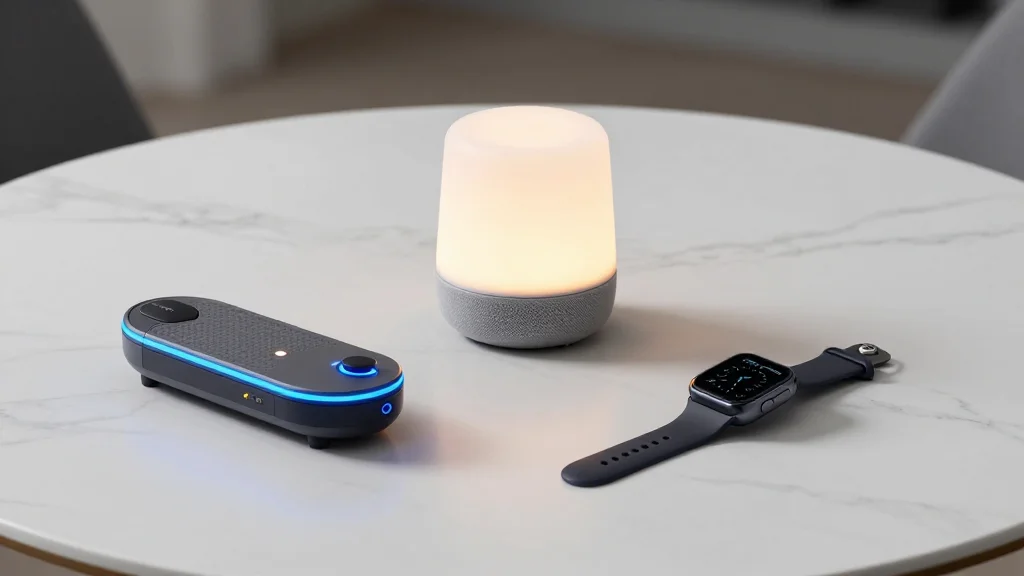
Changzhou AI Conference Debuts 27 Smart Consumer Devices, Showcasing China’s AI Hardware Surge

Companies Mentioned

Why It Matters
The Changzhou AI Terminal Trendy Products Conference illustrates how China is moving from low‑cost manufacturing to high‑value AI‑infused consumer goods. By coupling a dense industrial base with advanced AI capabilities, the city can deliver products that compete directly with Western incumbents in smart home, mobility and health sectors. This shift could reshape global supply chains, forcing established brands to reassess sourcing strategies and potentially driving price competition for AI‑enabled devices. Moreover, the event’s public‑facing format highlights a growing emphasis on consumer education and adoption. Direct interaction with AI gadgets helps demystify the technology, potentially accelerating market penetration in both domestic and overseas markets. As AI becomes a standard feature rather than a differentiator, the race will focus on integration quality, data security and ecosystem lock‑in, areas where Changzhou’s manufacturers are beginning to stake a claim.
Key Takeaways
- •20 companies presented 27 AI‑powered consumer devices at the Changzhou conference.
- •Changzhou’s EV output exceeded 800,000 units in 2025, with Li Auto among top Chinese EV makers.
- •Ninebot retained global leadership in smart electric two‑wheelers for three consecutive years.
- •Greenworks’ AI‑driven robotic lawn mowers rank in the U.S. top three for battery‑powered residential equipment.
- •Collaborative robots made in Changzhou hold 50% of China’s domestic market share.
Pulse Analysis
The Changzhou showcase marks a pivotal moment in the global consumer‑tech supply chain. Historically, China’s role was largely confined to cost‑driven assembly; today, the city is positioning itself as an AI hardware incubator. This evolution mirrors the broader industry trend where AI is no longer a cloud‑only service but an embedded component of physical products. Companies that can marry AI algorithms with mass‑production expertise will command premium pricing and faster time‑to‑market.
From a competitive standpoint, Western firms such as Apple, Samsung and Xiaomi will face intensified pressure on price and feature sets. The fact that a Chinese‑made robotic lawn mower can break into the top three U.S. market indicates that Chinese AI hardware is achieving parity in performance and reliability. For investors, the conference signals a fertile ground for venture capital targeting AI‑hardware startups that can leverage Changzhou’s ecosystem, especially in niche segments like intelligent toys and health monitoring where consumer trust is still being built.
Looking forward, regulatory scrutiny around AI data usage could become a differentiator. Companies that embed robust privacy safeguards into their devices may gain a competitive edge in markets with strict data laws, such as the EU and the United States. Changzhou’s manufacturers will need to balance rapid scaling with compliance, a challenge that could shape the next wave of AI‑enabled consumer products.
Changzhou AI Conference Debuts 27 Smart Consumer Devices, Showcasing China’s AI Hardware Surge
Comments
Want to join the conversation?
Loading comments...